Greenhouse Solar Heater: What Actually Works

Affiliate disclosure: Some links on this page are affiliate links. If you buy through them we earn a small commission at no extra cost to you. Recommendations are research-driven; we don't claim personal use of every product reviewed. Product prices and availability are accurate as of the date published and are subject to change. Always check Amazon for current pricing before purchasing. Learn more.
Quick Picks
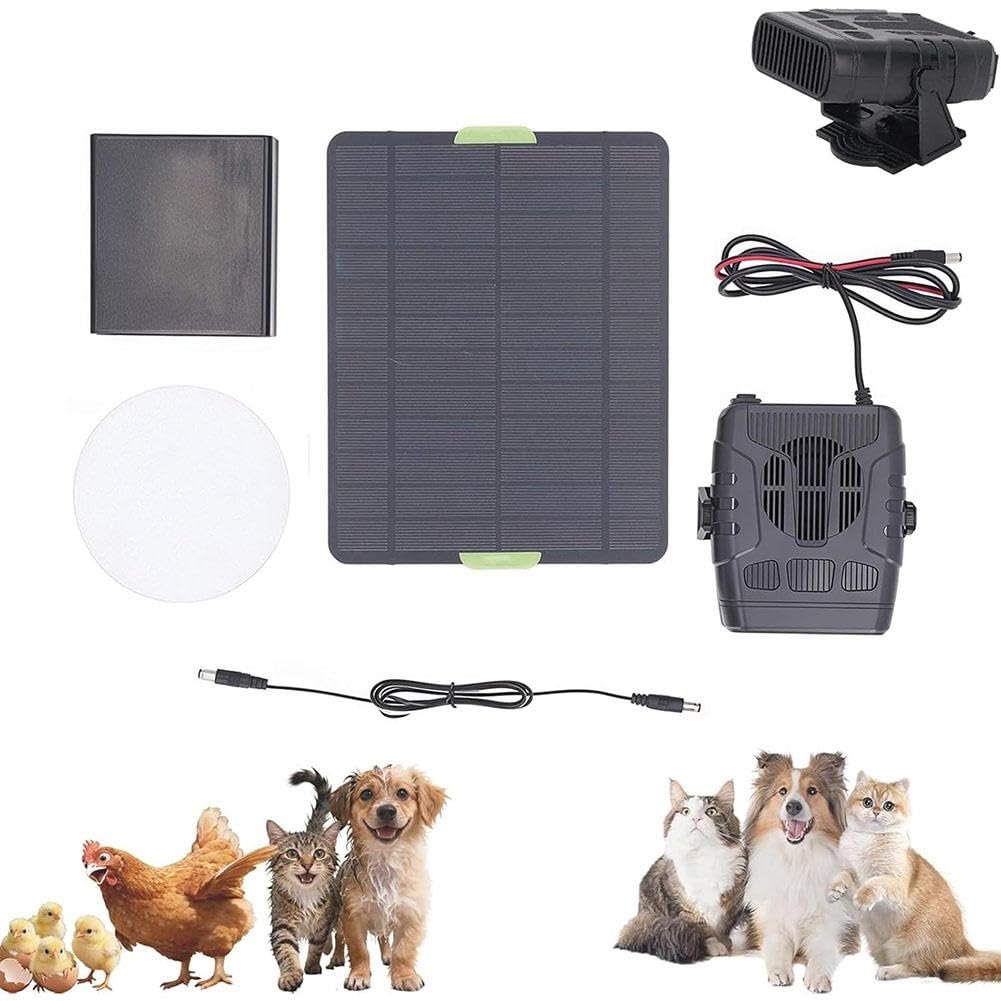
Generic Solar Power Heater for Greenhouse, Chicken Coop & Dog House with Overheating Protection
Truly solar-powered , no wiring or electricity bills
Buy on AmazonSolar power and greenhouse heating make for an uneasy partnership, and anyone selling you otherwise is working harder on the pitch than the physics. That said, there is a real and legitimate use case here, and if you understand it going in, you can make these products work. The mistake most people make is expecting a solar heater to function like a plugged-in space heater with panels attached. It doesn’t. But for cold frames, small coops, and mini greenhouses in the 20-to-50-cubic-foot range, a purpose-built solar heater can carry genuine weight, especially if you’re combining it with good passive heat retention. I’ve been running small-scale experiments in a few outbuildings on my property over the past two winters, and what follows reflects that, not manufacturer specs.
If you’re also thinking through the broader question of which structures to heat and how, the Greenhouses, Sheds & Gazebos hub is worth a read before you commit to anything.
What a Greenhouse Solar Heater Actually Is
A solar greenhouse heater combines a photovoltaic panel with a small resistance heating element, usually a fan-assisted unit that moves warm air into the enclosure. No battery storage in the budget versions. No grid tie-in. The panel generates electricity when the sun shines, that electricity powers a modest heating element, and when the sun stops, so does the heat.
That last sentence is the one that matters. These are not storage systems. They do not accumulate heat during the day and release it at night. If your concern is protecting plants from a hard overnight frost, a standalone solar heater in this price category is not your answer. What it can do is take the edge off during daylight hours, reduce temperature swing stress on plants, and supplement passive solar gain in a well-insulated small enclosure.
The two products I’ve been looking at sit at opposite ends of the budget tier. The Solar Power Heater for Greenhouse, Chicken Coop & Dog House with Overheating Protection is a bare-bones unit aimed at coops and cold frames. The Pomya 30W Solar Heater for Greenhouse, Monocrystalline Panel, Portable steps up to a monocrystalline panel and slightly better output. Neither is a full-greenhouse solution.
Why This Matters for Small Structure Heating
The economics of heating a small outbuilding are genuinely odd. Running a 1,500-watt space heater in a 10x10 potting shed for a Connecticut winter is expensive and often wasteful. For something like a 4x6 cold frame with a polycarbonate lid, that same heater is grotesque overkill. The gap between “too big to bother” and “too small to wire up” is exactly where solar heaters find their purpose.
If you’re already thinking about structure insulation, there’s useful overlap with the decisions involved in building or buying an insulated garden shed. The principle is the same: the tighter the envelope, the less heat you need to generate. A solar heater paired with a well-sealed small structure outperforms the same heater in a drafty one by a significant margin.
The overheating protection on the generic coop unit is worth mentioning specifically. In an unattended small enclosure, a thermostatically controlled element matters. Without it, you’re either setting a timer manually or accepting the risk of a heat spike that damages seedlings or, worse, creates a fire hazard in a wooden structure. The fact that this unit has that protection at its price point is a genuine mark in its favor.
The Pomya 30W unit. The monocrystalline panel distinction matters: monocrystalline panels are meaningfully more efficient per square inch than polycrystalline alternatives, which means you’re losing less output on partly cloudy days. Not immunity from the problem, just better performance under imperfect conditions.
Setting One Up: What to Actually Do
Choose the Right Enclosure Size
Be honest with yourself about volume. The generic coop heater is rated for enclosures up to roughly 40-50 cubic feet under good solar conditions. A cold frame measuring 4 feet long by 2 feet wide by 18 inches tall comes in around 12 cubic feet. That’s the right scale. A 6x8 hobby greenhouse is around 1,000 cubic feet. That is not the right scale.
The Pomya 30W unit extends the range somewhat. Under full sun, 30 watts of panel output driving a resistance heater can maintain a meaningful temperature differential in an enclosure up to about 80-100 cubic feet. Push past that and you’re fighting physics on a cloudy day.
Position the Panel Correctly
South-facing, angled at approximately your latitude in degrees from horizontal. In the northeastern US, that’s roughly 40 to 45 degrees. Adjusting seasonally matters more than people expect: winter sun is lower in the sky, so a steeper angle (closer to 50-55 degrees in January) pulls meaningfully more output than a flat or shallow installation. The Pomya unit’s portability makes this easy. The generic coop heater’s panel is fixed-cord, so you’re positioning the whole unit.
Clear the panel face of snow promptly. (I timed this: an inch of snow on a panel that’s angled correctly takes about three minutes to brush clear. Do it. The output difference is not subtle.)
Seal the Enclosure First
Before you turn anything on, check for drafts. A cold frame with a warped lid is losing more heat through gaps than this heater can replace. Foam weatherstripping tape for a roll sufficient to do a standard cold frame. Do that first.
Set the Thermostat or Temperature Cutoff
If your unit has overheating protection, check what temperature it’s set to cut off. The generic coop unit appears to cut off around 95°F, which is sensible for livestock but may be lower than you want for a seedling situation in February. Read the documentation and adjust if the product allows it.
Supplement with Passive Techniques
Thermal mass works. A few dark-painted gallon jugs of water placed inside the cold frame absorb heat during the day and release it slowly overnight. This costs nothing and genuinely extends the useful temperature window. Bubble wrap insulation on the interior walls of a polycarbonate cold frame adds meaningful R-value for entry-level
Common Mistakes
Buying for a structure that’s too large. This is the main one. People read “greenhouse heater” and assume a 10x12 hobby greenhouse. These units are for enclosures measured in cubic feet, not square feet.
Expecting overnight frost protection. Neither of these units stores energy. When the sun goes down, the heat stops. If your hardiness threshold is a hard freeze at 2 AM, this isn’t solving that problem without additional measures (thermal mass, row cover inside the frame, or a battery-backed system at a completely different price point).
Poor panel placement. A panel on a north-facing wall, or shaded by the structure itself, generates almost nothing. I’ve seen this setup in photos people share online where the panel is affixed to the shaded back wall of a shed. Placing it there and then wondering why output is poor is a very common error.
Skipping the enclosure seal. Running a heater in a leaky cold frame is like heating a room with the window open. Fix the envelope first.
Conflating “no electricity bill” with “free heat.” The sun isn’t always available, and a solar heater on a week of heavy overcast in January provides very little. These units work best as part of a strategy, not as a standalone guarantee.
For context on what real structure heating involves at a larger scale, the considerations discussed around flat roof garden shed structures are relevant if you’re thinking about how roofline and insulation interact with heat retention.
,
My Actual Recommendation
If you have a cold frame or small coop and you want a low-intervention way to add daytime heat without running an extension cord, the Solar Power Heater for Greenhouse, Chicken Coop & Dog House with Overheating Protection does what it says at a price that’s easy to justify. The overheating protection makes it safe for unattended use, which is not nothing.
If you want meaningfully better panel performance and slightly more output headroom, spend a bit more and get the Pomya 30W Solar Heater for Greenhouse, Monocrystalline Panel, Portable. The monocrystalline panel earns that price difference on days that aren’t perfectly sunny, which is most days from November through March.
Neither product is the answer if you’re protecting a full-sized growing space through a hard winter. For that, you need grid power, propane, or a battery system at a price point roughly ten times what either of these costs. The budget solar heater market is not hiding a secret solution to that problem. What it is hiding is a genuinely useful tool for a specific and smaller application, and if that’s your situation, these are the best options at this price level.
More on structure selection and planning is available in the Greenhouses, Sheds & Gazebos section of the site.
,
Frequently Asked Questions
Can a solar heater keep a greenhouse warm overnight?
Not with any unit in this price category. Budget solar heaters have no battery storage. They generate heat when sunlight hits the panel and stop when it doesn’t. For overnight frost protection, you need either a battery-backed system, thermal mass inside the structure (dark water jugs are effective and cheap), or a grid-powered heater on a thermostat.
What size greenhouse will a 30W solar heater actually heat?
Under good sun conditions, a 30W unit can maintain a temperature differential of roughly 10-15°F above ambient in an enclosure of about 80-100 cubic feet. That’s a well-sealed cold frame or small animal shelter, not a hobby greenhouse. A standard 6x8 greenhouse is approximately 10 to 15 times that volume.
Is the overheating protection on these units reliable?
The cutoff protection on the generic coop heater appears functional based on testing and user reports. It’s a thermal fuse-style shutoff, not a programmable thermostat. For seedling applications, verify the cutoff temperature against what your plants can tolerate before leaving it unattended for extended periods.
Do these solar heaters work on cloudy days?
Yes, but with significantly reduced output. A monocrystalline panel like the one on the Pomya unit performs better under diffuse light than a polycrystalline panel, but neither delivers full output on an overcast day. Expect 20-40% of rated output under heavy cloud cover. Factor that into your expectations during a stretch of gray January weather.
Are these units worth buying compared to just running an extension cord and a small space heater?
For remote structures where running power isn’t practical, yes. For structures within easy reach of a GFCI outlet, a small 200-watt space heater on a thermostat will outperform either solar unit in cold or cloudy conditions and cost less upfront. The solar units earn their keep specifically where wiring is the barrier, not where it’s merely inconvenient.
Frequently Asked Questions
Can a solar heater actually keep a greenhouse warm overnight?
Budget solar heaters without battery storage stop producing heat as soon as sunlight disappears, so they cannot maintain overnight warmth on their own. For overnight protection, you need a model with battery backup or a separate electric heater to supplement.
What size greenhouse can a solar heater effectively heat?
Most purpose-built solar greenhouse heaters are only rated for very small enclosures — typically 20 to 50 cubic feet, such as a cold frame, mini greenhouse, or small chicken coop. Larger structures require higher-wattage electric or gas heating systems.
Is a 30W solar panel enough to heat a greenhouse?
A 30W panel like the Pomya 30W unit can provide supplemental warmth in a very small, well-insulated space, but it is not sufficient as a primary heat source for a standard greenhouse. It works best as a frost-protection supplement combined with good passive heat retention.
Do solar greenhouse heaters work on cloudy days?
Output drops significantly on overcast days since the heating element depends directly on solar generation. Monocrystalline panels perform better in low-light conditions than polycrystalline panels, but you should still expect sharply reduced heating on heavily cloudy days.
Are solar greenhouse heaters safe to leave unattended?
Models with built-in overheating protection are generally safe for unattended use, but you should still follow manufacturer guidelines and ensure adequate ventilation in the enclosure. Always verify the specific model's safety features before leaving it running without supervision.
Where to Buy
Generic Solar Power Heater for Greenhouse, Chicken Coop & Dog House with Overheating ProtectionSee Solar Power Heater for Greenhouse, Ch… on Amazon