Propane Greenhouse Heater: Types, Safety & Selection

Affiliate disclosure: Some links on this page are affiliate links. If you buy through them we earn a small commission at no extra cost to you. Recommendations are research-driven; we don't claim personal use of every product reviewed. Product prices and availability are accurate as of the date published and are subject to change. Always check Amazon for current pricing before purchasing. Learn more.
Quick Picks
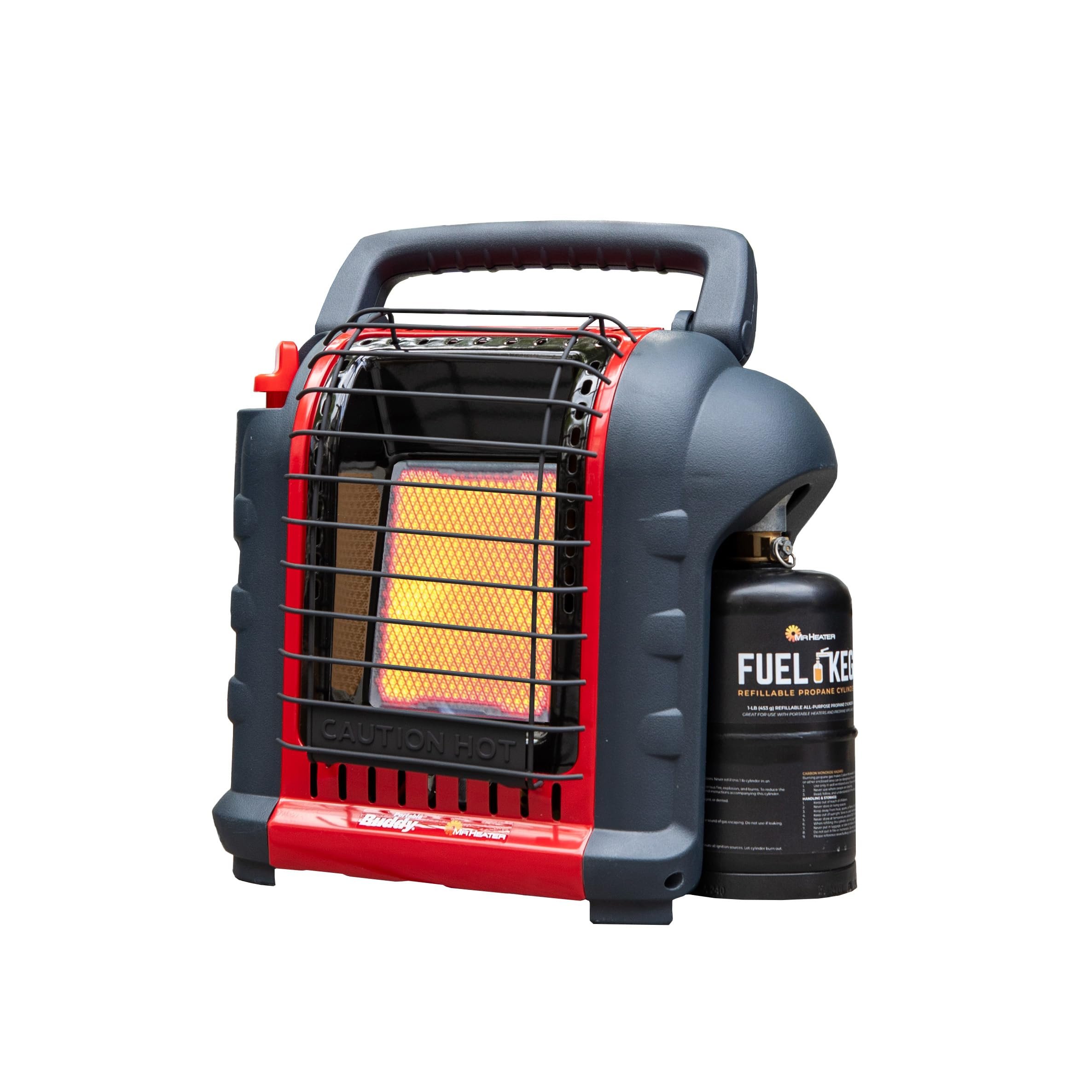
Mr. Heater 9,000 BTU Portable Buddy Radiant Propane Heater
Low-oxygen shutoff and tip-over safety , critical for enclosed greenhouse use
Buy on Amazon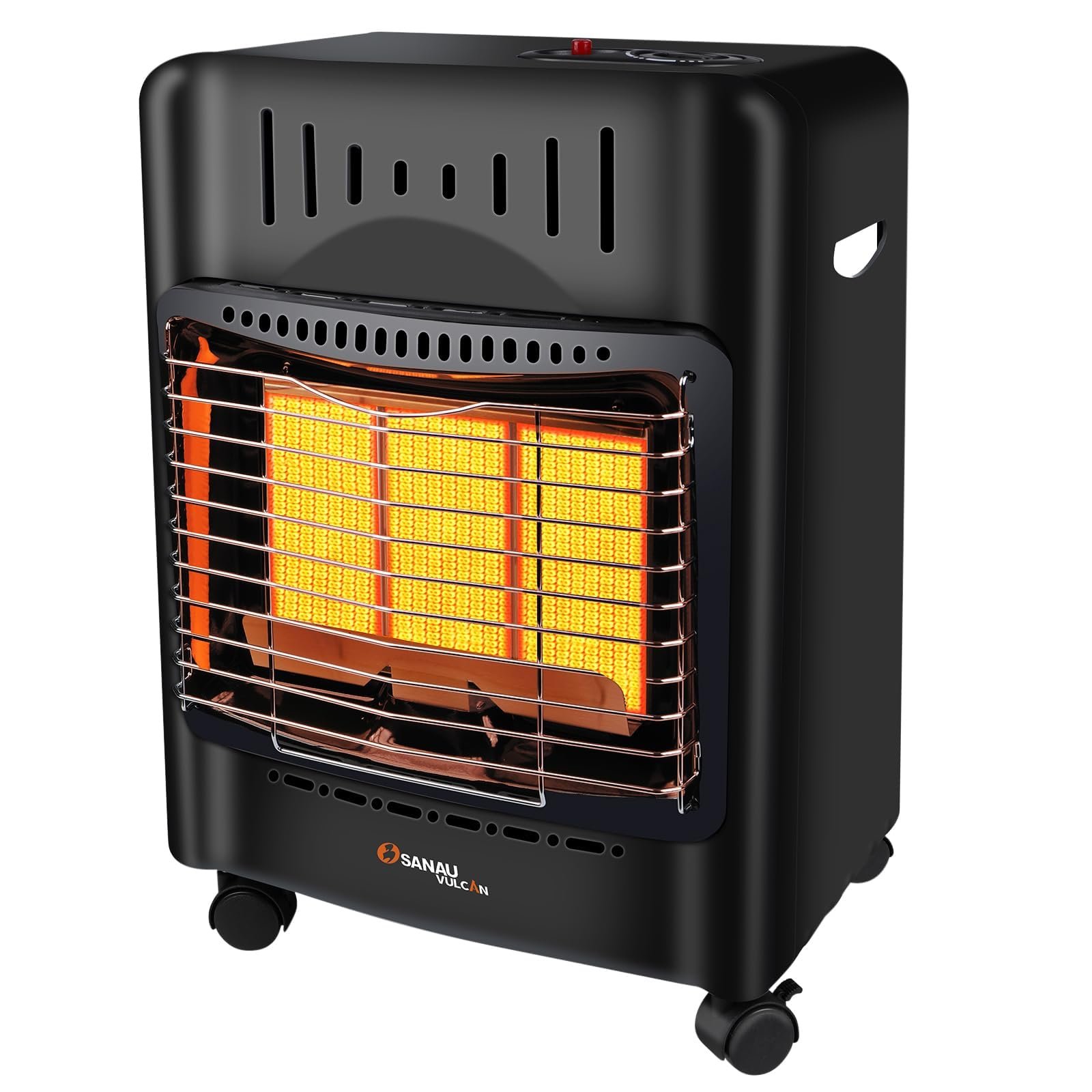
Generic 18,000 BTU Propane Heater for Garages & Yards with Regulator and Hose
18,000 BTU handles medium greenhouses up to 450 sq ft
Buy on Amazon| Product | Price Range | Top Strength | Key Weakness | Buy |
|---|---|---|---|---|
| Mr. Heater 9,000 BTU Portable Buddy Radiant Propane Heater also consider | $ | Low-oxygen shutoff and tip-over safety , critical for enclosed greenhouse use | Requires ventilation in enclosed spaces , produces moisture and CO | Buy on Amazon |
| Generic 18,000 BTU Propane Heater for Garages & Yards with Regulator and Hose also consider | $$ | 18,000 BTU handles medium greenhouses up to 450 sq ft | Requires ventilation , not for unvented enclosed spaces | Buy on Amazon |
A propane greenhouse heater is one of those purchases that sounds simple until you’re standing in a frost-killed propagation house in March trying to figure out what went wrong. The stakes are real: a single hard freeze can wipe out months of seedlings, overwintering perennials, or a collection you’ve spent years building. So I want to be direct about what these heaters actually are, which ones are worth buying, and what you need to do to run them safely.
For more on greenhouse structures and the buildings they go in, the Greenhouses, Sheds & Gazebos hub is a reasonable starting point if you’re still in the planning phase.
What a Propane Greenhouse Heater Actually Is
A propane greenhouse heater burns liquefied petroleum gas to generate heat, either through radiant panels (which heat objects and surfaces directly) or convective output (which heats the surrounding air). Most units sold for residential greenhouse use fall into the radiant category, meaning they work by warming what’s in front of them rather than circulating warm air throughout the space.
This matters for placement. A radiant heater positioned in a corner will protect what’s near it. It will not maintain a consistent temperature across a 20-by-30-foot structure the way a forced-air unit would. Know what you’re buying.
Propane heaters for greenhouse use come in two practical configurations. The first is the portable, self-contained unit that runs off a small 1-lb or 16-oz canister, or off a larger 20-lb tank via an adapter hose. The second is a larger, regulator-and-hose unit designed to connect directly to a 20-lb or larger tank and stay in one place. Both have their uses.
Why This Decision Matters More Than It Seems
A greenhouse heater that fails at 2 a.m. in January is not a minor inconvenience. And a heater that produces carbon monoxide in an enclosed space where you haven’t accounted for ventilation is a safety problem, not just a plant problem.
Propane combustion produces water vapor and carbon monoxide. In a well-ventilated space, this is manageable. In a sealed greenhouse, it accumulates. Every propane heater I’m aware of, including both units covered here, carries explicit warnings about this. The manufacturers are not being overly cautious. If you’re running a propane heater in an enclosed greenhouse, you need a carbon monoxide detector and you need a source of fresh air exchange, even a small one.
On the plant side: propane combustion also increases humidity. For most overwinter crops, that’s tolerable. For succulents or anything prone to rot in damp conditions, it’s a real concern.
The other factor is BTU sizing. Undersizing a heater means it runs constantly and still can’t hold temperature when it’s truly cold. Oversizing wastes fuel and can create hot spots. A rough rule: you need roughly 40 BTUs per cubic foot of greenhouse space in a cold climate with hard winters. A 10-by-12 greenhouse with 8-foot walls has about 960 cubic feet, which puts you at roughly 38,400 BTUs for serious cold. That’s well beyond what the small portables can cover as primary heat. For those spaces, propane becomes a supplemental or emergency backup heat source, not a sole solution.
If you’re building out a new structure, take a look at what a cedar greenhouse kit offers in terms of insulation and construction before you finalize your heating plan. The building’s thermal performance changes the BTU math considerably.
The Two Heaters Worth Considering
Mr. Heater 9,000 BTU Portable Buddy
The Mr. Heater 9,000 BTU Portable Buddy Radiant Propane Heater is the most widely used portable propane heater for greenhouse applications, and there’s a reason for that. It has two safety features that matter in an enclosed growing space: a low-oxygen shutoff sensor (ODS) and a tip-over auto-shutoff. Both are standard on this unit and neither is something you should compromise on.
At 9,000 BTU on its high setting, it’s rated for spaces up to 225 square feet. That’s a small greenhouse, a cold frame shelter, or a seedling area you’ve partitioned off for the winter. It is not going to heat a medium or large structure in any weather that would actually threaten your plants.

The unit runs on 1-lb propane canisters, which burn through fast at full output. Figure roughly 3 to 4 hours on a small canister at high. For overnight frost protection, you will need the adapter hose to connect to a 20-lb tank (the F273702 hose is the standard fit at the time of writing). That’s an extra purchase, and it should be factored into the total cost. The heater itself.
What the Portable Buddy does well: it’s reliable, the safety features work, it starts easily in cold temperatures, and it has a decades-long track record. I’ve seen these in more small greenhouse setups than I can count. What it doesn’t do: it won’t save you in a serious cold snap if your greenhouse is over 200 square feet and poorly insulated.
18,000 BTU Propane Heater with Regulator and Hose
The 18,000 BTU Propane Heater for Garages & Yards with Regulator and Hose is the step up from the Portable Buddy for growers who need more coverage. At 18,000 BTU, it’s rated for spaces up to 450 square feet, and it ships with the regulator and hose already included, which matters because the Portable Buddy doesn’t.
The real advantage here is output. If you have a 12-by-20 or 14-by-20 greenhouse and you’re trying to keep temperatures above freezing through a cold night, this unit gets you closer to viable coverage than the Mr. Heater can. It’s currently priced, which puts it in a similar range to the Portable Buddy with its hose adapter, making it more straightforward value for anyone with a larger space.
The downside is the brand. This is a generic product with limited warranty support and less documentation of long-term reliability. I wouldn’t use it as a sole heat source for anything irreplaceable. As a backup heater or a primary heater for a structure you’re watching carefully, it’s acceptable. As the only line of defense for a serious plant collection, the Mr. Heater’s established safety record gives it an edge.
For both units: the ventilation requirement is non-negotiable. These are not sealed-combustion appliances.
How to Set Up a Propane Heater in a Greenhouse
Placement, ventilation, and monitoring are the three things you control.
Placement. Position the heater so it has clear line-of-sight to the plants you most need to protect, but not so close that it’s creating heat stress on foliage. 18 to 24 inches of clearance from any plant material is a minimum. Keep it off the ground if possible, which helps radiant output distribute more evenly. Do not place it near plastic sheeting or fabric frost cloth.
Ventilation. Crack a vent or leave a door slightly ajar. Even a 2-inch gap at ground level and a top vent open a few inches will allow adequate air exchange. Yes, this lets some heat out. It also lets carbon monoxide out. This is the trade-off and it is not negotiable.
Monitoring. Install a CO detector rated for enclosed spaces. These and belong in any greenhouse where combustion heating is used. Also install a minimum/maximum thermometer so you know what your overnight lows actually are, not what you assume they are. (I’ve been surprised in both directions by this.)
Fuel management. For overnight use, do the math on your burn time before you go to bed. A 20-lb tank at full output on the 18,000 BTU unit will last roughly 16 to 18 hours. On the Portable Buddy at high, a 20-lb tank gets you closer to 40 to 50 hours. Know which setting you’re running and check fuel levels before a forecast cold night.
Common Mistakes
Using a 1-lb canister for overnight coverage. It won’t last. Connect to a 20-lb tank or accept that you’re monitoring this manually.
Skipping the CO detector. This is the mistake I have no patience for. A CO detector is a investment. The risk is not theoretical.
Placing the heater on the floor of a plastic-covered greenhouse without ventilation. I’ve seen this produce condensation problems and CO accumulation within an hour on still nights. Elevation and airflow both matter.
Relying on a single propane heater for a greenhouse larger than 250 square feet in genuinely cold weather. Below about 20 degrees Fahrenheit, a 9,000 BTU unit in a medium greenhouse will run continuously and still lose ground. Know the limits of what you’re buying.
Not accounting for fuel costs. Propane isn’t free, and running a heater all winter adds up. If you’re in a climate with consistently hard winters and you’re heating a real structure, look at electric options or a properly installed forced-air propane system before defaulting to portable units as your primary heat source.
For more information on greenhouse structures, storage buildings, and covered garden spaces of all kinds, the full Greenhouses, Sheds & Gazebos section covers a range of structures worth considering alongside whatever heating solution you land on. If you’re also thinking through cold-weather storage for tools and equipment, the garden shed with loft and flat roof garden shed articles cover options that pair well with a separate, properly ventilated heating setup.
Frequently Asked Questions
Can I use a propane heater inside a greenhouse overnight?
Yes, but only with adequate ventilation and a carbon monoxide detector. Propane combustion produces CO and water vapor. In a sealed space, CO accumulates to dangerous levels. Crack a vent and a lower opening to allow air exchange, even in cold weather. Both the Mr. Heater Portable Buddy and the 18,000 BTU generic unit require ventilation. This is not optional.
How many BTUs do I need for my greenhouse?
A common starting point is 40 BTUs per cubic foot for a cold climate with hard winters. Multiply your greenhouse length by width by average ceiling height to get cubic feet, then multiply by 40. A 10-by-12 greenhouse with 8-foot walls needs roughly 38,400 BTUs for serious cold protection. The portable heaters covered here (9,000 and 18,000 BTU) are best suited to small spaces or supplemental use in larger ones.
Is the Mr. Heater Portable Buddy safe for greenhouse use?
It’s the most widely recommended portable propane heater for this application, primarily because of its low-oxygen shutoff and tip-over protection. Those two features are meaningful in an enclosed growing space. It still requires ventilation and a CO detector. “Safe” is conditional on how you set it up.
How long will a 20-lb propane tank last running a greenhouse heater?
On the Mr. Heater Portable Buddy at its high setting (9,000 BTU), a 20-lb tank lasts roughly 40 to 50 hours. On the 18,000 BTU unit at full output, expect closer to 16 to 18 hours. Real-world burn time varies with ambient temperature and how hard the heater is cycling. Check your tank level before any forecast cold night.
What’s the difference between the Portable Buddy and the Big Buddy (MH18B)?
The Portable Buddy (MH9BX) runs up to 9,000 BTU and covers spaces up to 225 square feet. The Big Buddy (MH18B) outputs up to 18,000 BTU and handles spaces up to 450 square feet. Both have safety shutoffs. The Big Buddy also connects to two 1-lb canisters simultaneously or to a larger tank. If you have a greenhouse over 200 square feet, the Big Buddy or the generic 18,000 BTU unit with its included hose and regulator is the more practical choice.
Frequently Asked Questions
What safety features should a propane greenhouse heater have?
At minimum, look for a low-oxygen shutoff (ODS) sensor and a tip-over auto-shutoff. The Mr. Heater Portable Buddy has both, which is why it is the most widely recommended portable propane heater for enclosed growing spaces. Without an ODS sensor, a propane heater in a sealed greenhouse can produce dangerous levels of carbon monoxide before any visible warning.
Do I need a carbon monoxide detector if I use a propane heater in a greenhouse?
Yes — propane combustion produces carbon monoxide, and in a small enclosed greenhouse it can accumulate to dangerous concentrations quickly. A CO detector rated for enclosed spaces costs $20 to $40 and is non-negotiable when running any combustion heater in a greenhouse. Do not rely on the heater's built-in ODS sensor as a substitute for a dedicated CO detector.
What size propane heater do I need for a 10x12 greenhouse?
A 10x12 greenhouse with 8-foot walls has roughly 960 cubic feet of space. Using the standard 40 BTU per cubic foot cold-climate rule, you need about 38,400 BTU for serious freeze protection. A 9,000 BTU portable heater is inadequate as a sole heat source for this size; the 18,000 BTU unit is marginal. For a 10x12 in a genuinely cold climate, consider propane as supplemental backup to an electric heating system.
Can I run the Mr. Heater Portable Buddy off a 20-lb propane tank in a greenhouse?
Yes — the Portable Buddy requires the F273702 adapter hose (approximately $25) to connect to a 20 lb tank. On high at 9,000 BTU, a 20-lb tank lasts 40 to 50 hours, which is practical for multi-night frost protection. Running off 1-lb canisters at full output provides only 3 to 4 hours of heat and is not viable for overnight protection.
How much ventilation does a propane greenhouse heater require?
Enough to allow continuous air exchange — at minimum, a 2-inch gap at ground level and a partially open top vent. This lets carbon monoxide and excess humidity escape while bringing in fresh air for combustion. Yes, this lets some heat out; that is the required trade-off for safe propane use in any enclosed structure.
Where to Buy
Mr. Heater 9,000 BTU Portable Buddy Radiant Propane HeaterSee Mr. Heater 9,000 BTU Portable Buddy R… on Amazon