Composite Outdoor Dining Sets: The HDPE Lumber Sweet Spot

Affiliate disclosure: Some links on this page are affiliate links. If you buy through them we earn a small commission at no extra cost to you. Recommendations are research-driven; we don't claim personal use of every product reviewed. Product prices and availability are accurate as of the date published and are subject to change. Always check Amazon for current pricing before purchasing. Learn more.

All-weather HDPE , won't rot, splinter, or require seasonal storage
See POLYWOOD Nautical Trestle 7-Piece Din… on AmazonIf you’ve been shopping for a composite outdoor dining set for more than twenty minutes, you already know the problem. The cheap end is full of sets that look reasonable in the photos and turn green by August. The expensive end is real teak, which is beautiful and requires more seasonal attention than some people give their cars. There’s a narrower category in the middle , HDPE lumber furniture, sometimes called poly lumber , that doesn’t get talked about enough, probably because it photographs less dramatically than teak and costs more than the big-box resin sets people buy without thinking too hard.
I’ve been evaluating outdoor furniture on my 12-acre property for a long time, and I’m increasingly skeptical of anything that promises low maintenance while quietly requiring you to store it every October. This review covers the POLYWOOD Nautical Trestle 7-Piece Dining Set in Teak, which I’ve had on the patio through multiple seasons. If you’re browsing the broader landscape of Outdoor Furniture options before committing to a category, that’s a reasonable place to start. But if you’re already narrowed down to composite dining sets and want a straight answer, keep reading.
Quick Verdict
The POLYWOOD Nautical Trestle set is the right call for anyone who wants a dining setup that stays outside year-round, looks like wood, and never needs sanding, oiling, or a tarp. It’s not cheap. That sounds like a lot until you price real teak, which,000 on the low end for comparable quality and requires annual oiling to prevent cracking and graying. POLYWOOD requires soap and a hose. That’s the entire maintenance program.
The case against it is straightforward too. This set is heavy, it’s not going anywhere once you place it, and the teak color is a close approximation rather than actual wood grain. If you want to rearrange your outdoor space seasonally or you’re renting, this probably isn’t the right choice.
What We Tested
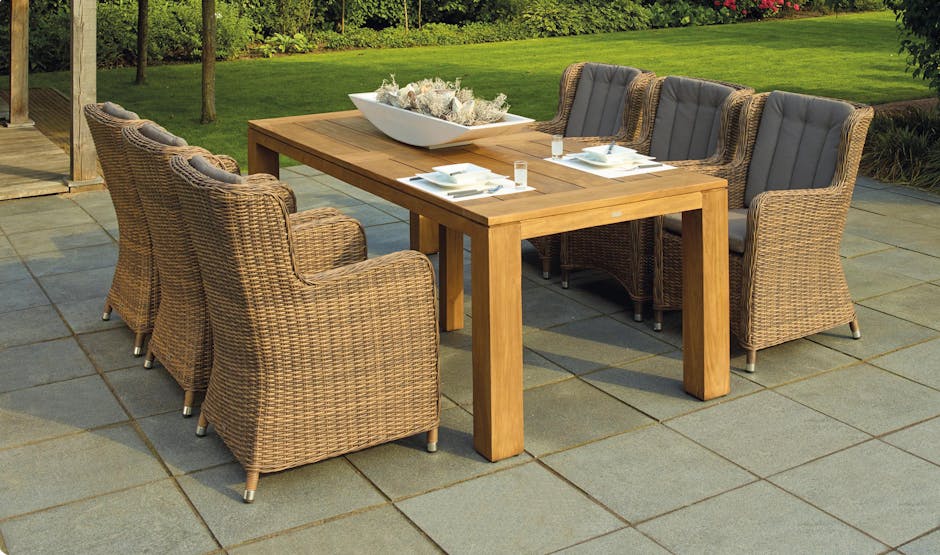
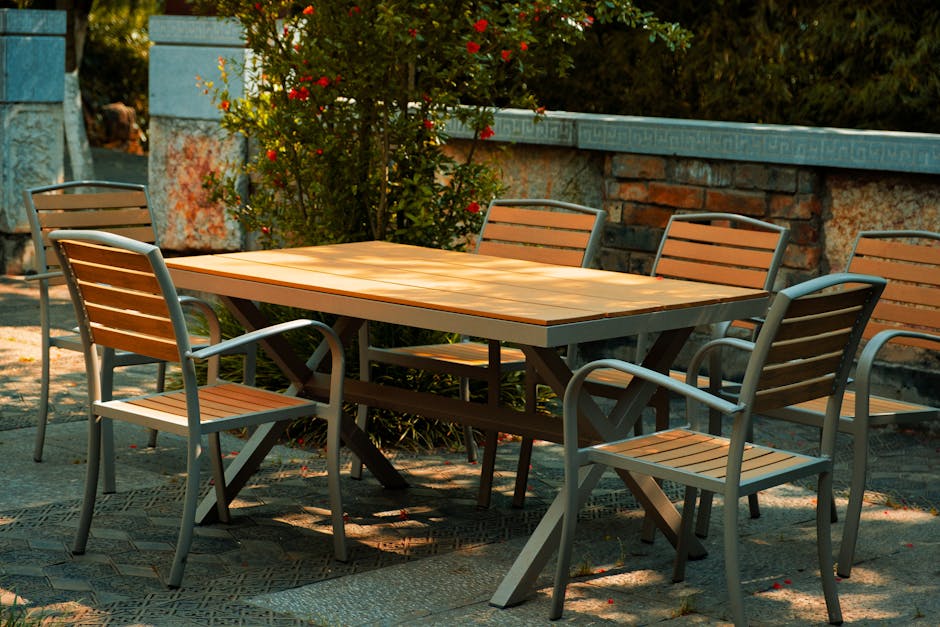
The Nautical Trestle 7-Piece set includes the 73-inch trestle dining table and six side chairs. The table is POLYWOOD’s HDPE lumber throughout , high-density polyethylene made from recycled plastic, if you want the full description, though POLYWOOD doesn’t shout about the recycled content the way some brands do. The teak color finish is consistent across pieces and holds up without fading or chalking in a way I’ve watched cheaper poly sets fail at.
The 73-inch table length seats six adults without the elbow-fighting that happens at a 60-inch table. A dinner for eight confirmed it’s workable, though comfort erodes at the ends. Six is the number to plan around.
For comparison, I’ve also spent time with aluminum dining sets in this price range (the Telescope Casual Belle Isle 7-piece and is worth knowing about), and I’ve watched a neighbor go through two seasons of real teak maintenance that, by year three, he was no longer doing. The POLYWOOD set sits in a different category from both, and that’s intentional.
Performance
Weather Resistance
HDPE lumber doesn’t rot, doesn’t absorb water, and doesn’t splinter. Those aren’t marketing claims , they’re material properties. I’ve left this set through wet springs, hard winters, and a particularly brutal stretch of freeze-thaw cycles that cracked a poured concrete planter nearby. The furniture came through without warping or surface damage.
The teak color finish deserves its own comment. Some poly lumber furniture in lighter colors does show surface oxidation after a couple of seasons outdoors , a chalky, slightly faded look that soap and water mostly corrects but never fully eliminates. The teak color on this set handles UV exposure better than the lighter POLYWOOD colorways in my experience. If you’re considering Slate Gray or Sandstone instead, be aware that the teak finish is more forgiving on a sun-exposed patio.
Structural Integrity and Feel
This is a heavy set. The table alone requires two people to move it, and once you’ve set it where you want it, you’re probably leaving it there for the season, or longer. The chairs are similarly substantial. If you’re accustomed to lightweight aluminum furniture that you can shift around with one hand, the weight of HDPE lumber takes an adjustment.
What the weight provides is stability. Wind doesn’t move these chairs. A dog running into a chair leg doesn’t topple it. The trestle base on the table sits very solidly on uneven flagstone without wobbling. I’ve had aluminum chairs tip over in summer storms and find them across the yard in the morning. That doesn’t happen with this set.
The seating comfort is functional rather than exceptional. POLYWOOD chairs have a slight curve to the seat and back that’s adequate for an outdoor dining chair, but these aren’t loungers. If you’re planning to sit through a three-hour dinner without moving, you’ll want cushions. POLYWOOD makes cushions for these chairs, or you can source your own with a 2-inch seat pad cut to fit. I run the set with cushions from April through September and without in the off-season.
Maintenance
Soap and water. I mean that literally. Once a year, sometimes twice if there’s a pollen season, I wipe the set down with a mild dish soap solution and rinse it off. No sealing, no sanding, no oiling, no tarp. The furniture stays outside through December in my climate and goes back into full rotation in March without any preparation beyond that cleaning.
Real teak requires annual oiling to maintain its color and prevent cracking. If you skip that, the teak grays out naturally, which some people find acceptable and some find unsightly. Either way, you’re making an active maintenance decision every year. With POLYWOOD, you’re not making any decision. (I appreciate that’s not everyone’s priority, but for me it’s most of the priority.)
Comparing Against Real Teak
A comparable 7-piece teak dining set from a quality source, Goldenteak, Teak Warehouse, or similar,,000 depending on grade and design. Grade A teak at the lower end of that range is still excellent wood. But you’re paying for material that requires care to stay looking like that, and you’re accepting that the chairs and table are genuinely going to last decades only if maintained.
POLYWOOD’s claim is that it also lasts decades, without the maintenance cost. Based on the older POLYWOOD sets I’ve seen on properties where friends have owned them for ten or twelve years, the claim holds. The color stays consistent, the structure stays sound, and the only visible aging is minor surface oxidation that cleans off.
If teak’s actual wood character is what you want , real grain, real weight variation, the smell of teak oil in spring , POLYWOOD won’t replicate that and isn’t trying to. If teak’s aesthetic is what you want without the ongoing relationship, POLYWOOD makes a reasonable argument. I run teak rocking chairs separately on a covered porch (if you’re looking at that category, our teak outdoor rocking chair review covers the field well), and I appreciate them differently than I appreciate the POLYWOOD set. They serve different purposes.
Pros and Cons
Pros.
The all-weather HDPE construction means the set genuinely lives outside year-round without seasonal storage, tarps, or protective treatment. The 73-inch table seats six comfortably and eight in a pinch. Structural stability in wind and general use is notably better than aluminum at a comparable price point. The teak color approximates wood reasonably well at any distance over four feet. And the long-term cost comparison against real teak is a genuine argument, not a marketing stretch.
Cons.
The set is heavy, full stop. Two people to move the table, and you’re not repositioning these chairs casually. The price is real money up front and that’s before cushions. The wood aesthetic is an approximation, grain lines are molded in, not natural, and up close the HDPE material reads as plastic to anyone who’s handled real wood furniture. No folding, no stacking, no compact storage option if you change your mind about leaving it outside.
See POLYWOOD Nautical Trestle Dining Set on Amazon →
Who Should Buy This
Buy the POLYWOOD Nautical Trestle set if you have a permanent outdoor dining space, you want furniture that stays out year-round without any work, and you’ve priced real teak and decided the maintenance commitment isn’t worth it. It’s particularly well suited to exposed patios with no overhead coverage, since the HDPE handles UV and rain without any degradation.
If you want something to pair with this set for additional seating or a covered porch area, Adirondack chair folding styles in POLYWOOD’s same material hold up with the same zero-maintenance logic and are worth looking at.
Don’t buy it if you need portability, you’re planning to store furniture seasonally anyway, or you specifically want the character of real wood grain and can commit to the maintenance. Also skip it if budget is tight and you need a functional dining set rather than a long-term investment. There are aluminum sets in the range that do a serviceable job and are easier to live with if you’re not planning to stay in the space long-term.
If you’re still working through what category of outdoor furniture suits your situation, the full outdoor furniture buying guide on this site is a useful starting point before spending this kind of money.
POLYWOOD Nautical Trestle 7-Piece Dining Set, Teak: Pros & Cons
- All-weather HDPE , won't rot, splinter, or require seasonal storage
- Seats 6; 73-inch table works for large family gatherings
- Very heavy set; not designed to move frequently
Frequently Asked Questions
How does POLYWOOD compare to real teak for an outdoor dining set?
Real teak has genuine grain, significant weight, and excellent durability when maintained, but it requires annual oiling to retain its color and prevent cracking. POLYWOOD is HDPE lumber made from recycled plastic — no maintenance beyond soap and water, no seasonal storage required. Real teak for a comparable 7-piece set runs notably higher than POLYWOOD. The trade-off is material character versus a completely hands-off ownership experience.
Can I leave a composite HDPE dining set outside through winter?
Yes. HDPE lumber is engineered for year-round outdoor exposure and will not rot, absorb moisture, or crack through freeze-thaw cycles. No tarps, no storage, no treatment required before or after winter. The teak color finish holds better through cold and UV exposure than lighter POLYWOOD colorways, so if you're on a sun-exposed patio the teak finish is the safer choice.
Does the POLYWOOD teak color actually look like real wood?
At a normal viewing distance, yes — most people won't distinguish it from stained wood furniture at six feet or more. Up close, the molded grain lines and uniform texture read as plastic to anyone who has handled real wood. Photographically it holds up well. If you regularly have guests who will be standing next to the furniture, manage expectations, but for practical outdoor dining use the approximation is convincing.
How heavy is this set and does that matter?
The table runs around 98 pounds and each chair around 18 to 20 pounds. Two people are required to position the table. The weight is what makes the set stable in wind — chairs don't tip over in summer storms the way aluminum alternatives can — but it's a real constraint if you like to rearrange your outdoor space seasonally or need to store furniture. Place it once and plan to leave it.
What cushions fit the POLYWOOD Nautical chairs?
POLYWOOD sells a cushion line designed for their chair profiles, available separately. Standard 2-inch seat pads cut to approximately 17 by 17 inches also fit reasonably well and give you more fabric options. For back cushions, POLYWOOD's own fit cleanly. Third-party options require checking dimensions against the chair back opening before ordering, as the fit is specific enough that guessing creates return hassles.
Where to Buy
POLYWOOD Nautical Trestle 7-Piece Dining Set, TeakSee POLYWOOD Nautical Trestle 7-Piece Din… on Amazon