Gazebo With Gutters: A Buyer's Guide to Drainage

Affiliate disclosure: Some links on this page are affiliate links. If you buy through them we earn a small commission at no extra cost to you. Recommendations are research-driven; we don't claim personal use of every product reviewed. Product prices and availability are accurate as of the date published and are subject to change. Always check Amazon for current pricing before purchasing. Learn more.
Quick Picks
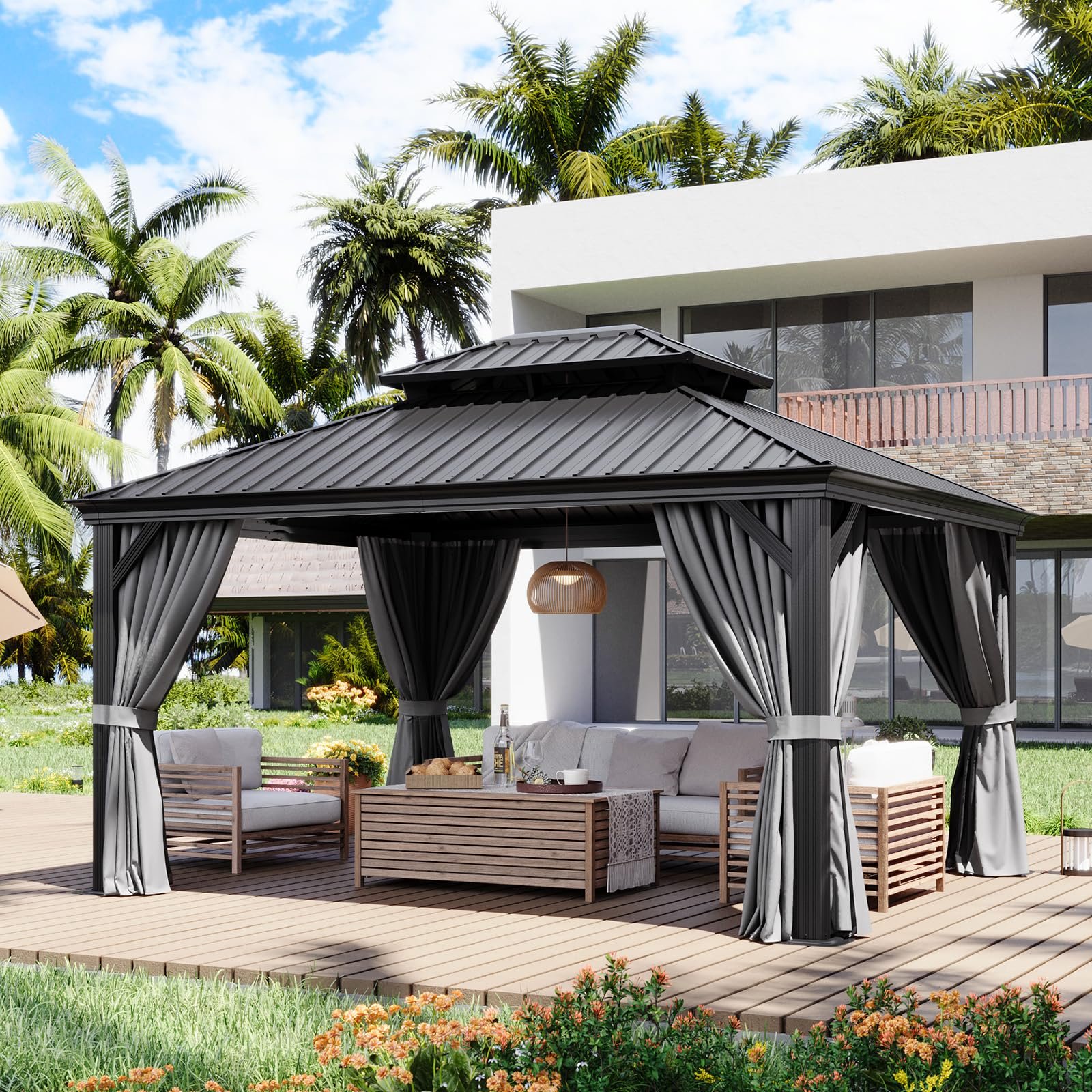
Aoxun 12' x 14' Hardtop Gazebo with Drainage System, Aluminum Frame, Galvanized Steel Double Roof
Built-in drainage system channels rainwater off the roof and away from the footprint
Buy on Amazon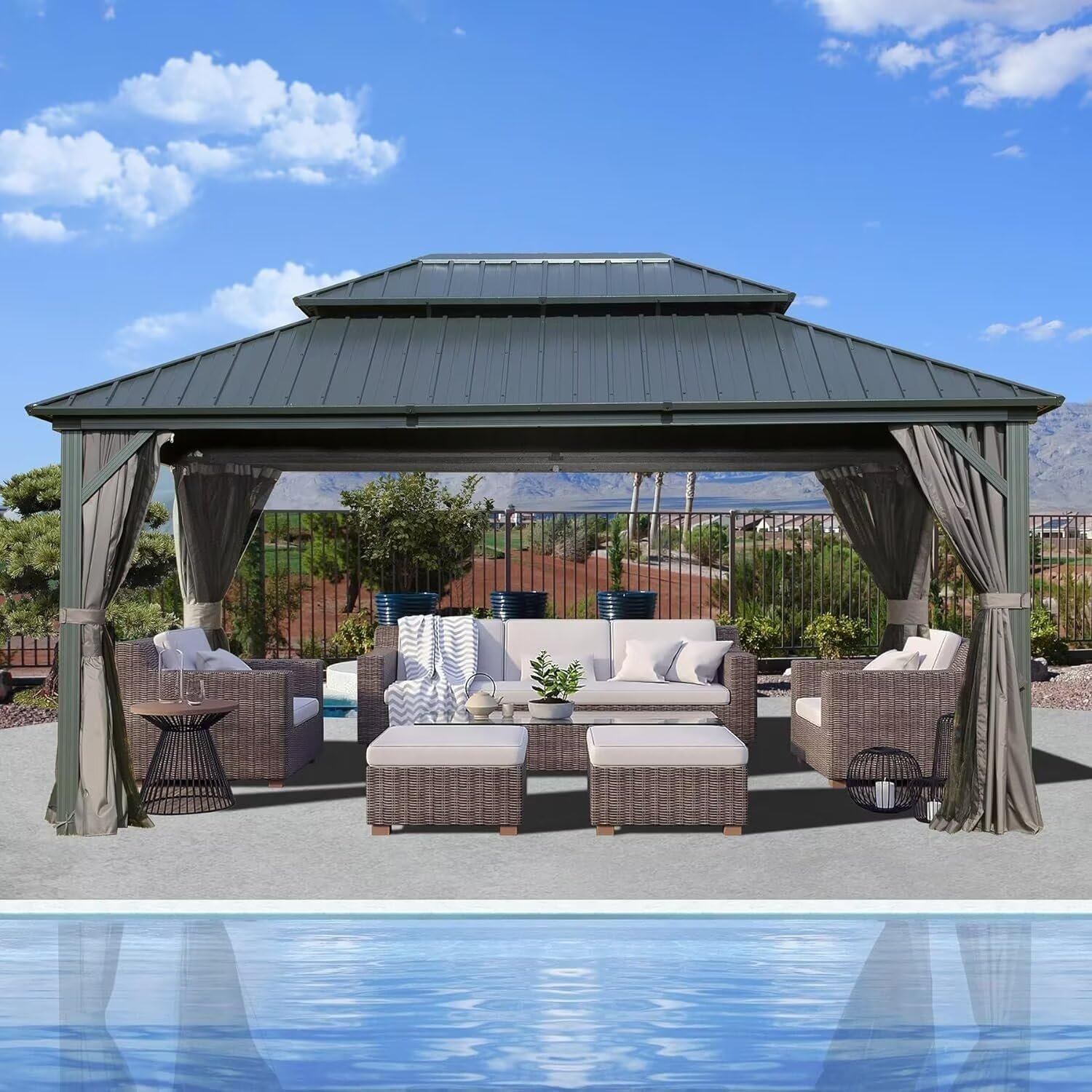
Domi Outdoor Living 12' x 14' Hardtop Gazebo, Galvanized Steel Roof with Curtains and Netting
Full curtains and netting included for privacy and insect protection at no added cost
Buy on Amazon
Palram Canopia Palram Martinique 10 Ft. x 12 Ft. Hardtop Gazebo with Polycarbonate Roof
Twin-wall polycarbonate roof panels block 99.9% UV while diffusing light , no harsh glare
Buy on Amazon| Product | Price Range | Top Strength | Key Weakness | Buy |
|---|---|---|---|---|
| Aoxun 12' x 14' Hardtop Gazebo with Drainage System, Aluminum Frame, Galvanized Steel Double Roof best overall | $$$ | Built-in drainage system channels rainwater off the roof and away from the footprint | Larger 12x14 footprint requires a well-prepared level base before assembly | Buy on Amazon |
| Domi Outdoor Living 12' x 14' Hardtop Gazebo, Galvanized Steel Roof with Curtains and Netting also consider | $$ | Full curtains and netting included for privacy and insect protection at no added cost | Less premium build quality than higher-end aluminum-frame alternatives | Buy on Amazon |
| Palram Canopia Palram Martinique 10 Ft. x 12 Ft. Hardtop Gazebo with Polycarbonate Roof also consider | $$$ | Twin-wall polycarbonate roof panels block 99.9% UV while diffusing light , no harsh glare | Premium price for a permanent structure; installation requires two people and half a day | Buy on Amazon |
| Yardistry 10' x 12' Cedar Wood Pergola Gazebo Kit also consider | $$$ | North American cedar is naturally rot-resistant without chemical treatment | Cedar requires restaining every 2-3 years | Buy on Amazon |
If you’ve ever watched a season’s worth of rainwater sheet off a gazebo canopy and pool directly onto your patio pavers. Or worse, onto your outdoor furniture cushions, you already understand why gutters matter on a garden structure. The phrase “gazebo with gutters” sounds like a minor upgrade, but on a permanent outdoor structure, channelled drainage is the difference between a space you actually use in variable weather and one you abandon from April through October. This guide covers four structures worth considering, across two categories. Hardtop gazebos (which can accommodate gutters because they have rigid roof panels) and storage sheds (which handle drainage differently but belong in the same buying conversation for anyone planning a functional outdoor space). All four are available now, all have been assessed against the same core questions. Will it hold up to the weather? What does it actually cost to own, not just to buy? And is the assembly something a capable adult can manage without hiring a contractor? For broader context on how these structures fit into a working property, the Greenhouses, Sheds & Gazebos hub is where I keep the related guides.
What to Look For in a Gazebo with Gutters
Roof Material Determines Everything
Fabric canopies and gutters are mostly incompatible in practice. A canvas or polyester canopy sags, pools, tears, and fades. By year three, many of them look like a collapsed tent. Rigid roof panels, polycarbonate, powder-coated steel, or aluminum, are what make integrated or add-on gutter systems viable, because the panel edges can be profiled to direct water into a channel rather than spilling it in sheets. Twin-wall polycarbonate is my preference for garden gazebos specifically because it diffuses light rather than blocking it. You get shade without sitting in shadow, and the material has enough UV-blocking capacity (99.9% in quality panels) that it won’t bleach or crack the way cheaper clear plastic does after two seasons of sun.
Frame Material and Finish
Powder-coated aluminium is the low-maintenance standard. It won’t rust, it won’t rot, and unlike painted steel it doesn’t require periodic touch-up when the surface chips. If you’re buying a structure that’s meant to be permanent, meaning you’re anchoring it to a pad and expecting it to outlast a decade of Connecticut winters or similar, aluminum frame with polycarbonate roof is the combination to prioritise.
Cedar is a legitimate alternative if aesthetics matter more than maintenance simplicity. It’s naturally rot-resistant without chemical treatment, which I appreciate, though it does require restaining every two to three years. If that’s a trade-off you’re comfortable making, fine. If your current list of annual property maintenance tasks is already longer than your arm, be honest with yourself about adding another one.
Installation Footprint and Anchoring
A 10x12 structure covers 120 square feet of ground. That sounds obvious, but the footprint you need to prepare, a level, compacted base, ideally concrete or pavers, is slightly larger once you account for post placement. Budget a half-day for site prep before you even open the box. For anything in the 10x12 range, plan on two people for assembly. This isn’t a suggestion, it’s a structural reality. A willing second person is also helpful!
What Gutters Actually Do (and Don’t Do)
Integrated gutters on a rigid-roof gazebo channel water off the panels and away from the structure’s footprint. What they don’t do is protect the open sides of the structure from wind-driven rain. Most hardtop gazebos are open-air by design with no side walls. If you need a fully enclosed rain shelter, you’re looking at a greenhouse or shed, not a gazebo.
Top Picks
Best Permanent Hardtop Gazebo: Palram Martinique 10 Ft. x 12 Ft. Hardtop Gazebo with Polycarbonate Roof
The Palram Martinique 10 Ft. x 12 Ft. Hardtop Gazebo with Polycarbonate Roof is the structure I’d buy if I were starting from scratch and wanted a single permanent outdoor living space. The twin-wall polycarbonate roof panels block 99.9% UV and diffuse rather than block light, which matters when you’ve sat under a solid metal roof in August. The powder-coated aluminium frame won’t rust, the gutter channels are integrated into the roofline profile, and Palram backs this with a 10-year limited warranty. At 120 square feet of shade coverage, a full outdoor dining set fits comfortably with good clearance to pull chairs out. Two honest caveats though. First, the open-air design means the sides offer no wind or rain protection. In a hard driving rain, you’re going to get wet. Second, installation takes two people and a solid half-day. The instructions are functional but assume some assembly competence. Don’t attempt it solo with the belief you’ll manage because you won’t. At the point where you’re holding a roof panel and need someone to align the frame simultaneously (I’ve seen this go wrong, and it’s demoralising at the four-hour mark).
Compared to something like the Sunjoy 10x12 steel-roof gazebo, which, the Palram costs more but the polycarbonate roof justifies it. It will have no condensation drip, better light quality underneath, and no rust risk on the roof panels themselves over time. The verdict: For a permanent structure you’re anchoring to a prepared pad, this is the one to go for. The 10-year warranty is also pretty meaningful.
Best Natural Wood Option: Yardistry 10’ x 12’ Cedar Wood Pergola Kit
The Yardistry 10’ x 12’ Cedar Wood Pergola Kit sits in a different category from the Palram. It’s a pergola base, not a closed-roof gazebo, so in its standard configuration it provides shade but not rain coverage. The cedar is North American sourced, pre-cut, pre-drilled, and pre-stained, which reduces assembly time significantly compared to working from raw lumber. The wood is naturally rot-resistant without chemical treatment, which is a genuine advantage for anyone concerned about what’s sitting in their soil or near their planting beds. Where it becomes relevant to a gazebo-with-gutters search? Yardistry sells polycarbonate roof panel add-ons separately (plan for an additional polycarbonate panel purchase) that convert the pergola into a rain-shedding structure with proper drainage off the panels. With those panels fitted, this becomes a legitimate hardtop alternative with considerably more visual warmth than any aluminium kit. The maintenance commitment is unfortunately quite real and non-negotiable: cedar requires restaining every two to three years. If you’re the kind of gardener who approaches maintenance methodically, you’ll factor this in and manage it. If you’re looking for a fit-and-forget structure, my advice would be to buy the Palram.
The verdict: The most visually appealing option in this group, and worth the premium if the aesthetic matters to your outdoor space. Add the polycarbonate roof panels or this is shade only.
Best Mid-Range Steel Shed: Arrow Select 10’ x 8’ Steel Storage Shed, Charcoal
Sheds handle drainage differently from gazebos, the roof pitch directs water off the panels, and gutters can be added as aftermarket accessories. But for anyone planning a combined outdoor living and storage setup, the shed question comes up in the same buying session. The Arrow Select 10’ x 8’ Steel Storage Shed, Charcoal. At 80 square feet, it handles a full complement of lawn and garden equipment, mower, string trimmer, long-handled tools, fertiliser bags. The electro-galvanised steel panels resist rust, the reinforced corners handle wind racking better than standard steel panel sheds, and the padlockable doors are a basic but necessary feature. Two things readers consistently miss: First, the floor kit is sold separately. If you order this without accounting for the floor kit, you’ll be improvising a base. Plan for it upfront would be my advice. Secondly, steel walls condensate in humid summers. A ventilation kit is worth adding, particularly if you’re storing anything that moisture can damage. Assembly is a one-person job technically, but it will take a full day and require some patience at the panel alignment stages. Two people makes it a half-day. The verdict: The practical workhorse option. No rot, no painting, lower upfront cost than wood alternatives. The condensation issue is manageable with ventilation; don’t let it be a reason to overpay elsewhere.
Best Low-Maintenance Resin Shed: Suncast 7x7 Heavy-Duty Sutton Resin Storage Shed
The Suncast 7x7 Heavy-Duty Sutton Resin Storage Shed is a smaller footprint (49 square feet) at a mid-range price The argument for resin over steel or wood is purely about long-term maintenance effort. No painting, no rust prevention, no rot treatment, no staining. The double-wall panel construction is more rigid than single-wall resin sheds, which have a tendency to bow and flex in temperature extremes that are a fact of life in Zone 6. The skylight panel is a practical feature when you’re trying to find something in a dim interior without reaching for your phone.
Compared directly to the Arrow Select, the Arrow has more interior space and heavier-duty panel construction, but it will eventually require rust management, particularly at screw points and panel edges in humid conditions. The Suncast requires nothing beyond an occasional rinse. At this price point, the deciding factor is usually space. 49 square feet for tools and a mower, but not a workshop. Floor is not included, same as the Arrow. A prepared, level base is not optional with any shed in this category. The verdict: The right choice if your maintenance bandwidth is the limiting factor. Not for anyone who needs more than basic storage capacity.
How to Choose Between These Options
If your primary goal is a permanent outdoor living space with weather-managed drainage, the Palram Martinique is the answer. The polycarbonate roof, integrated gutters, and 10-year warranty make it the only structure in this group designed from the ground up for that purpose. If aesthetics and natural materials matter more than maintenance simplicity, the Yardistry cedar kit with polycarbonate panels added gets you there at higher cost and with an ongoing restaining commitment. If storage is the priority and you want to minimise long-term maintenance, the choice between the Arrow Select and the Suncast Sutton comes down to square footage versus material preference. The Arrow gives you more space but the Suncast gives you fewer maintenance obligations. Both require a prepared base and neither includes a floor. One thing worth being clear about, if you’re searching “gazebo with gutters” hoping to find a structure that fully encloses you from rain on all sides, none of these are that. A hardtop gazebo with integrated gutters manages roof drainage and provides overhead coverage. Side protection requires either a greenhouse structure or aftermarket side panels, neither of which are covered here. For anyone building out a complete outdoor property setup, the full range of structure options is covered in the garden structures hub covering Greenhouses, Sheds & Gazebos.
Frequently Asked Questions
Can you add gutters to an existing gazebo?
On a rigid hardtop gazebo with polycarbonate or metal roof panels, yes. Aftermarket aluminium gutter kits can be attached to the panel edges with appropriate brackets. On a fabric canopy gazebo, gutters aren’t a practical option because the canopy lacks a fixed edge profile. If you’re planning to add gutters, confirm your gazebo’s roof panel edge design before purchasing a kit.
What’s the difference between a gazebo and a pergola for rain coverage?
A gazebo typically has a solid or semi-solid roof that sheds rain. A pergola has an open lattice or slatted roof that provides partial shade but no rain protection in its base form. The Yardistry cedar kit in this guide is a pergola that becomes rain-shedding only with the polycarbonate panel add-on. If rain coverage matters, confirm you’re buying a closed-roof structure or planning the add-on purchase from the outset.
How long does a polycarbonate roof last on an outdoor gazebo?
Quality twin-wall polycarbonate (10mm or thicker, with UV-resistant coating on both sides) typically lasts 10 to 15 years before noticeable yellowing or brittleness develops. Cheap single-wall polycarbonate can degrade visibly in more like three to five years. The Palram Martinique uses coated twin-wall panels and carries a 10-year limited warranty, which is a reasonable indicator of the manufacturer’s confidence in the material’s lifespan.
Do I need a concrete base for a 10x12 gazebo?
A concrete pad is not strictly required, but a level, compacted, stable base is. Pavers, compacted gravel on a weed barrier, or a concrete pad all work. What doesn’t work is installing directly onto soft ground, grass, or a surface that will shift seasonally. In freeze-thaw conditions specifically, ground movement will eventually rack the frame if the base isn’t stable. Budget site prep time before the structure arrives and your life will be easier.
Is a 10x12 gazebo large enough for outdoor dining?
For a standard rectangular dining table seating six, a 10x12 footprint is workable but not generous. A round table seating four to six fits more comfortably. The usable interior of the Palram Martinique at 120 square feet accommodates a full outdoor dining set if you’re not also trying to fit lounge seating. If you want both dining and lounging areas under one roof, consider a 12x14 or larger structure.
Frequently Asked Questions
Can any gazebo have gutters added to it, or do some styles not work?
Gutters require a rigid roof with defined panel edges to channel water effectively. Hardtop gazebos with polycarbonate or steel panels are compatible with integrated or add-on gutter systems. Fabric canopy gazebos are generally incompatible because the soft canopy sags and pools rather than directing water into a channel.
What problem do gazebo gutters solve that a standard gazebo does not?
Without gutters, rainwater sheets off the roof edge in a curtain directly onto the perimeter of the patio, soaking anyone seated near the edge and pooling on pavers or furniture. A built-in drainage system channels that water away from the footprint, keeping the seated area usable during and after rain.
Are gazebo gutters the same as house gutters and can I connect them to a downspout?
Gazebo drainage systems are typically integrated channels that route water to the corner posts, which can often be connected to standard downspouts and redirected away from the patio. Some buyers connect them to a rain barrel for collection. Check whether the specific model includes corner post drainage channels before purchasing.
What is the best hardtop material for a gazebo that will stay out in rain year-round?
Twin-wall polycarbonate and galvanized steel panels are both suitable for year-round rain exposure. Polycarbonate diffuses light and is lighter, while steel panels are heavier and better at handling snow loads. Both significantly outlast fabric canopies, which typically need replacement every 3–4 years.
Do gazebos with gutters require professional installation?
Most hardtop gazebos with drainage systems are designed for two-person DIY assembly, typically taking half a day to a full day. However, you must prepare a level base first, and anchoring to a concrete pad or deck requires appropriate hardware. Hiring a contractor is advisable if you are not comfortable with structural assembly.
Where to Buy
Aoxun 12' x 14' Hardtop Gazebo with Drainage System, Aluminum Frame, Galvanized Steel Double RoofSee Aoxun 12' x 14' Hardtop Gazebo with D… on Amazon