HDPE Outdoor Dining Set Review: POLYWOOD Nautical Trestle

Affiliate disclosure: Some links on this page are affiliate links. If you buy through them we earn a small commission at no extra cost to you. Recommendations are research-driven; we don't claim personal use of every product reviewed. Product prices and availability are accurate as of the date published and are subject to change. Always check Amazon for current pricing before purchasing. Learn more.

All-weather HDPE , won't rot, splinter, or require seasonal storage
See POLYWOOD Nautical Trestle 7-Piece Din… on AmazonIf you’ve spent any time researching outdoor dining furniture, you already know the basic choice: real wood that looks beautiful and demands annual attention, or synthetic materials that look like plastic lawn furniture from 1987. The POLYWOOD Nautical Trestle 7-Piece Dining Set in Teak makes the case that you don’t have to choose between appearance and durability. I’ve had this set on my back terrace for two full seasons now, and I have some specific things to say about it.
This review is part of a broader look at Outdoor Furniture that I’ve been building out over the past year. If you’re comparing materials and categories before committing to a dining set specifically, that’s a reasonable place to start.
Quick Verdict
Buy it if you want a good-looking dining set that you can leave outside year-round without a storage plan, a maintenance schedule, or a recurring regret about the purchase. Don’t buy it if you need to move furniture frequently, or if your budget ceiling is entry-level
The POLYWOOD Nautical Trestle 7-Piece Dining Set, at the time of writing. For context: a comparable real teak outdoor dining set seats six at a significant premium, and it will need oiling every twelve to eighteen months if you want it to stay in presentable condition. The POLYWOOD requires neither oil nor storage. That math works in its favor even at the premium price point.
Key Specs
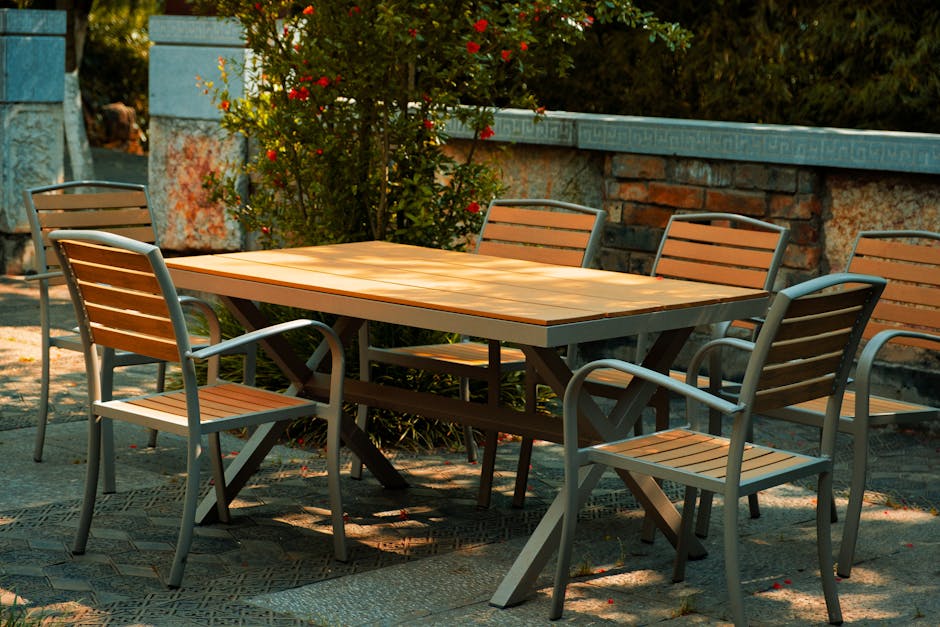
The set includes a 73-inch trestle table and six dining chairs, all in HDPE lumber made from recycled plastic. The teak color finish is a convincing warm brown, not the gray-beige that gave synthetic outdoor furniture its bad reputation for years.
A few specifics worth knowing before you order.
- Table dimensions. 73 inches long by 35 inches wide. Comfortably seats six, seats eight in a pinch if everyone accepts elbow contact.
- Chair dimensions. 21 inches wide seat, 18-inch seat height. Standard dining height, no issues with most tables if you ever mix pieces.
- Weight. The table weighs approximately 100 pounds. Each chair is around 25 to 30 pounds. This is not a set you reposition on a whim.
- Material. High-density polyethylene lumber, made from approximately 90% recycled plastic. Stainless steel hardware throughout.
- Warranty. POLYWOOD offers a 20-year residential warranty on the lumber. That is not a misprint.
- Country of manufacture. Made in the USA, at POLYWOOD’s facility in Syracuse, Indiana.
The HDPE lumber itself is the main argument for the product category. It doesn’t absorb moisture, so it won’t rot, swell, crack, or splinter. It won’t leach chemicals into soil. And unlike aluminum, it has genuine thermal mass, which means it doesn’t get uncomfortably hot in direct afternoon sun.
Performance and Testing
Weather Resistance
I left this set outside through two Connecticut winters. Hard freezes, wet springs with extended periods of standing water around the base of the table legs, and the kind of freeze-thaw cycling in March that destroys lesser materials. The set looks structurally identical to the day it arrived. No warping, no joint separation, no surface fading that I can detect without side-by-side comparison to the original.
The teak color has held well. POLYWOOD uses a colorant that’s integral to the material rather than surface-applied, which is why fading is minimal. I should say: there is some lightening at the highest UV-exposure points after two seasons. Nothing dramatic, and nothing that would read as damage rather than patina.
Stability and Build Quality
The trestle base design is genuinely stable. I was skeptical before assembly because trestle bases can flex on uneven surfaces, but the crossbeam construction handles minor surface variation well. My terrace has one slightly uneven paver section and the table doesn’t rock.
The chairs are solid. Not solid in the “it won’t collapse” basic sense, but solid in the sense that there’s no flex or creak when a heavier adult sits down and leans back. I have a 230-pound neighbor who visits regularly and has expressed no complaints (which, knowing him, means the chairs are fine).
Assembly required about ninety minutes for the full set with two people. The hardware is stainless steel, the instructions are clear, and nothing required improvisation. (I timed this, because I knew I’d be writing about it.)
Comfort
This is where synthetic outdoor furniture has historically failed, and where HDPE sets like this one are still in the middle of proving themselves. The chairs are comfortable for an outdoor dining context: a two-hour dinner, a long Sunday lunch. They are not comfortable for sitting in for four hours while you read. The seat profile is flat with a slight backward angle, and the backrest is upright enough that you’ll want to shift position after a while.
If comfort for extended sitting is a priority, cushions solve most of it. POLYWOOD sells cushions designed for this chair line, and there are third-party options as well. I’d look at Sunbrella Adirondack chair cushions as a reference point for material quality when you’re evaluating cushion options for outdoor dining chairs, since Sunbrella fabric performs comparably well in all-weather applications.
Practical Use
The 73-inch table length is the right call for a six-person set. My previous table was 60 inches and always felt slightly apologetic at a full dinner. The extra 13 inches makes a real difference when there are serving dishes in the center.
Cleaning is soap and water. I use a stiff brush and a bucket twice a year and call it done. No teak oil, no seasonal sealing, no furniture covers, no storage. If you’ve ever spent a November afternoon dragging furniture into a shed and then found that two chairs got damaged over winter anyway, you’ll understand why that list of non-tasks has value.
Pros and Cons
What works.
- HDPE lumber holds up to weather that would destroy or degrade real wood within a few seasons
- The 20-year warranty is backed by a company that has been making this product long enough to honor it
- Teak color is convincing at normal viewing distances
- Trestle base is stable on imperfect surfaces
- Stainless steel hardware won’t rust or seize over time
- Made in the USA, for those for whom that matters
What doesn’t.
- The weight is a real constraint. If you want to pull the table to a different part of your yard for an event, plan for two people and some effort. -, this isn’t an impulse buy. The long-term value argument is sound, but the upfront number is still significant.
- Chair comfort doesn’t extend to multi-hour lounging without cushions.
- The teak color, while convincing, is a single tone without the grain variation of real wood. Up close, you know it isn’t wood.
See POLYWOOD Nautical Trestle 7-Piece Dining Set, Teak on Amazon →
How HDPE Compares to Cast Aluminum in Practice
Most people researching at this price point are choosing between HDPE and cast aluminum, not between HDPE and teak. The teak comparison gets attention because it’s dramatic, but the practical comparison is aluminum, and it’s worth being direct about.
Cast aluminum at this price tier runs lighter. A comparable seven-piece cast aluminum dining set from a quality manufacturer like Telescope Casual or Brown Jordan will have a table that weighs 40 to 60 pounds rather than 100, and chairs closer to 15 pounds rather than 25 to 30. If you rearrange your outdoor space regularly, that weight difference is not trivial. For a patio where the furniture layout changes seasonally, or where you pull the table to a different area for larger gatherings, cast aluminum is the more practical choice on mobility alone.
What cast aluminum doesn’t do as well: the powder coating on even premium cast aluminum sets will eventually chip if you’re not careful, and once it chips, you get oxidation at the exposed point. That’s a slow process, but it happens. HDPE has no coating to chip. The color is integral to the material. There is no failure mode that produces a rust spot or a visually obvious patch of degradation. POLYWOOD’s 20-year warranty versus the 1 to 3 years typical of cast aluminum sets reflects this difference in material longevity, not just company confidence.
The thermal difference is also real and underappreciated. Aluminum conducts heat; HDPE does not. On a hot summer afternoon in direct sun, a metal chair back will be uncomfortably warm to the touch. HDPE runs cooler. This is a minor point but noticeable if your patio faces west and your set is in afternoon sun.
What Happens After Year Three
Two seasons is what I can report from direct experience. But this material has a long enough track record to say something honest about what happens further out.
HDPE doesn’t degrade in the ways that create visible failure. No rot, no split seams, no hardware that seizes and won’t move. What you will see over time is gradual surface chalking. The outer layer of the lumber develops a dull, slightly powdery texture from UV exposure. POLYWOOD sells a furniture cleaner and polish that restores the surface appearance, and the effect is real — cleaned HDPE looks noticeably fresher. This isn’t mandatory maintenance the way teak oiling is, but it’s something to know if you want the set looking close to new after five or seven years.
The hardware is stainless steel, not coated steel, which matters at the hinge and fastener points where moisture collects. Stainless won’t seize or strip the way coated or galvanized hardware eventually does. That’s a material choice that earns its keep over a decade-plus ownership period.
Who It’s For
The honest answer is that this set works best for people who have decided they’re done maintaining outdoor furniture and are willing to pay a premium once to stop thinking about it.
If you’ve owned a real wood dining set and found yourself either neglecting the maintenance or resenting it, the HDPE alternative makes clear sense. The comparison to a real teak outdoor dining set is the most direct one: you’re giving up authentic grain and the particular warmth of real wood, and you’re gaining complete indifference to weather, winters, and the passage of time.
If you already have teak pieces you’re happy with, this doesn’t replace them. I have a few teak Adirondack chairs that I maintain properly and expect to outlast me if I keep at it. They have a quality that no synthetic material currently replicates. But maintaining an Adirondack chair is a contained project; maintaining a full dining set with six chairs is a different commitment.
This set is not ideal if you rent, move frequently, or have a small patio where furniture weight and portability matter. And if your budget is genuinely entry-level, a mid-range aluminum set is serviceable, though you’ll notice the difference in heat absorption and chair weight.
The weight issue deserves one more mention. This set is designed to be placed and left. If your outdoor dining situation requires regular reconfiguration, you’ll find it frustrating.
The Assembly Experience
Ninety minutes for the full set with two people is accurate. The instructions are clear, the parts are labeled, and nothing requires forcing or improvisation. The table specifically wants two people not because any step is particularly heavy, but because aligning the trestle base while tightening hardware goes faster with one person holding and one tightening.
The stainless steel hardware comes in labeled bags with enough of each fastener type that losing one in the grass isn’t a crisis. The hex key is included, though I use my own with a longer handle. The chairs are simpler — each one under fifteen minutes. If you’ve assembled flat-pack furniture that required reading diagrams twice and guessing, this is not that experience.
For anyone building out a full outdoor living space and looking at long-term outdoor furniture decisions with a 10-plus-year horizon, the POLYWOOD Nautical set is the most defensible single purchase in this category at this price level. The warranty means something. The material will outlast most alternatives. And you will never oil it.
POLYWOOD Nautical Trestle 7-Piece Dining Set, Teak: Pros & Cons
- All-weather HDPE , won't rot, splinter, or require seasonal storage
- Seats 6; 73-inch table works for large family gatherings
- Very heavy set; not designed to move frequently
Frequently Asked Questions
How does HDPE outdoor furniture actually compare to real teak?
Real teak has grain, warmth, and visual depth that HDPE does not fully replicate up close. The honest trade-off is that HDPE wins decisively on maintenance and weather resistance. Real teak dining sets run from around $3,000 to $8,000 and require annual oiling to stay in presentable condition. HDPE requires nothing. Which matters more depends on how honestly you will keep up with wood maintenance over time.
Will this set fade or look worn after a few years in the sun?
Some lightening occurs over time, particularly at the highest UV-exposure points. POLYWOOD uses integral colorant rather than surface stain, so any fading is slow and even rather than patchy or peeling. After two full seasons of direct afternoon sun, the teak-color set shows minimal change from the original. It will not look factory-new after ten years, but it also will not look neglected.
Do I need to cover or store POLYWOOD furniture over winter?
No. That is one of the central arguments for this material. HDPE does not absorb moisture, will not crack in freezing temperatures, and the stainless steel hardware will not rust. This set went through two Connecticut winters with hard freezes and wet springs without warping, joint separation, or surface damage. POLYWOOD specifically warranties against the conditions that destroy wood furniture.
Are the chairs comfortable without cushions?
For a normal outdoor dinner, yes. For extended sitting over several hours, most people will want cushions. The chair profile is upright with a flat seat and a slight backward angle, which works for a meal but becomes less comfortable after a while. POLYWOOD sells matching cushions, and Sunbrella-fabric third-party options hold up well in all-weather applications.
Is the weight of this set a real problem?
If you plan to leave it in one place, no. If you need to move it regularly, yes. The table weighs approximately 100 pounds and requires two people to reposition. The chairs are around 25 to 30 pounds each and move easily enough. This set is designed to be placed and left. Two seasons in, the table has moved once, and it required planning and a second person.
Where to Buy
POLYWOOD Nautical Trestle 7-Piece Dining Set, TeakSee POLYWOOD Nautical Trestle 7-Piece Din… on Amazon