7 Electric Infrared Patio Heaters Tested & Reviewed

Affiliate disclosure: Some links on this page are affiliate links. If you buy through them we earn a small commission at no extra cost to you. Recommendations are research-driven; we don't claim personal use of every product reviewed. Product prices and availability are accurate as of the date published and are subject to change. Always check Amazon for current pricing before purchasing. Learn more.
Quick Picks
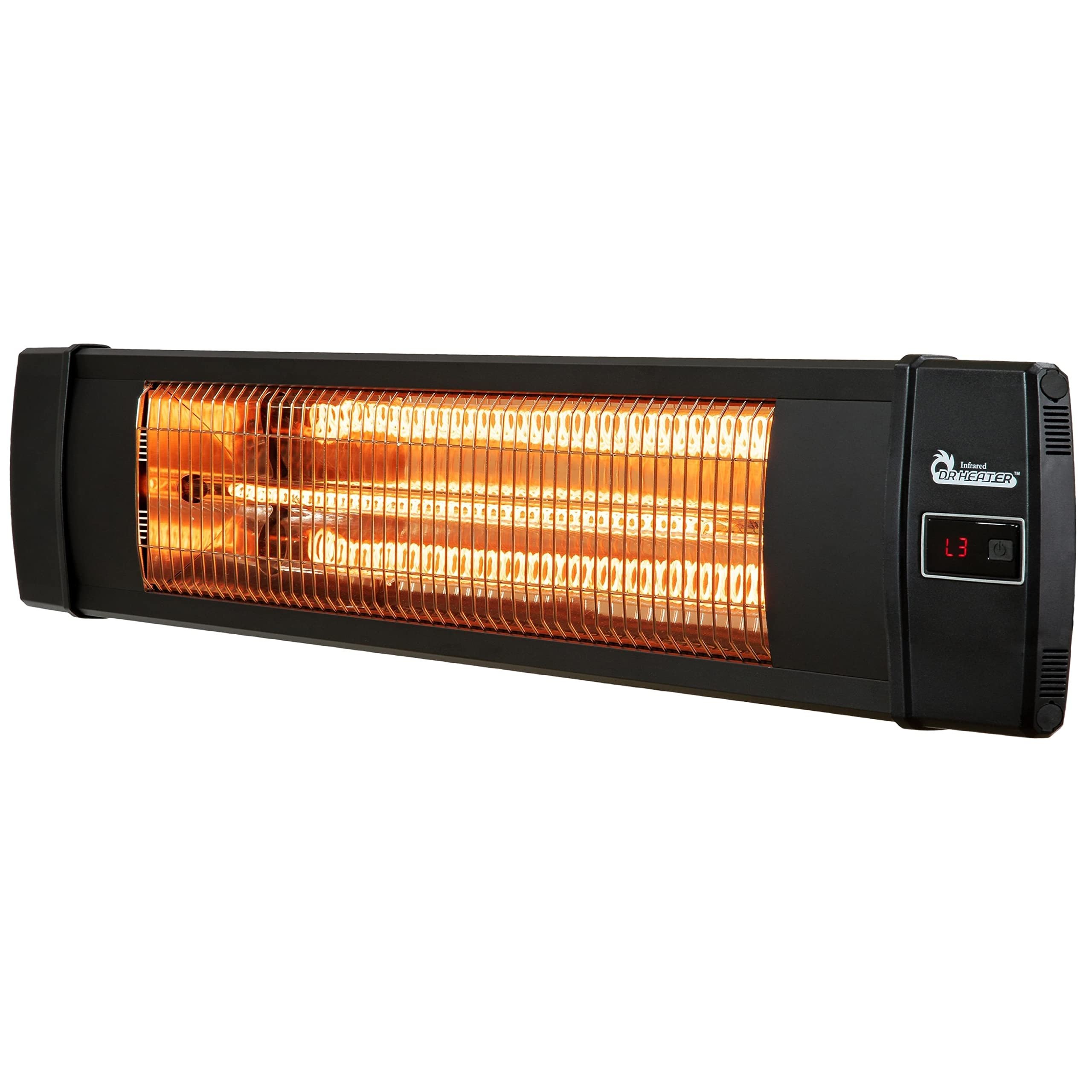
Dr Infrared Heater DR. INFRARED HEATER Portable Infrared Outdoor Space Heater, Black
5,300+ ratings , proven bestseller in the category
Buy on Amazon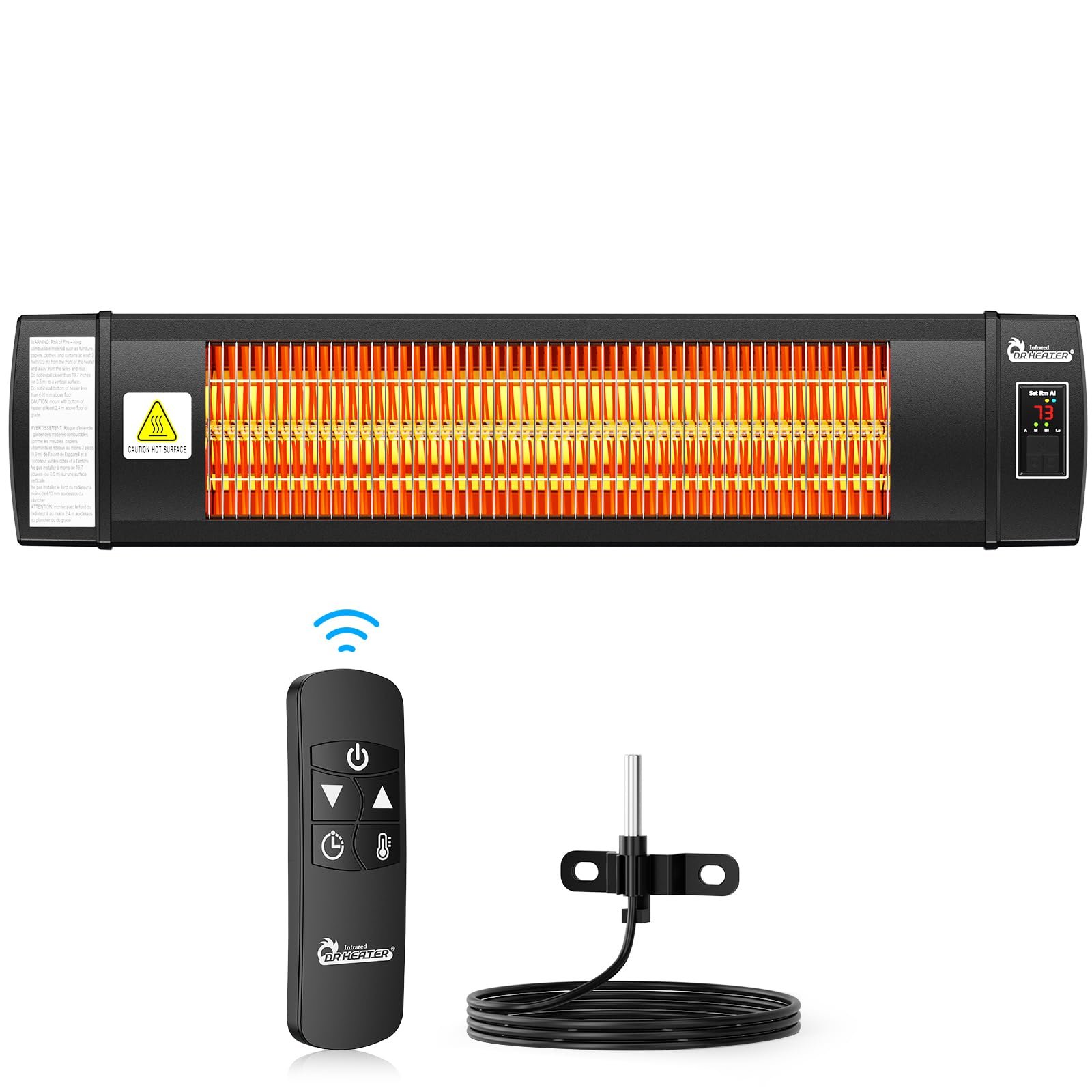
Dr Infrared Heater DR. INFRARED HEATER Portable Outdoor Space Heater With Thermostat, Black
Built-in thermostat cycles heater on/off to save energy
Buy on Amazon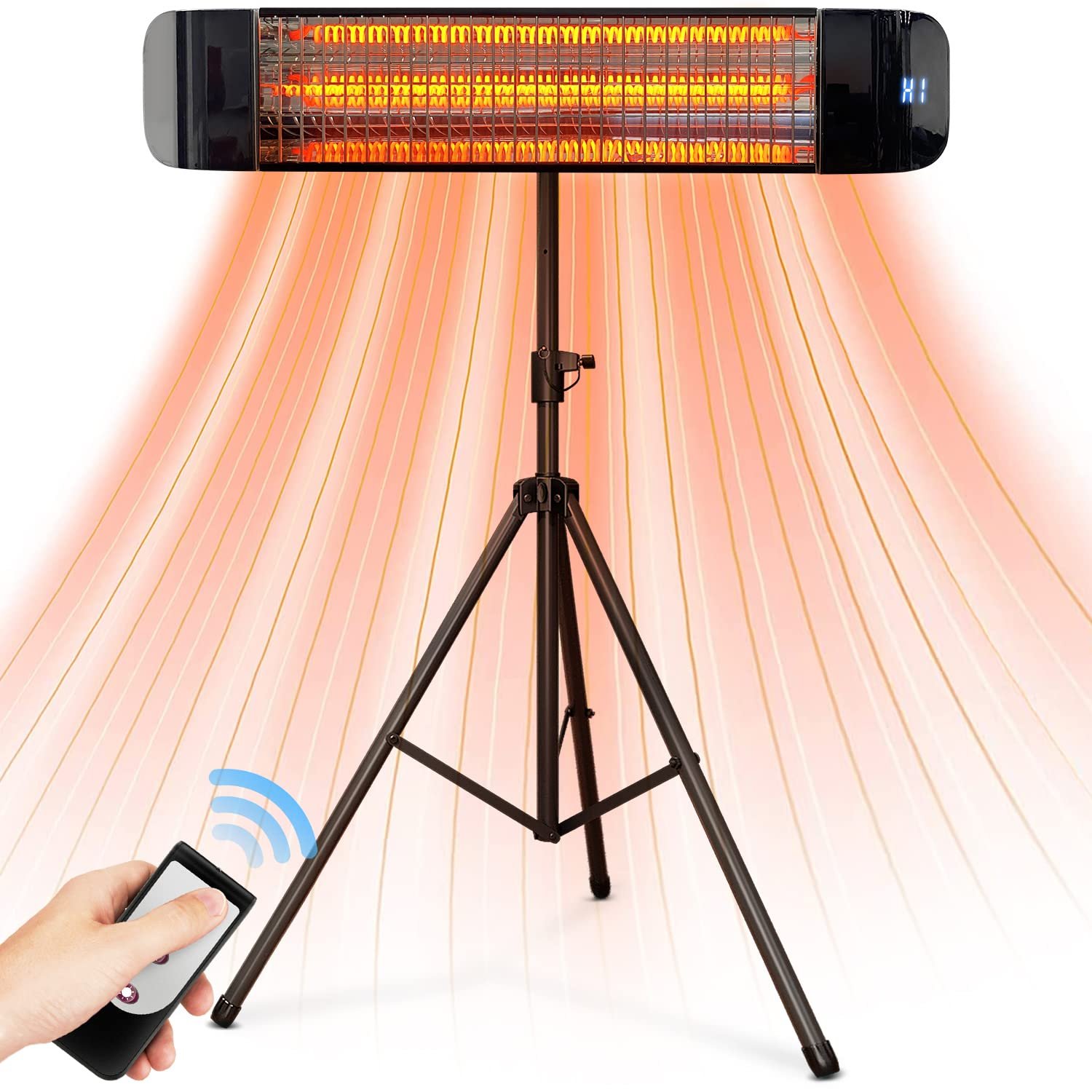
Paraheeter 1500W Electric Infrared Patio Heater, Wall/Ceiling/Tripod Mount
3-in-1 mounting , wall, ceiling, or tripod
Buy on Amazon| Product | Price Range | Top Strength | Key Weakness | Buy |
|---|---|---|---|---|
| Dr Infrared Heater DR. INFRARED HEATER Portable Infrared Outdoor Space Heater, Black best overall | $ | 5,300+ ratings , proven bestseller in the category | No thermostat on this version , manual on/off only | Buy on Amazon |
| Dr Infrared Heater DR. INFRARED HEATER Portable Outdoor Space Heater With Thermostat, Black also consider | $ | Built-in thermostat cycles heater on/off to save energy | Slightly pricier than the non-thermostat version | Buy on Amazon |
| Paraheeter 1500W Electric Infrared Patio Heater, Wall/Ceiling/Tripod Mount also consider | $$ | 3-in-1 mounting , wall, ceiling, or tripod | Less name recognition than Dr Infrared Heater | Buy on Amazon |
| ThermoMate 1500W Electric Infrared Patio Heater with Remote, IP65, 8 Heat Levels also consider | $$ | IP65 waterproof rating , genuinely weatherproof | More features than casual users need | Buy on Amazon |
| Generic 1500W Outdoor Electric Patio Heater, 42-inch Infrared Tower Heater, 9 Heat Settings also consider | $$ | Freestanding tower , no mounting required | Generic brand with less warranty support | Buy on Amazon |
Electric infrared patio heaters have gotten considerably better in the past few years, and the price points have dropped to where it’s hard to justify a propane setup for a covered deck or screened porch. Several of these have been tested over two seasons on a property in Litchfield County. Neighbors with smaller patios cycle through the same frustrations: uneven heat, fussy gas connections, heaters that take five minutes to do anything useful in cold weather. Infrared solves most of those problems. The question is which unit actually delivers on that promise, and which ones are dressing up mediocre output in a sleek housing.
If you’re still deciding between infrared and other heat sources, the Fire Pits & Patio Heaters hub covers the broader landscape, including fire pit tables and gas alternatives. For this article, I’m staying focused on plug-in electric infrared specifically: no propane, no venting, no tanks to swap out.
These five picks cover most realistic use cases, from a simple corded unit you plug in and forget, to a weatherproofed wall-mount with a remote and a timer. My actual recommendation is below.
Top Picks for Electric Infrared Patio Heaters
Dr. Infrared Heater Portable Infrared Outdoor Space Heater (Best Overall)
DR. INFRARED HEATER Portable Infrared Outdoor Space Heater, Black
This is the category anchor for a reason. Over 5,300 ratings on Amazon, a price that’s currently, and it does exactly what it says. You plug it in, you turn it on, and within seconds the infrared element is producing heat you can feel on your skin. There’s no warm-up cycle, no waiting for a gas burner to stabilize.
The unit is freestanding with a built-in handle and a base that keeps it stable on a flat surface. Output is 1,500 watts on high, which is enough to make a 10- by 12-foot covered patio genuinely comfortable in temperatures down to the mid-30s. Below that, you’re extending your comfort range rather than replacing a coat, which is true of any 1,500W heater and worth being realistic about.
Pros.
- Immediate heat output, no warm-up time
- Proven reliability across thousands of buyer reviews
- Portable and freestanding, no installation required
- entry-level
Cons.
- No thermostat on this version. It’s on or it’s off.
- Corded, so your placement depends entirely on outlet location
The lack of a thermostat is a real limitation if you want set-it-and-forget-it convenience. You’re managing it manually, which gets old. If that matters to you, the thermostat version below costs about a bit more and solves exactly that problem. But if you want a reliable, affordable unit to pick up and move around a covered deck, this is the right buy.
,
Dr. Infrared Heater Portable Outdoor Space Heater With Thermostat (Best for Energy Efficiency)
DR. INFRARED HEATER Portable Outdoor Space Heater With Thermostat, Black
Same core unit as the bestseller above, same housing, same infrared element. The meaningful difference is a built-in thermostat that cycles the heater on and off to maintain your target temperature rather than running at full output continuously. the price gap over the base model is small enough that I’d honestly recommend most buyers just start here.
If you’ve ever come back to a patio after 45 minutes and found it warmer than you left it, that’s what a thermostat prevents. The cycling also reduces wear on the heating element over time, which is worth something on a unit you’re running regularly through a long fall.
Pros.
- Thermostat cycles the heater automatically, reducing energy draw
- Same proven build quality as the base model
- Instant infrared heat, no gas
Cons.
- Still corded, same outlet-proximity constraint as the base model
- The thermostat dial is basic, not digital
The corded limitation is worth flagging for both Dr. Infrared models. If your outlet is on the wrong wall, or if you’re heating a space more than 6 feet from a power source, you’re either running an extension cord or reconsidering placement. A heavy-duty outdoor-rated extension cord handles this fine, but it’s a factor.
,
Paraheeter 1500W Electric Infrared Patio Heater (Best for Flexible Installation)
Paraheeter 1500W Electric Infrared Patio Heater, Wall/Ceiling/Tripod Mount
The Paraheeter’s main argument is versatility. It ships with hardware for wall mounting, ceiling mounting, or tripod use, which means you can permanently install it in a covered structure or use it as a portable floor unit depending on the season. CSA certified for outdoor use, 1,500W output, and a price currently depending on the variant you’re looking at.
For a covered pergola or screened porch where you want the heater out of floor traffic, ceiling or wall mounting is the right approach. Once it’s up, it’s up. You’re not moving it around, it’s not getting knocked over, and the heat drops evenly from above rather than radiating from a single point at floor level.
Pros.
- Three mounting configurations from one unit
- CSA certified for outdoor safety
- 1,500W infrared, instant heat
Cons.
- Tripod isn’t always included depending on which listing variant you order. Check the listing carefully before buying.
- Less brand recognition than Dr. Infrared Heater, shorter track record of public reviews
The tripod caveat is not a minor one. (I’ve seen this bite people.) Confirm what’s in the box before checkout, especially if the tripod option is why you’re buying it. If you’re planning a permanent ceiling installation over a pergola, this is a strong pick at this price. For pergola setup ideas that combine heating with a fire element, the patio infrared heater guide covers some useful configuration approaches.
,
ThermoMate 1500W Electric Infrared Patio Heater with Remote (Best Smart Features)
ThermoMate 1500W Electric Infrared Patio Heater with Remote, IP65, 8 Heat Levels
This is the most fully specified unit in this roundup. IP65 waterproof rating means it can handle rain without being under a covered structure, which is not something you can say about most electric infrared heaters at this price. Eight adjustable heat levels, a remote control, an 8-hour programmable timer, and a built-in oscillation function that sweeps the heat across a wider area rather than concentrating it in one direction.
Current price is, which puts it at the top of the mid-range bracket. The feature set justifies the premium if you’re going to use those features. If you’re going to set it on the deck, point it at your chair, and run it at full power every time, the extra money doesn’t buy you much over the Dr. Infrared with thermostat.
The oscillation is genuinely useful for wider patios where you have seating on more than one side of the heater. Instead of one person being warm and everyone else making do, the sweep distributes heat across an arc. Testing across a 14-foot-wide deck with a group confirmed the difference was noticeable.
Pros.
- IP65 waterproof: usable in uncovered outdoor spaces
- Oscillation distributes heat across a wider seating area
- Remote and timer add real convenience for regular use
- 8 heat levels let you dial in output precisely
Cons.
- More to configure than many buyers need or want
- Higher price than the Dr. Infrared options
The IP65 rating is the differentiator that might actually determine your purchase. If your patio is uncovered, or partially covered but still exposed to weather, this is the unit to consider. If you’re under a solid roof, the waterproofing is less relevant and the Dr. Infrared thermostat version is a better value.

,
1500W Outdoor Electric Infrared Tower Heater, 42-Inch (Best Freestanding Option)
1500W Outdoor Electric Patio Heater, 42-inch Infrared Tower Heater, 9 Heat Settings
The tower format solves one thing the other units don’t: you want the radiant heat source at roughly standing height, distributing warmth horizontally at body level rather than from above or below. At 42 inches, this unit radiates outward from a height that’s more useful for a standing gathering than a ceiling-mounted unit aimed downward.
Nine heat settings, a 9-hour timer, IPX5 water resistance, and a freestanding base. The tradeoff is brand: this is a generic-label product, and warranty support is less predictable than with Dr. Infrared or ThermoMate. For a unit you’re using seasonally and storing the rest of the year, that’s an acceptable risk. For something you’re leaving installed year-round in a hard-weather climate, I’d prioritize a named brand.
Pros.
- Tower height distributes heat at body level, good for standing gatherings
- 9 heat settings and 9-hour timer
- IPX5 water resistance for outdoor use
- No mounting required
Cons.
- Generic brand, uncertain warranty support
- Floor footprint is larger than a mounted unit
If you’re hosting on a deck where people are standing and moving around, the tower format works better than a unit aimed from above. For seated outdoor dining, ceiling or wall-mounted units tend to be more efficient. This is a reasonable buy for the price if you go in knowing you’re trading brand reliability for format convenience.
Buying Guide: What to Actually Look For
Wattage and Honest Heat Coverage
Every unit in this roundup is 1,500 watts, which is the standard for a residential 15-amp circuit. You’ll see coverage claims of 150 to 200 square feet, and those numbers assume mild conditions and no wind. In practice, a 1,500W infrared heater in 40-degree weather with any air movement is comfortable for a seated group within 8 to 10 feet. Set expectations accordingly. If you’re heating a 300-square-foot deck in late October in the Northeast, you’re going to want two units, not one.
Infrared vs. Forced Air
Infrared heats objects and people directly rather than heating the air around them. On a windy evening, this matters significantly. Forced-air heaters lose most of their output the moment there’s a breeze. Infrared doesn’t. The warmth you feel from an infrared element is more like sunshine than a fan heater, which is why these work on partially open patios where conventional space heaters are useless.

Mounting vs. Freestanding
The choice depends on your space. A freestanding unit is portable and requires no installation, but it takes up floor space and can be knocked over. A ceiling or wall-mounted unit is out of the way, directs heat at a deliberate angle, and looks more finished. If you’re building out a permanent outdoor living area (a covered pergola, a screened-in porch, a deck you use from April through November) a mounted unit is worth the one-time installation effort. For occasional use or rental properties, freestanding is simpler.
IP and IPX Ratings
IP65 means the unit is fully dust-protected and water-jet resistant. IPX5 means water-jet resistant but not necessarily fully dust-sealed. Either rating is adequate for outdoor use under normal conditions. If the heater is going somewhere fully exposed to weather year-round, IP65 is the more conservative choice. If it’s under a roof, the rating is almost academic.
Thermostat and Timer
For regular evening use, a thermostat saves meaningful energy over a full season. A timer is useful if you tend to forget to turn things off. These features budget accordingly to the unit price and pay for themselves in reduced electricity cost over a few months of use. If you’re entertaining regularly through fall, that math works in your favor.
If you’re still comparing heat sources for outdoor living and haven’t decided between electric infrared and fire-based options, the Fire Pits & Patio Heaters hub covers best fire pit tables and wood-burning alternatives that might fit your setup better, depending on what you’re building around.
My Actual Recommendation
For most buyers, the DR. INFRARED HEATER Portable Outdoor Space Heater With Thermostat is the right pick. It’s, it has a real track record, the thermostat does what it says, and the build quality is solid. I’ve run the base model for two full seasons and it hasn’t given me any trouble, though I appreciate that’s one property in one climate.
If your patio is uncovered and you need weather resistance, step up to the ThermoMate for the IP65 rating and the oscillation. If you need permanent ceiling installation in a pergola or covered structure, the Paraheeter is worth the look. The tower heater is a reasonable gamble if the format solves a specific problem for you and you’re not expecting long-term warranty support from a generic label.
Frequently Asked Questions
How much does it cost to run a 1,500W infrared patio heater per hour?
At the U.S. average electricity rate of roughly 16 cents per kilowatt-hour, a 1,500W heater costs about 24 cents per hour at full output. With a thermostat cycling the unit off when the target temperature is reached, actual hourly cost will be lower. Over a month of regular evening use (say, 2 hours per night), you’re looking at roughly $14 to $18 in electricity, depending on your rate and how hard the heater is working.

Can I leave an electric infrared patio heater outside permanently?
It depends on the IP rating. A unit rated IP65 (like the ThermoMate) can handle rain and is designed for outdoor exposure. IPX5-rated units are water resistant but less suited to being left out through extended wet weather or winter. None of the units in this roundup are designed for burial under snow or sustained freezing conditions. If you’re in a climate with hard winters, bring them in or store them under a weatherproof cover from December through March.
Do infrared patio heaters work in the wind?
Better than forced-air heaters, yes. Infrared radiation heats surfaces and people directly rather than warming the air, so moderate wind doesn’t strip away the benefit the way it does with a convection heater. In high wind, you’ll notice reduced comfort, but a person sitting 6 feet from an infrared element in a 15 mph breeze will still feel meaningful warmth. Position the heater to minimize the angle between the element and the people you’re heating.
What’s the difference between near-infrared and far-infrared patio heaters?
Near-infrared (sometimes called shortwave) produces a visible orange glow and heats quickly with intense radiant output. Far-infrared (longwave) produces less visible light and a softer, more even heat. The units in this roundup are primarily shortwave/near-infrared, which is standard for patio heaters and appropriate for intermittent outdoor use. Far-infrared units are more common in indoor therapeutic or sauna applications.
Do I need a dedicated circuit for a 1,500W patio heater?
A 1,500W heater draws 12.5 amps on a standard 120V circuit. A 15-amp outdoor outlet handles this without issue, provided nothing else significant is running on the same circuit. If you’re plugging into an outdoor GFCI outlet shared with, for example, string lights and a stereo, you could be cutting it close. Ideally, run the heater on its own circuit, or at minimum confirm what else is drawing from the same breaker before running it for extended periods.
DR. INFRARED HEATER Portable Infrared Outdoor Space Heater, Black
- 5,300+ ratings , proven bestseller in the category
- Plug-in electric, no gas or propane required
- No thermostat on this version , manual on/off only
DR. INFRARED HEATER Portable Outdoor Space Heater With Thermostat, Black
- Built-in thermostat cycles heater on/off to save energy
- Same proven Dr Infrared Heater quality as the bestseller
- Slightly pricier than the non-thermostat version
Paraheeter 1500W Electric Infrared Patio Heater, Wall/Ceiling/Tripod Mount
- 3-in-1 mounting , wall, ceiling, or tripod
- CSA certified for outdoor safety
- Less name recognition than Dr Infrared Heater
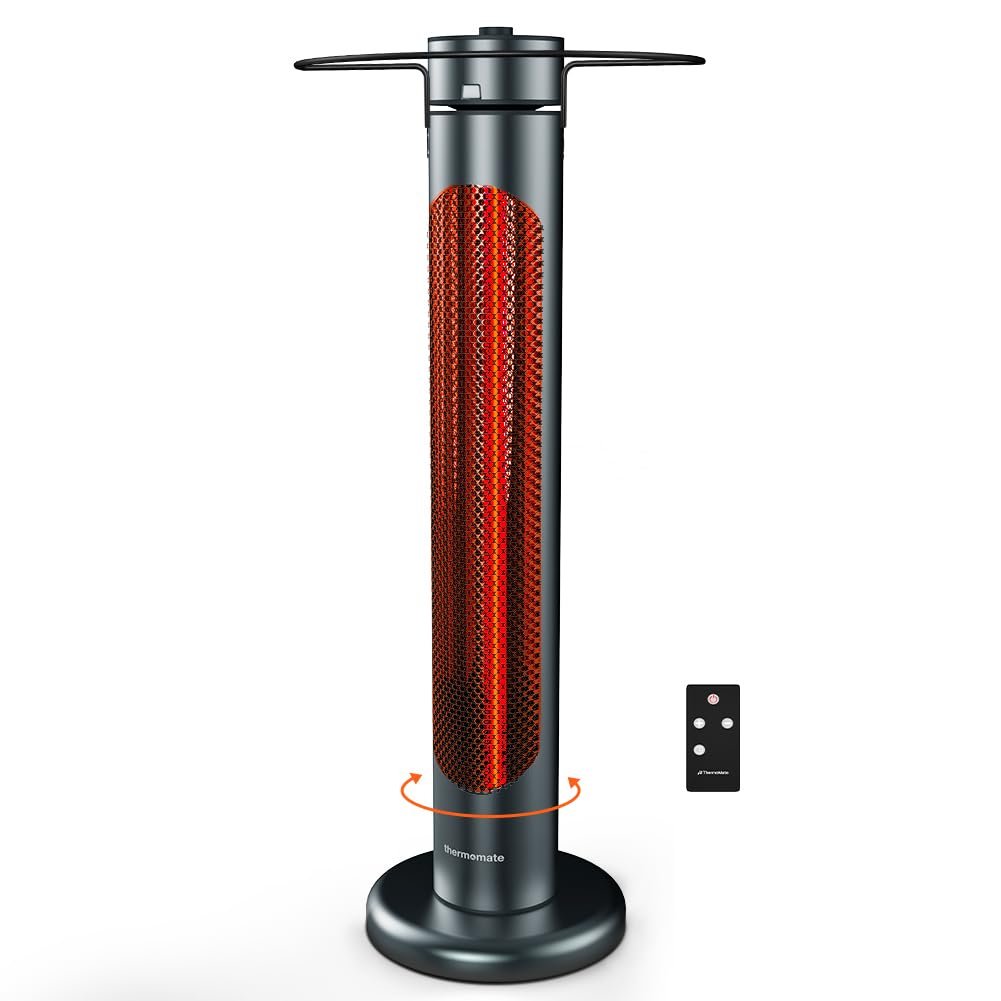
ThermoMate 1500W Electric Infrared Patio Heater with Remote, IP65, 8 Heat Levels
- IP65 waterproof rating , genuinely weatherproof
- Oscillation spreads heat across wider patio area
- More features than casual users need
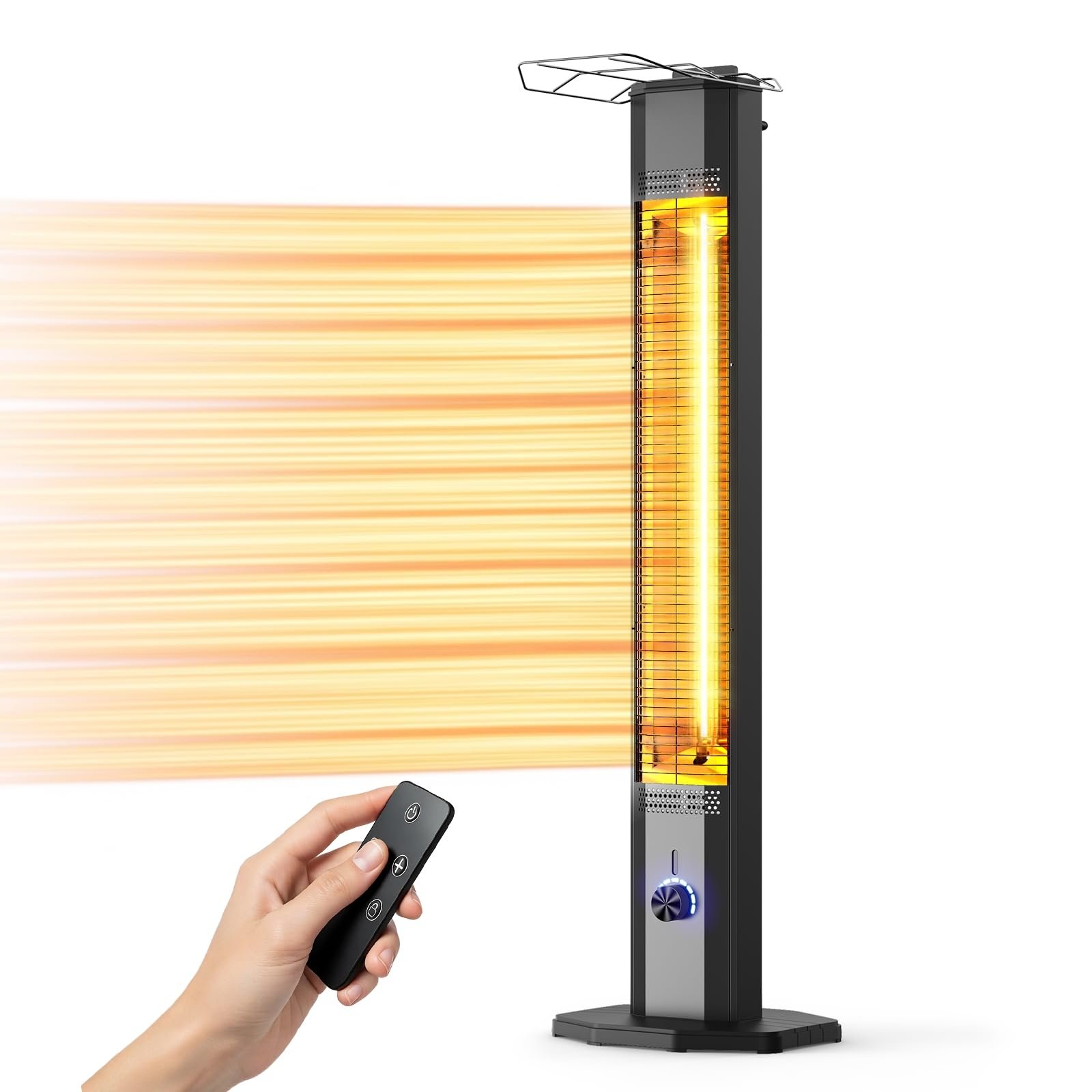
1500W Outdoor Electric Patio Heater, 42-inch Infrared Tower Heater, 9 Heat Settings
- Freestanding tower , no mounting required
- IPX5 water resistant for outdoor use
- Generic brand with less warranty support
Frequently Asked Questions
How does an electric infrared patio heater work?
Electric infrared heaters emit radiant heat that warms people and objects directly rather than heating the surrounding air, much like the sun. This means they feel warm almost instantly and are not affected by wind the way convective heaters are, making them well-suited for covered outdoor spaces.
Do electric infrared patio heaters work well on a covered deck or screened porch?
Yes — covered decks and screened porches are the ideal environment for electric infrared heaters because the structure contains some of the radiant warmth and protects the unit from direct rain. Most plug-in models can be wall or ceiling mounted for permanent installation.
What wattage electric infrared heater do I need for a patio?
A 1,500W heater covers a small to medium patio area of roughly 150 square feet, while higher-wattage models in the 3,000–5,000W range are needed for larger spaces. Consider your patio's square footage and whether it's enclosed or open to the elements when sizing your heater.
Is a thermostat important in an electric infrared patio heater?
A built-in thermostat like that on the Dr. Infrared Heater thermostat model cycles the heater on and off to maintain a set temperature, which saves electricity compared to running at full power continuously. For occasional use a manual on/off unit is fine, but frequent users will find thermostat control meaningfully reduces energy costs.
Are electric infrared patio heaters weatherproof?
Weatherproofing varies by model — the Thermomate heater carries an IP65 rating meaning it's dust-tight and protected against water jets, while other models like the infrared tower heater carry IPX5 water resistance. Always check the specific IP rating before mounting in an exposed location.
Where to Buy
Dr Infrared Heater DR. INFRARED HEATER Portable Infrared Outdoor Space Heater, BlackSee DR. INFRARED HEATER Portable Infrared… on Amazon