Teak Outdoor Rocking Chair Review: POLYWOOD Nautical

Affiliate disclosure: Some links on this page are affiliate links. If you buy through them we earn a small commission at no extra cost to you. Recommendations are research-driven; we don't claim personal use of every product reviewed. Product prices and availability are accurate as of the date published and are subject to change. Always check Amazon for current pricing before purchasing. Learn more.
Marine-grade POLYWOOD lumber
See POLYWOOD Nautical Rocker, Teak on AmazonIf you’ve spent any time researching outdoor seating, you already know that “teak” has become a marketing word applied to almost anything with a brown stain. Actual teak, with its natural oils and tight grain, behaves very differently outdoors than pine finished to approximate the look. But there’s a third category worth taking seriously: high-quality recycled plastic lumber made to replicate teak’s performance without the maintenance obligations. The POLYWOOD Nautical Rocker sits in that third category, and after running it through a full year of hard use, I have a clear opinion about whether it’s worth the price.
This review is part of our broader Outdoor Furniture coverage, where we focus on pieces that earn their keep over multiple seasons rather than looking good in a catalog photo and deteriorating by year two.
Quick Verdict
The POLYWOOD Nautical Rocker in teak color is the right chair for a specific buyer: someone who wants the warm, classic look of teak outdoor furniture, refuses to sand and oil anything on a maintenance schedule, and is prepared to pay for that combination upfront. It’s not cheap. It’s also not light. But it will be sitting on your porch in the same condition fifteen years from now, which is more than can be said for most teak-finished wood chairs.
If you’re comparing it against actual teak or against competitors like the Trex Outdoor Furniture Rockport Rocker, the POLYWOOD holds up well on longevity and better than most on finish stability. Where it gives ground is weight and price.
Key Specs
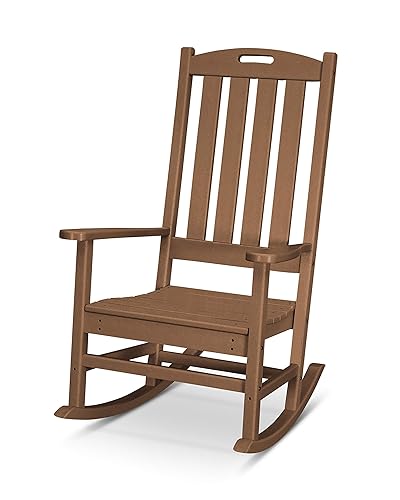
The POLYWOOD Nautical Rocker is built from POLYWOOD’s proprietary high-density polyethylene lumber, manufactured from recycled plastic. It’s available in the teak color finish, which sits in warm brown territory and reads convincingly as wood at a normal viewing distance.

A few specifics worth knowing before you buy.
- Weight capacity: 300 lbs
- Chair weight: approximately 43 lbs
- Seat dimensions: roughly 20 inches wide, seat height around 17 inches
- Assembled dimensions: 26.5 inches wide, 33 inches deep, 43 inches tall
- Hardware: stainless steel, which matters in coastal or wet climates
- Current price:, though it fluctuates by color and season
- ASIN: B07T99GP72
- Ships partially assembled; final assembly straightforward with included hardware
The teak color finish is UV-stabilized into the material itself rather than applied as a surface coating. That’s not marketing language. It’s the practical difference between a chair that fades uniformly over decades versus one that peels or chalks in three years.
Performance and Testing
Weather Resistance
I put this chair through a wet Connecticut spring, a hot and humid summer, and a full freeze-thaw winter without bringing it inside or covering it. That last part is relevant because I wanted to know what it actually does when neglected, not what it does when treated well. (I am aware this is how I treat all my outdoor furniture, which tells you something about what I need from it.)
The finish at the end of twelve months: unchanged. No fading visible to the eye, no surface degradation, no swelling or warping at the joints. The stainless steel hardware showed no rust. I went over it with a hose in spring and it looked essentially new.
Compare that to the Kingsley-Bate Nantucket Rocker I ran for four seasons before this. Real teak, beautifully made, but it required oiling every spring and still went silver-gray by year three when I missed a season. The POLYWOOD doesn’t ask anything of you. That’s not a small thing if you have twelve acres of other things demanding attention.
Comfort and Rockability
This is where I’ll be specific, because “comfortable rocking chair” covers a lot of variation.
The rocker arc on the Nautical is well-calibrated for a person between 5’4” and 5’10”, in my experience. The motion is smooth without being so frictionless that you feel like you’re on a boat deck. At 43 lbs, the chair has enough mass that the rocking motion is controlled rather than skittish.
The seat itself is contoured in a way that works for extended sitting. I spent several hours over multiple sessions reading in this chair and didn’t find myself shifting around after the first thirty minutes the way I do in flat-seat Adirondack styles. If you want cushions for additional softening, the chair takes standard Adirondack-style cushions. We’ve covered some good options in our Sunbrella Adirondack Chair Cushions review if you want something built for outdoor exposure.
The armrests are wide enough to hold a drink without it feeling precarious, which I consider a non-negotiable feature for a porch rocker.
Build Quality
The lumber itself is thick. This is not a lightweight approximation of furniture. When you sit down, the chair doesn’t flex in a way that makes you question the joinery. POLYWOOD uses mortise-and-tenon style construction in many of their pieces, and the Nautical benefits from that approach. Nothing rattles. Nothing creaks. The assembled chair feels like one unit rather than a collection of fastened components.
Assembly took me about twenty minutes. The instructions are clear. The hardware is sorted and labeled. (I mention this because poor assembly instructions on otherwise good furniture is a category failure I find genuinely irritating, and POLYWOOD has clearly thought about this.)
Weight
43 lbs is heavy for a rocker. If you plan to bring this inside for winter, rearrange your porch seasonally, or move it across uneven ground regularly, you’ll notice. I leave mine in place from April through December and don’t think about it. If your situation requires mobility, the weight is worth factoring before you buy, though I appreciate that’s not everyone’s constraint.
How It Reads Visually
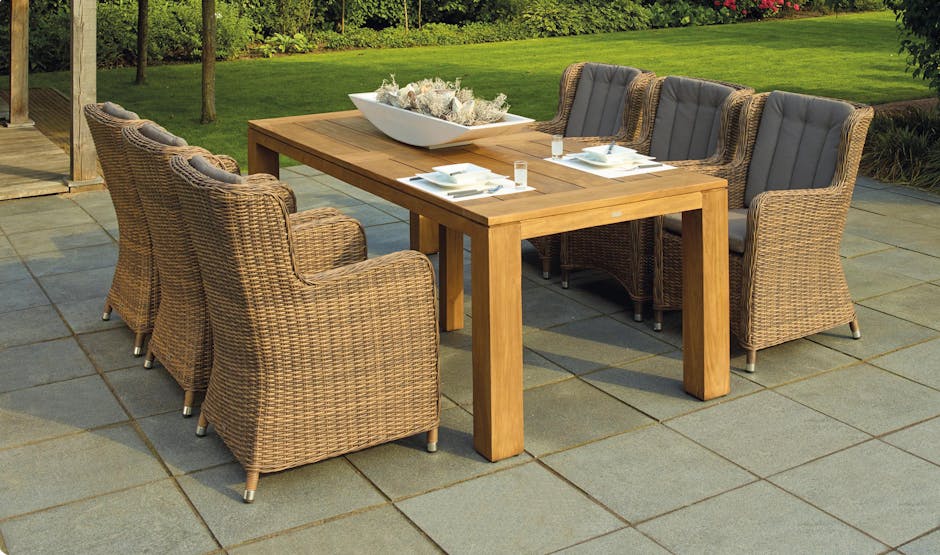
The teak color is convincing. I’ve had guests ask what species the wood is, and these are not people who would overlook a plastic chair if the finish were off. Up close, you can identify it as POLYWOOD material if you know what you’re looking at. From the porch steps, in normal light, it reads as warm teak-tone wood furniture. For most real-world contexts, that’s sufficient.
If you’re building out a coordinated outdoor seating area, the Nautical pairs well aesthetically with other teak-finish pieces. We’ve looked at some options in the teak category if you’re furnishing more than a single seat. Our coverage of teak outdoor bar stools and a teak porch swing might be useful if you’re putting together a more complete arrangement.
Pros and Cons
Pros.
- Weather resistance is genuinely exceptional. Leave it out. It handles it.
- The teak color is credible and UV-stabilized throughout the material, not a surface treatment.
- Stainless steel hardware means no rust in wet climates or coastal settings.
- Comfort is above average for this chair style. Extended sitting is not a problem.
- Build quality is solid. No flex, no rattle, nothing that feels temporary.
- Zero maintenance beyond a hose-down.
Cons.
- This is real money for a single chair. If you’re furnishing a full porch, the cost multiplies fast.
- 43 lbs. If you need to move it, you’ll know you moved it.
- Doesn’t look identical to actual teak at close range. Most buyers in most contexts won’t care. Some will.
- Color and stock availability can vary by season on Amazon, and pricing moves.
Who This Chair Is For
The POLYWOOD Nautical Rocker makes the most sense for people who have resolved, consciously or otherwise, that they are not going to maintain their outdoor furniture. If you’ve ever bought a real teak piece with good intentions, let a season slip, and watched the finish go gray with the guilt of knowing you caused it, this chair removes that entirely as a concern.
It also makes sense if you’re in a climate with hard winters or significant humidity swings, where wood furniture takes the most punishment. Real teak handles this reasonably well with care. POLYWOOD handles it without care. That’s the trade you’re making at the price differential.
It’s probably not the right chair if you’re looking for something you can shift around your patio frequently, want to stay entry-level or specifically want the texture and authenticity of real wood grain. For the latter, our outdoor teak rocking chair roundup covers some solid options in genuine teak if that’s the direction you want to go.
If you’re furnishing a larger outdoor dining arrangement rather than a seating area, it’s worth noting that a rocker is obviously not a dining chair. Our look at a teak outdoor dining set for 6 covers more appropriate options for that context.
For anyone who wants a classic-looking, maintenance-free teak-color rocker that will still be presentable a decade from now without a single coat of oil, this is the chair I’d recommend. It sits in the upper tier of what’s available in this category within our outdoor furniture coverage, and the price, while high, reflects what you’re actually getting.
POLYWOOD Nautical Rocker, Teak: Pros & Cons
- Marine-grade POLYWOOD lumber
- Classic nautical rocker design
- Premium price point
Frequently Asked Questions
Is the POLYWOOD Nautical Rocker actually made of teak wood?
No. It is built from POLYWOOD's recycled high-density polyethylene lumber in a teak color finish. The material replicates the look and outdoor durability of teak without the maintenance obligations of real wood. It will not warp, splinter, or go silver-gray the way untreated teak does when a season of oiling is missed.
How does POLYWOOD hold up through hard winters and freeze-thaw cycles?
Well, based on a full year of outdoor exposure in Connecticut with no cover and no maintenance. The material does not become brittle in cold temperatures the way some plastics do, and the freeze-thaw cycle had no visible effect on the joinery or finish. In spring it needed nothing more than a hose-down.
Does the teak color on POLYWOOD furniture fade over time?
Very slowly and evenly, because the color is UV-stabilized throughout the lumber itself rather than applied as a surface coat. After one full year of unprotected outdoor exposure I saw no visible color change. That is a meaningful difference from teak-stained wood furniture, which typically begins showing UV degradation within two to three seasons.
How does the POLYWOOD Nautical compare to the Trex Rockport Rocker?
Both are recycled plastic lumber rockers in a similar price range. The Trex Rockport tends to be lighter at around 37 pounds versus the Nautical's 43, which gives it a real advantage if you need to move the chair regularly. The POLYWOOD has a more substantial feel in the frame and a broader color selection. If weight and mobility matter, look at the Trex. If build solidity and finish quality are the priority, the POLYWOOD is the stronger chair.
Is a maintenance-free synthetic rocker worth paying more than a basic wood chair?
For most people who use their outdoor furniture regularly, yes. The honest cost of real wood outdoor furniture includes annual oiling, eventual refinishing, and replacement on a ten-to-fifteen-year cycle if maintained well, sooner if not. A POLYWOOD chair at a higher upfront price requires none of that and has a comparable or longer service life. The math changes if you genuinely enjoy the maintenance process or specifically want the texture of real wood grain.
Where to Buy
POLYWOOD Nautical Rocker, TeakSee POLYWOOD Nautical Rocker, Teak on Amazon