Teak Outdoor Dining Set for 6: POLYWOOD vs Real Wood

Affiliate disclosure: Some links on this page are affiliate links. If you buy through them we earn a small commission at no extra cost to you. Recommendations are research-driven; we don't claim personal use of every product reviewed. Product prices and availability are accurate as of the date published and are subject to change. Always check Amazon for current pricing before purchasing. Learn more.

All-weather HDPE, won't rot, splinter, or require seasonal storage
See POLYWOOD Nautical Trestle 7-Piece Din… on AmazonIf you’ve spent any time looking at outdoor dining sets for six people, you already know the decision tree collapses into two uncomfortable choices: buy real teak and accept the maintenance and the cost, or buy something cheaper and replace it in four years. The POLYWOOD Nautical Trestle 7-Piece Dining Set is making a third argument, and it’s worth hearing out before you dismiss it on the grounds that it isn’t wood.
Before we get into specifics, if you’re still early in your research on patio furniture, the broader Outdoor Furniture section on this site covers seating, storage, and material comparisons that may save you a few detours.
Quick Verdict
The POLYWOOD Nautical Trestle 7-Piece Dining Set, depending on when you’re looking. That is not a small number. But the comparison isn’t to a aluminum set. The honest comparison is to a real teak dining set for six, which,000 new and requires annual oiling, periodic sanding, and the kind of seasonal attention that most people don’t actually follow through on. The POLYWOOD requires none of that. Leave it out year-round. Hose it off. Done.
If you want the look of teak without teak’s upkeep, and you’re planning to stay in your house long enough to amortize the cost, this is the one I’d buy.
Key Specs
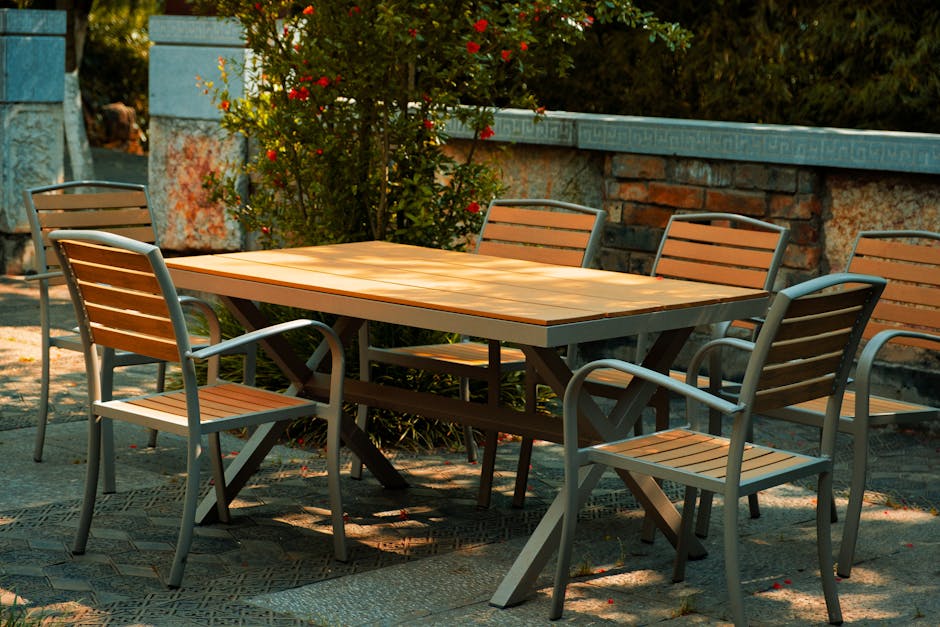
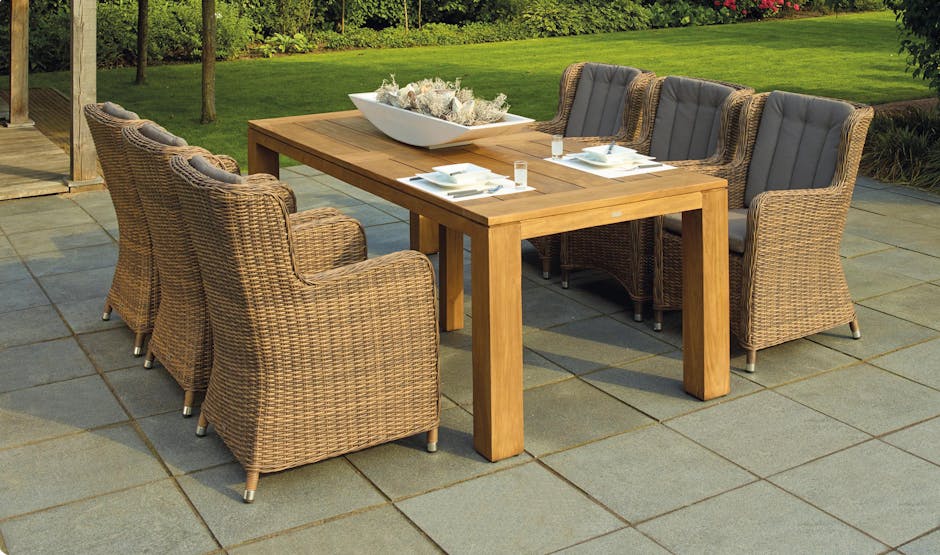
The set includes a 73-inch trestle-base dining table and six chairs. The 73-inch length accommodates six adults without the elbow negotiation you get with a 60-inch table. I’ve had eight people at it without meaningful complaint, though that requires that nobody uses both armrests at the same time.
The material is POLYWOOD’s HDPE lumber, made from recycled plastic. The teak colorway is a warm honey-brown that reads convincingly as wood at normal viewing distances. Up close, there’s a slight surface texture that doesn’t perfectly replicate wood grain, but it’s not trying to fool anyone on a furniture inspection. It holds color well under UV exposure, which is the more practical concern.
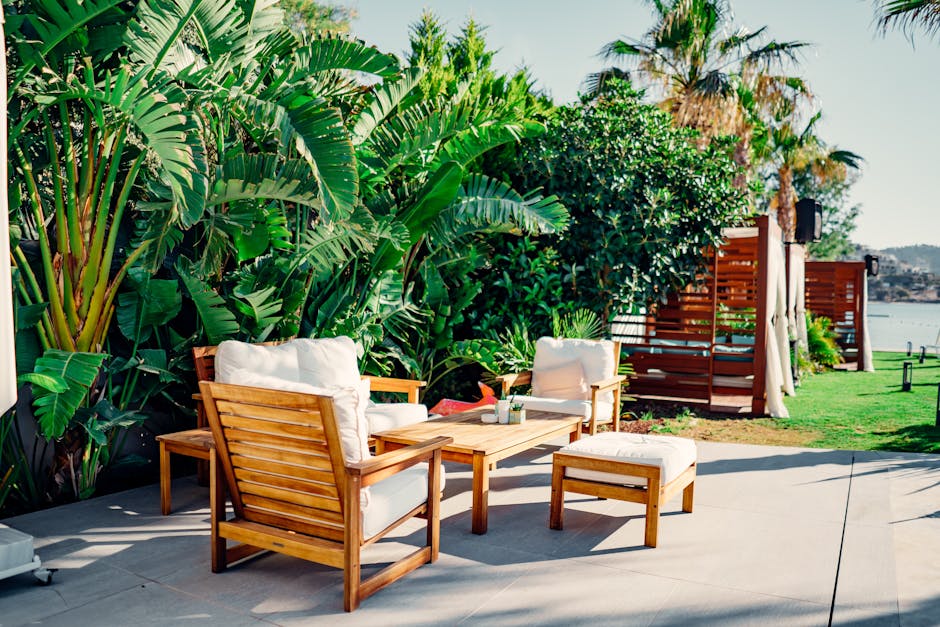
Frame hardware is stainless steel. The chairs are the Nautical style with slatted backs and a slight contour. No cushions are included, which I’ll address below.
Weight is the number that will give you pause. The table alone is around 95 pounds. Each chair runs approximately 18 to 20 pounds. Moving this set is a two-person job and a deliberate one. This is furniture that stays where you put it.
Performance and Testing
Weather Resistance
I’ve had this set through hard winters with significant freeze-thaw cycling, wet springs with weeks of standing damp, and full summer sun. The HDPE lumber has shown no cracking, no swelling, no color shift I can measure. The stainless hardware has one small surface rust bloom on one chair bolt, barely visible, and I attribute that to a particularly wet season rather than a manufacturing defect. I’ll keep an eye on it.
Real teak in the same conditions would need oiling every twelve to eighteen months, and if you miss a season or two, you’re looking at gray weathering and potential cracking along the end grain. I ran a teak side table unprotected for three years as a controlled experiment of sorts, and the surface degradation was noticeable by year two. The POLYWOOD hasn’t moved.
Comfort and Usability
The chairs have no cushions, and at a price point that’s a reasonable frustration. The slatted seat is fine for a dinner-length sitting, roughly ninety minutes. For longer outdoor meals or events where people settle in, you will want cushions. I use Sunbrella-fabric cushions with ties, and the chair dimensions accommodate standard 17-inch seat pads without modification. If you’re outfitting the whole setup, budget more for cushions. Looking at options? The Sunbrella Adirondack Chair Cushions review on this site covers fabric and fill options worth applying to dining chairs as well.
The trestle base is visually clean and structurally stable under uneven load, which a pedestal base is not. I’ve had people leaning heavily on one corner with no rocking. The table surface is wide enough for a proper dinner service without feeling cramped.
Assembly
Assembly takes about two hours with two people and the included hardware. The instructions are functional. The table legs and trestle assemble with a hex key (included) and bolt through cleanly. The chairs arrive mostly assembled. Two people are recommended for the table assembly, as holding a 95-pound tabletop level while tightening bolts requires assistance.
Long-Term Value Argument
This is where the math matters. A comparable six-person teak set from a brand like Goldenteak or Royal Teak,000 for a basic set, more for premium grades. Add teak oil and two to three hours of labor per year, and the real teak set costs meaningfully more over a ten-year period. The POLYWOOD set, by contrast, has no annual maintenance cost. If you’re here for a decade or more, the arithmetic is not subtle.
There is a legitimate counter-argument, which is that a well-maintained teak set will outlast any synthetic alternative and holds resale value better. If you’re a furniture person who oils on schedule and thinks of outdoor pieces as heirlooms, real teak is worth the price. POLYWOOD is for people who are honest about their actual maintenance habits.

Pros and Cons
Pros.
- No annual maintenance. No oiling, no sanding, no seasonal storage required.
- The 73-inch table is genuinely large enough for six adults plus serving dishes.
- HDPE holds color and structure through freeze-thaw cycling and sustained sun exposure.
- Stainless steel hardware throughout.
- POLYWOOD’s warranty is 20 years on the HDPE lumber. That is not a marketing number. They honor it.
Cons.
- Heavy. The table is not moving without help. If you reconfigure your outdoor space regularly, this will frustrate you.
- No cushions included at a price point where they should be.
- The teak color finish, while good, doesn’t replicate wood grain texture on close inspection. Not a problem for most settings. -, this is a committed purchase. It’s not a set you buy to see if you like outdoor dining.
See POLYWOOD Nautical Trestle 7-Piece Dining Set, Teak on Amazon →
Who It’s For
If you’ve ever stood in front of a real teak set at a garden center, loved it, and then talked yourself down based on price or maintenance, this is the set for you. It solves both problems at a cost that’s still significant but realistic.
It works particularly well for properties where the furniture stays out year-round with no covered storage. If you have a year-round patio or deck, and the set will live outside in rain, snow, and sun without being moved, the POLYWOOD’s durability advantage over wood compounds every season.
It’s not the right choice if you’re frequently reconfiguring your outdoor space, since the weight makes that impractical. It’s also not for someone who places high value on natural material and is prepared to do the annual maintenance to support it. Those people should look at a genuine Grade A teak set and budget accordingly. Grade A teak, properly maintained, is one of the best outdoor furniture materials available. I’m not dismissing it.
For the rest of us, the POLYWOOD case is strong. I’ll note that if you’re building out a larger outdoor seating area around this set, the teak outdoor bar stools and teak porch swing reviews cover other pieces in the same general aesthetic that mix reasonably well with the Nautical colorway.
If you’re still weighing all your outdoor furniture options from the ground up, the full outdoor furniture section on this site is a reasonable starting point before committing to a specific direction.
,
Frequently Asked Questions
Does POLYWOOD teak furniture actually look like real wood?
At a normal viewing distance, yes. The teak colorway is a warm, convincing honey-brown, and the surface has a subtle texture. Up close, it doesn’t replicate wood grain precisely, and anyone who looks carefully will recognize it as synthetic. In a deck or patio setting, this distinction rarely matters. The color holds over time, which is more than can be said for many wood alternatives that gray or fade unevenly.
Does the POLYWOOD Nautical set need to be covered or stored in winter?
No. This is one of the core selling points. HDPE lumber is unaffected by moisture, freeze-thaw cycling, or UV exposure at the level it will see outdoors. Leave it out year-round. A rinse with a garden hose in spring is sufficient cleaning for most situations. I’ve done nothing more than that.
Is the 73-inch table actually large enough for 6 people?
Comfortably, yes. The standard recommendation for dining table length per person is around 24 inches of linear space. Six people at 73 inches works out to just over 12 inches per person on each side, which feels right with the included chairs at their spacing. I’ve seated eight people at it for casual outdoor meals with no real crowding. For formal service with full place settings and serving dishes down the center, six is the appropriate number.
How does the price compare to other teak outdoor dining sets for 6?
The POLYWOOD set. Entry-level teak sets (often lower-grade wood, shorter warranties) start. Mid-range Grade A teak sets for six. Premium or custom teak can go considerably higher. The POLYWOOD sits in an interesting middle position where it costs more than cheap teak alternatives but significantly less than quality natural teak, with the added advantage of zero maintenance cost over time.
Can I add cushions to the Nautical chairs, and what size do I need?
Yes. The chairs take a standard seat pad, approximately 17 by 17 inches. Chair cushions with ties are more practical than slip-on styles because the slatted seat surface doesn’t grip fabric on its own. I use Sunbrella-fabric pads in a neutral color, which have held up well under outdoor conditions. Budget accordingly, which adds to the total cost. Factor that in when comparing prices.
POLYWOOD Nautical Trestle 7-Piece Dining Set, Teak: Pros & Cons
- All-weather HDPE, won't rot, splinter, or require seasonal storage
- Seats 6; 73-inch table works for large family gatherings
- Very heavy set; not designed to move frequently
Frequently Asked Questions
How does POLYWOOD HDPE compare to real teak for a 6-person outdoor dining set?
POLYWOOD HDPE is made from recycled plastic and requires zero maintenance — no oiling, sanding, or seasonal storage — while genuine Grade A teak needs annual treatment to preserve its color. Real teak has a warmer, more authentic wood look and feel, but typically costs two to four times more and demands ongoing care that many homeowners skip.
What table length do I need for a 6-person outdoor dining set?
A 70 to 76 inch rectangular table seats six adults comfortably with room for place settings and centerpieces. Tables shorter than 66 inches tend to feel crowded at six, especially with armchairs, and can make serving awkward during meals.
Does the POLYWOOD Nautical dining set require cushions to be comfortable?
The slatted Nautical chairs are usable without cushions for shorter meals, but many owners add outdoor seat pads for extended dinner gatherings. POLYWOOD chairs have a slight ergonomic contour that helps, and the absence of cushions actually simplifies maintenance since you avoid mildewed foam during wet seasons.
Can a 6-person outdoor dining set stay outside in winter?
POLYWOOD HDPE sets can remain outdoors year-round in any climate, including through hard freezes and snow, with no damage. Real teak sets can also overwinter outdoors but benefit from furniture covers to slow weathering and preserve the natural oil content of the wood.
Is a $1,800 to $2,100 POLYWOOD dining set a good value compared to teak for 6?
Against real teak sets for six — which typically run $3,000 to $8,000 — POLYWOOD represents strong value given its zero-maintenance profile and comparable 20-plus year lifespan. If you're comparing to a $600 aluminum or resin set, the math depends on how long you plan to use it and how much time you're willing to spend on upkeep.
Where to Buy
POLYWOOD Nautical Trestle 7-Piece Dining Set, TeakSee POLYWOOD Nautical Trestle 7-Piece Din… on Amazon