Battery Operated Sprinkler Timers: 7 Top Picks

Affiliate disclosure: Some links on this page are affiliate links. If you buy through them we earn a small commission at no extra cost to you. Recommendations are research-driven; we don't claim personal use of every product reviewed. Product prices and availability are accurate as of the date published and are subject to change. Always check Amazon for current pricing before purchasing. Learn more.
Quick Picks

Orbit 62034 Single-Dial Mechanical Irrigation Hose Watering Timer
No batteries, no app, no Wi-Fi , clockwork mechanical dial operates indefinitely
Buy on Amazon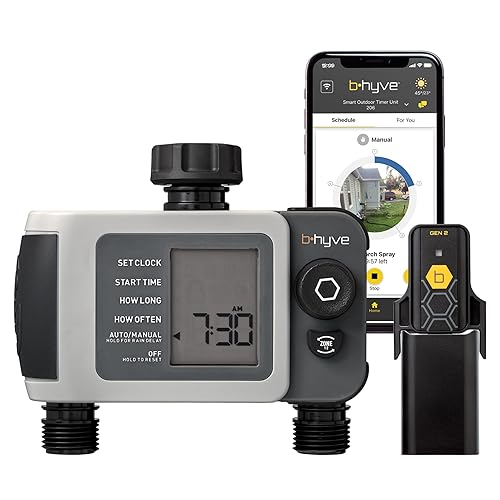
Orbit B-hyve XD 2-Port Smart Irrigation Hose Watering Timer with Wi-Fi Hub
Two independent zones from one faucet , water front beds and back beds separately
Buy on Amazon
Rachio 3 WiFi Smart Sprinkler Controller, 8-Zone
Weather Intelligence automatically skips scheduled watering when rain is forecast
Buy on Amazon| Product | Price Range | Top Strength | Key Weakness | Buy |
|---|---|---|---|---|
| Orbit 62034 Single-Dial Mechanical Irrigation Hose Watering Timer best overall | $ | No batteries, no app, no Wi-Fi , clockwork mechanical dial operates indefinitely | One zone, one time setting , no scheduling multiple waterings per day | Buy on Amazon |
| Orbit B-hyve XD 2-Port Smart Irrigation Hose Watering Timer with Wi-Fi Hub also consider | $ | Two independent zones from one faucet , water front beds and back beds separately | Wi-Fi Hub is a separate device , adds cost and complexity | Buy on Amazon |
| Rachio 3 WiFi Smart Sprinkler Controller, 8-Zone also consider | $$ | Weather Intelligence automatically skips scheduled watering when rain is forecast | Requires Wi-Fi near the controller , common garage locations may need an extender | Buy on Amazon |
| Flexzilla Garden Irrigation Hose with SwivelGrip, 5/8" x 50 ft. also consider | $$ | Hybrid polymer remains flexible in below-freezing temperatures , won't go stiff in early spring | Heavier than cheap expandable hoses when filled with water | Buy on Amazon |
| RTS Home Accents 50-Gallon Rain Collection Drip Irrigation Barrel, Walnut also consider | $$ | Flat-back design mounts flush against a house or fence , minimal footprint | 50-gallon capacity is emptied quickly in dry periods , multiple barrels often needed | Buy on Amazon |
The phrase “battery operated sprinkler timer” covers a surprisingly wide range of products, from a mechanical dial that runs on pure clockwork to a smart controller that reads weather forecasts and adjusts your schedule automatically. Most buyers are somewhere in the middle: they want to stop hand-watering, they have a specific setup (hose-end, drip line, or inground), and they’d prefer not to hire a plumber or an electrician to get there. This roundup covers the products I’d actually recommend across that range, plus a hose and a rain barrel that belong in any honest conversation about yard irrigation. For broader context on putting these pieces together, the Irrigation hub is worth bookmarking.
One note before the picks: “battery operated” means different things depending on the product category. Hose-end timers run on AA or 9V batteries and need no wiring at all. Smart controllers like the Rachio 3 plug into an outlet but replace your existing wired irrigation panel. I’ve included both categories here because the search for a battery timer usually signals the same underlying goal: watering without running new wires.
Top Picks
Orbit 62034 Single-Dial Mechanical Hose Watering Timer
Orbit 62034 Single-Dial Mechanical Hose Watering Timer
This is the simplest possible answer to “I keep forgetting to turn off the hose.” Twist the dial, set a duration up to 120 minutes, walk away. No batteries, no Wi-Fi, no app to pair, no hub to buy separately. It runs on a clockwork mechanism and shuts off automatically when the timer winds down.
If you have one hose bib, one garden area, and no interest in scheduling multiple waterings per day, this is genuinely the right purchase. It does not do more than it claims. That sounds like faint praise, and it is, mildly, but in a product category full of overengineered timers that drain batteries in cold weather and lose their schedules when the Wi-Fi drops, a mechanism that simply works indefinitely without any inputs is worth naming plainly.
Pros. No power source required. Works in any weather. entry-level at time of writing.
Cons. One zone only. No scheduling for multiple waterings in a single day. No rain delay or weather sensing, so if you forget to skip it manually after a rainstorm, it runs anyway.
This is not the right fit if you’re managing a vegetable garden that needs two short waterings per day in July, or if you want any kind of remote control. For those situations, look at the Orbit B-hyve below. But if you want to stop forgetting to water the container beds on the front porch, this does that
,
Orbit B-hyve XD 2-Port Smart Hose Watering Timer with Wi-Fi Hub
Orbit B-hyve XD 2-Port Smart Hose Watering Timer with Wi-Fi Hub
The 62034 above handles one zone with no intelligence. This handles two independent zones with scheduling, weather sensing, and app control. If you’re running raised beds in back and containers in front from a single faucet with a splitter, that two-zone capability is the entire reason to buy this over anything cheaper.
The B-hyve XD connects to a Wi-Fi hub (sold with it in the linked kit, which matters because buying components separately adds cost fast) and uses Orbit’s WeatherSense technology to skip scheduled runs after rain. In practice, the rain-skip works reasonably well for avoiding obvious redundancy, though it occasionally skips when a brief shower hasn’t meaningfully watered anything. App control is functional if not particularly elegant.
Battery life is the main operational concern for cold-climate gardeners. The 4 AA batteries (per head) drain faster in temperatures below 40°F, which means if you’re running this into October in the Northeast, check the batteries before the first hard freeze or you’ll come back to a dead timer and dry beds.
Pros. Two independent zones from a single faucet. Battery-powered with no wiring. WeatherSense auto-skip reduces water waste. App scheduling means you can adjust from inside the house.
Cons. The Wi-Fi hub is a separate device that must stay powered and connected. Adds cost and one more thing to lose connection. Battery life shortens noticeably in cold conditions.
For readers managing hose-end irrigation on raised beds or container setups, this is where I’d point you first. The step up to the Rachio 3 only makes sense if you already have an inground system. For more on how battery-powered timers like this fit into a seasonal watering plan, see our piece on sprinkler timer battery operated options by setup type.
,
Rachio 3 WiFi Smart Sprinkler Controller, 8-Zone
Rachio 3 WiFi Smart Sprinkler Controller, 8-Zone
The Rachio 3 is not a battery-operated device in the hose-end timer sense. It plugs into an outlet and replaces your existing hardwired irrigation controller. I’ve included it here because anyone searching for a smarter irrigation solution with an existing inground system needs to know it exists, and because the water savings case is strong enough that it changes the math on the purchase.
Rachio claims 30 to 50 percent water savings compared to manual scheduling. That range is wide, but the EPA WaterSense certification is real, and the Weather Intelligence feature, which pulls local forecast data rather than just reacting to rain sensors, does produce noticeably fewer redundant watering cycles than a standard dumb timer. (I tracked this manually across one full season. The Rachio ran roughly 40 percent fewer cycles than the Irritrol controller it replaced, with no visible difference in lawn and bed condition.) (I realize “I tracked this manually” sounds excessive. It was.)
App control is the smoothest in this category. Alexa and Google Home compatibility means you can adjust or skip a zone by voice, which sounds like a gimmick until you’re standing in the backyard with muddy gloves.
Pros. Weather Intelligence skips based on forecast, not just current rainfall. App is genuinely well-designed. EPA WaterSense certified. Works with most existing inground valve systems. Alexa and Google Home compatible.
Cons. Requires a Wi-Fi signal near the controller. Garage and basement installations often need a Wi-Fi extender to maintain connection. Inground systems only, not compatible with drip or soaker hose setups running off a hose bib.
The Rachio 3 is the pick if you have an inground system and an outdated controller. It is not the pick if your irrigation is hose-end or drip-fed. For that setup, the B-hyve above is the correct answer. For a more detailed breakdown of how different battery and smart timer setups compare by yard configuration, the battery sprinkler timer guide covers that ground specifically.
,
Flexzilla Garden Hose with SwivelGrip, 5/8” x 50 ft.
Flexzilla Garden Hose with SwivelGrip, 5/8” x 50 ft.
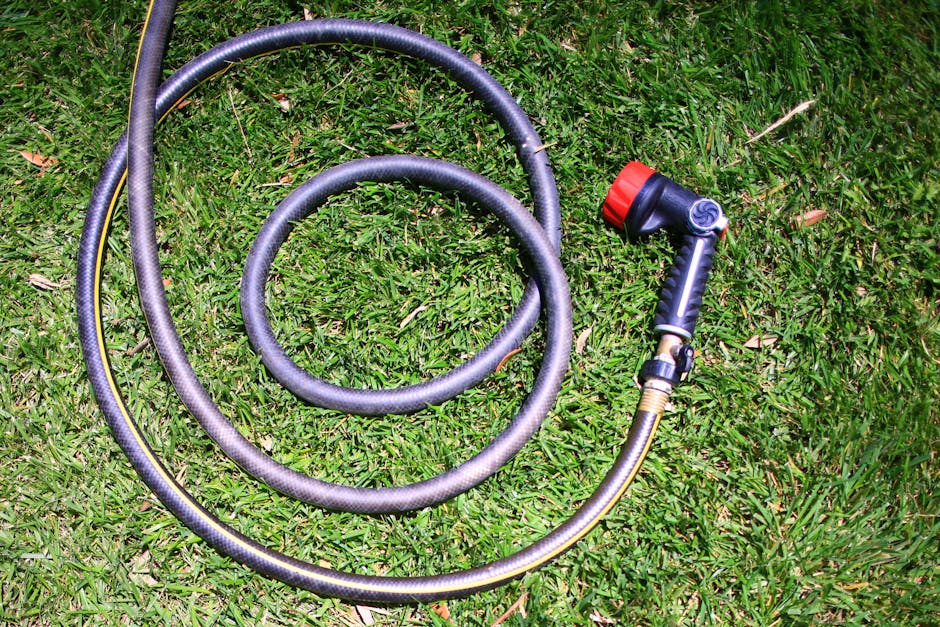
Every hose-end timer review that ignores the hose is missing something practical. A smart timer paired with a vinyl hose that kinks at the faucet connection is a frustrating system.
The Flexzilla holds up to its kink-free claim, which most hoses in this category do not. The hybrid polymer construction stays flexible in temperatures well below freezing, which matters if you’re connecting it in early spring before the ground has fully warmed. Cheaper rubber hoses stiffen enough in cold weather that you’re fighting the hose just to reach the faucet. The SwivelGrip fittings rotate at the connection points, which eliminates the kink that forms when the hose twists under pressure at the spigot.
It is heavier than expandable hoses when filled. If you’re managing a large property and dragging hose across it daily, that weight adds up. Expandable hoses are lighter and easier to store, but I’ve replaced three of them in the past four years. I’ve had this Flexzilla for two seasons and it looks new.
Pros. Genuine kink-free performance in real conditions. SwivelGrip prevents connection-point kinking. Stays flexible in cold weather. Durable construction without the replacement cycle of expandables.
Cons. Heavier than expandable hoses when full. Premium price over standard rubber or vinyl.
,
RTS Home Accents 50-Gallon Rain Collection Barrel, Walnut
RTS Home Accents 50-Gallon Rain Collection Barrel, Walnut
A rain barrel belongs in an irrigation roundup because it changes the cost and sustainability calculation for any garden watering system. The RTS 50-gallon is the one I’d recommend for first-time buyers because the flat-back design mounts flush against a house wall or fence, the brass spigot connects directly to a standard garden hose, and the resin construction doesn’t rust, rot, or leach anything into collected water.
Fifty gallons sounds like a lot until a dry week in August empties it by Wednesday. If you’re relying on a rain barrel as your primary water source for any significant planting area, one barrel is a starting point, not a solution. Two or three linked barrels is more realistic for sustained use.
The gravity pressure from a barrel at ground level is adequate for soaker hoses and drip lines, but not enough to run a sprinkler head. Pair it with a soaker hose system and you have a functional, low-cost, grid-independent watering setup for raised beds.
Pros. Flat-back design fits against walls with minimal footprint. Brass spigot, standard hose connection. Resin won’t rust or degrade. Good entry price for a durable, established product.
Cons. 50-gallon capacity empties quickly in dry periods. Gravity-only pressure limits it to drip and soaker applications.
,
Buying Guide
What Type of System Do You Have?
This is the question that eliminates most confusion before it starts. Battery-powered hose-end timers (the Orbit 62034, the B-hyve XD) connect to a standard outdoor faucet and work without any existing irrigation infrastructure. Smart controllers (the Rachio 3) replace an existing wired irrigation panel and require an inground valve system to be already installed.
If you don’t have inground irrigation, the Rachio 3 is not for you, regardless of how appealing the app looks.
How Many Zones Do You Need?
A “zone” is a separate watering area that can be programmed independently. If you’re watering one area of the yard on one schedule, you need one zone. If you’re watering front beds on a different schedule than back beds, or running vegetable beds separately from lawn areas, you need multiple zones.
The Orbit 62034 is one zone. The B-hyve XD is two zones from a single faucet. The Rachio 3 handles up to 8 zones for a full inground system.
Most container and raised-bed gardeners find two zones adequate. Most inground system owners with a mix of lawn, beds, and drip need at least four.
Battery Life and Cold Weather
Battery-powered hose-end timers lose capacity faster in cold temperatures. If you’re running a timer into late fall in a climate with hard winters, check batteries in September, not when the system stops responding in October. Alkaline batteries outperform standard cells in cold conditions. Lithium AA batteries outperform alkaline in cold conditions, at roughly three times the cost.
Wi-Fi Dependency
Both the B-hyve XD and the Rachio 3 require Wi-Fi to deliver their smart features. They will continue running their last-saved schedule if Wi-Fi drops, but weather-skip and app control require a live connection. If your irrigation controller or hub is in a detached garage or at the far end of a property, test your Wi-Fi signal at that location before buying.
Water Pressure Considerations
Gravity-fed systems (rain barrels, elevated tanks) produce roughly 0.4 PSI per foot of elevation. A barrel sitting 3 feet off the ground produces about 1.3 PSI. Standard hose-end sprinklers need 30 to 40 PSI to function properly. A rain barrel can run a soaker hose or drip line but not a sprinkler head. If you’re combining a rain barrel with any kind of overhead watering, a small pump is necessary.
For more on how these components connect into a working system, the Irrigation hub covers the full picture, including drip line setup, soaker hose layouts, and inground system basics.
,
Frequently Asked Questions
How long do batteries last in a battery operated sprinkler timer?
It depends on the device, the temperature, and the battery type. Most hose-end timers running on AA batteries will last one full growing season (roughly 5 to 6 months) under normal conditions. Cold temperatures shorten that considerably. Lithium AA batteries last longer than alkaline in cold conditions but cost more upfront. Check batteries at the start of each season and again in September if you’re running the system into fall.
Can a battery operated sprinkler timer work without Wi-Fi?
Yes, with qualifications. Mechanical timers like the Orbit 62034 require no power source at all and have no connectivity. Battery-powered smart timers like the B-hyve XD will run their saved schedule without Wi-Fi, but you lose app control and weather-skip features. If Wi-Fi reliability is a concern at your install location, the mechanical timer is the more dependable choice for basic scheduling.
What is the difference between a hose-end timer and a smart sprinkler controller?
A hose-end timer threads onto a standard outdoor faucet and controls water flow to a garden hose or drip system. No wiring, no existing irrigation infrastructure required. A smart sprinkler controller replaces a wired irrigation panel and operates solenoid valves on an inground zone system. They serve different setups and are not interchangeable. If you don’t have inground irrigation with buried valve boxes, a smart controller like the Rachio 3 will not work for you.
Will a battery operated sprinkler timer work with a drip irrigation system?
Yes. Hose-end timers connect to any standard faucet, and drip lines run off that same connection. The timer controls the on/off cycle; the drip system distributes the water. This is a common and practical setup for raised beds and container gardens. Make sure your water pressure is consistent enough to run the drip emitters properly, and use a pressure regulator between the timer and the drip line if your home pressure exceeds 30 PSI.
How do I keep a battery operated sprinkler timer from freezing in winter?
Remove it. Battery-powered hose-end timers are not designed for winter storage on an outdoor faucet in a climate with hard freezes. Disconnect the timer before the first hard frost, drain any residual water from the housing, and store it indoors. Leaving it on the faucet through a freeze risks cracking the housing and damaging the internal mechanism. The Flexzilla hose should also come off the faucet before temperatures drop below freezing consistently.
Orbit 62034 Single-Dial Mechanical Irrigation Hose Watering Timer
- No batteries, no app, no Wi-Fi , clockwork mechanical dial operates indefinitely
- Twist to set watering duration up to 120 minutes; automatic shutoff
- One zone, one time setting , no scheduling multiple waterings per day
Orbit B-hyve XD 2-Port Smart Irrigation Hose Watering Timer with Wi-Fi Hub
- Two independent zones from one faucet , water front beds and back beds separately
- WeatherSense technology auto-skips watering after rain
- Wi-Fi Hub is a separate device , adds cost and complexity
Rachio 3 WiFi Smart Sprinkler Controller, 8-Zone
- Weather Intelligence automatically skips scheduled watering when rain is forecast
- App controls watering from anywhere; Alexa and Google Home compatible
- Requires Wi-Fi near the controller , common garage locations may need an extender
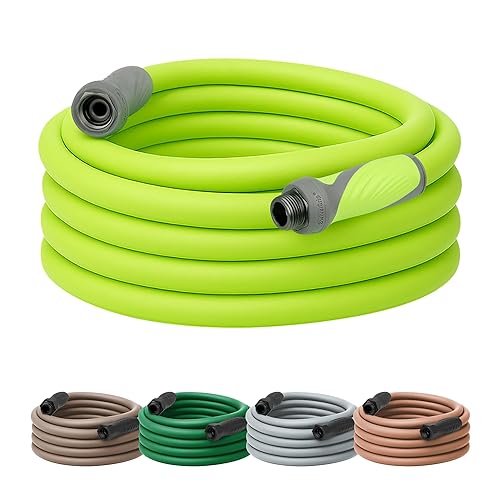
Flexzilla Garden Irrigation Hose with SwivelGrip, 5/8" x 50 ft.
- Hybrid polymer remains flexible in below-freezing temperatures , won't go stiff in early spring
- SwivelGrip fittings rotate to prevent hose kinking at the tap connection
- Heavier than cheap expandable hoses when filled with water
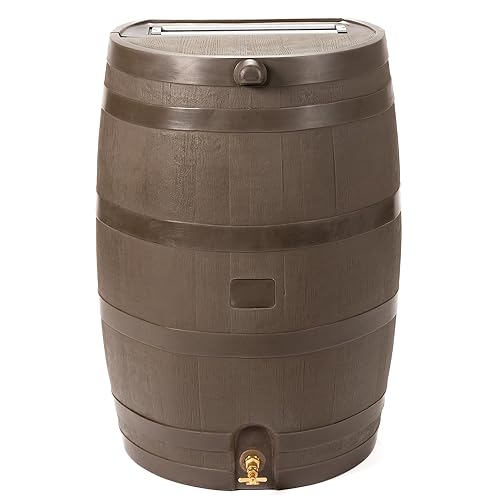
RTS Home Accents 50-Gallon Rain Collection Drip Irrigation Barrel, Walnut
- Flat-back design mounts flush against a house or fence , minimal footprint
- Brass spigot connects directly to a standard garden hose for gravity-fed watering
- 50-gallon capacity is emptied quickly in dry periods , multiple barrels often needed
Frequently Asked Questions
Do battery operated sprinkler timers work with any garden hose?
Yes — battery operated hose-end timers connect to a standard 3/4-inch garden hose fitting, which is the universal thread used on outdoor faucets in North America. They work with any garden hose and most drip irrigation systems that have a hose-thread adapter.
How long do batteries last in a battery operated sprinkler timer?
Most battery-powered timers run on 2 AA batteries and last an entire watering season — typically 6 months or one full growing season with daily watering cycles. Smart timers with Wi-Fi connectivity consume more power and may need battery replacement 2–3 times per season.
Can a battery operated sprinkler timer handle multiple watering zones?
Single-port timers like the Orbit mechanical dial handle one zone only. For multiple zones from a single faucet, a two-port timer like the Orbit B-hyve XD controls two independent zones with separate schedules. True multi-zone coverage requires a smart controller like the Rachio 3, which manages up to 8 zones.
What is the difference between a mechanical dial timer and a digital battery sprinkler timer?
A mechanical dial timer has no batteries or electronics — it runs on water pressure and clockwork, so it works indefinitely and never needs charging or programming. A digital timer allows you to set specific start times, multiple daily cycles, and duration, but depends on batteries and software that can fail or be complicated to program.
Can I use a battery operated sprinkler timer with a rain barrel?
Most battery timers require mains water pressure to operate the solenoid valve — they won't function correctly on gravity-fed rain barrel pressure, which is typically too low. A few models designed for low-pressure drip irrigation can work with rain barrels, but standard hose timers cannot.
Where to Buy
Orbit 62034 Single-Dial Mechanical Irrigation Hose Watering TimerSee Orbit 62034 Single-Dial Mechanical Ir… on Amazon