Ultrasonic Deer Repellers That Actually Work

Affiliate disclosure: Some links on this page are affiliate links. If you buy through them we earn a small commission at no extra cost to you. Recommendations are research-driven; we don't claim personal use of every product reviewed. Product prices and availability are accurate as of the date published and are subject to change. Always check Amazon for current pricing before purchasing. Learn more.
Quick Picks
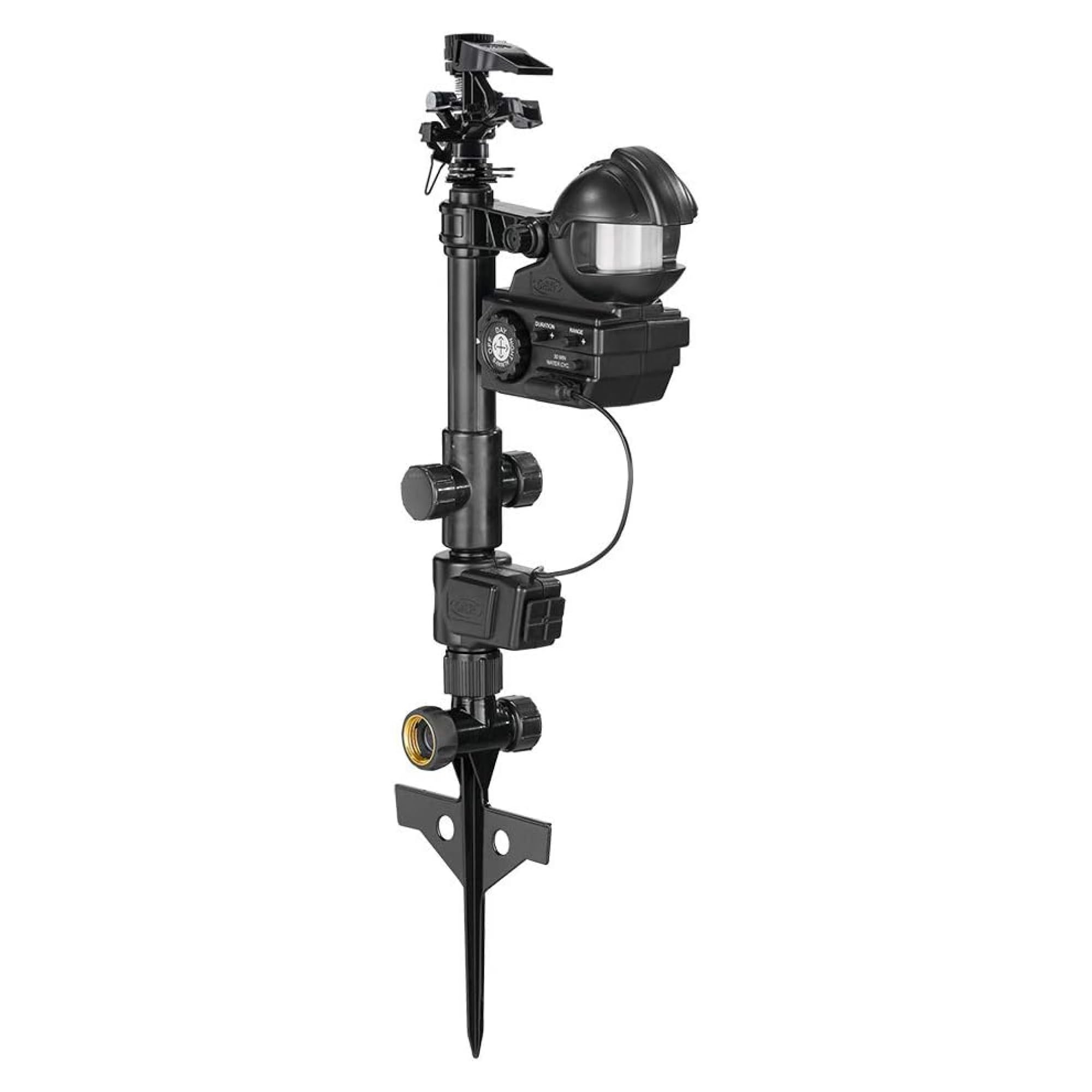
Orbit 62000 Yard Enforcer Motion-Activated Deer Repellent Sprinkler, 2-Pack
Deters deer, rabbits, cats, raccoons, and birds without chemicals or harm
Buy on Amazon
Liquid Fence Deer and Rabbit Yard Repellent Ready-To-Use, 1 Gallon
Ready-to-use formula , no mixing; trigger sprayer applies directly to plants
Buy on Amazon| Product | Price Range | Top Strength | Key Weakness | Buy |
|---|---|---|---|---|
| Orbit 62000 Yard Enforcer Motion-Activated Deer Repellent Sprinkler, 2-Pack best overall | $$ | Deters deer, rabbits, cats, raccoons, and birds without chemicals or harm | Can be triggered by other movement (blowing shrubs, passing people) , positioning matters | Buy on Amazon |
| Liquid Fence Deer and Rabbit Yard Repellent Ready-To-Use, 1 Gallon also consider | $ | Ready-to-use formula , no mixing; trigger sprayer applies directly to plants | Strong sulfur/egg odor during and shortly after application | Buy on Amazon |
If you’ve been searching for the best ultrasonic deer repeller, you’ve probably landed on a category full of plastic stakes with blinking lights that deer learn to ignore within a week. Cheaper models were tested. They go in the trash. What actually works to keep deer and other wildlife out of garden beds involves a different approach entirely, and the two products I’m recommending here are the ones I keep coming back to after years of dealing with a property that borders active deer corridors. Before we get into the picks, if you’re also managing bird feeders and baths alongside a deer problem, the Birds & Wildlife section has broader coverage of both sides of that equation.
The honest answer on ultrasonic repellers specifically: the research behind them is weak. Most peer-reviewed studies on ultrasonic animal deterrents show limited or inconsistent results in field conditions. Deer habituate fast. The devices I’m recommending below don’t rely on sound frequencies you can’t verify are working. One uses water. One uses smell. Both use mechanisms with documented behavioral responses in deer, and I’ve seen results on my own property that back that up.
Top Picks
Orbit 62100 Yard Enforcer Motion-Activated Sprinkler
Orbit 62100 Yard Enforcer Motion-Activated Sprinkler with Day and Night Detection
This is the product I recommend first to anyone with a defined garden bed they need to protect. The Yard Enforcer is a motion-activated sprinkler that connects to a standard garden hose and delivers a sharp burst of water when anything warm-blooded moves through its detection zone. It covers a 120-degree arc out to about 40 feet, which is enough to cover most ornamental beds without repositioning.
The detection options are what make this practical. You can set it to day-only, night-only, or 24-hour activation. Deer pressure on my beds is heaviest between dusk and about 2 AM, so I run it on night-only mode during the growing season and avoid soaking myself when I walk out to the garden in the morning. (I’ve still soaked myself. At least once per summer, without fail.)
The training effect is real. Deer and rabbits that encounter this device repeatedly begin to avoid the zone within two to three weeks, even when the sprinkler isn’t active. That’s a meaningful behavioral shift, not just a temporary deterrent. The spray itself isn’t harmful, but it’s startling enough that the animal associates that area with an unpleasant experience and routes around it. For established deer trails that cut through a garden, this is exactly what you need.
The Yard Enforcer runs on a 9V battery, and Orbit rates it at around 7,500 activations per set. If you’re in an area with high deer traffic, that can go faster than you’d expect. Check the battery every few weeks during peak season. it’s reasonable for what it does.
Positioning matters more than almost anything else. If you put this unit where it can pick up blowing ornamental grasses or a shrub near a fence line, you’ll burn through your battery and activation count in days. Spend fifteen minutes watching where the false triggers are before you lock in the placement. Stake height is adjustable, so dial that in before the foliage fills out in late spring.
Pros.
- Deters deer, rabbits, cats, raccoons, and birds without any chemical application
- Three detection modes (day, night, 24-hour) prevent nuisance activations
- 120-degree detection range up to 40 feet
- Behavioral training effect builds over two to three weeks
- No batteries required for the water mechanism itself
Cons.
- Will false-trigger on wind movement in nearby plantings if positioned carelessly
- 9V batteries need regular monitoring during high-traffic periods
- Only 7,500 activations per battery set under Orbit’s rating
This pairs extremely well with the liquid repellent below. The sprinkler handles the active deterrent work around the perimeter, and the spray handles the plants the sprinkler can’t reach without drenching them constantly.
,
Liquid Fence Deer and Rabbit Repellent Ready-To-Use, 1 Gallon
Liquid Fence Deer and Rabbit Repellent Ready-To-Use, 1 Gallon
The smell is bad. I want to get that out of the way before anything else. Liquid Fence works primarily on a sulfur and putrefied egg base, and for about an hour after application, your garden will smell like something died near a boiled egg factory. Once it dries, the odor fades to something humans can’t detect at normal distances, but deer and rabbits remain fully aware of it. That’s the point.
The ready-to-use gallon format comes with a trigger sprayer, which is functional enough for small to medium beds. You apply it directly to leaves, stems, and the perimeter soil around plants you want to protect. The formula is rain-resistant once dry and typically holds for two to four weeks under normal conditions. After a hard rain event, reapply. In wet springs, you may be doing this more than you’d like.
If you’re covering a larger property, the ready-to-use gallon gets expensive and inconvenient fast. Liquid Fence also sells a concentrate (ASIN B014UUZ8AC) that mixes with water and goes significantly further per dollar. For anything more than a couple of garden beds, the concentrate is the smarter buy.
The safety profile is reasonable. Once dried, it’s safe around pets and children. I’d still keep dogs away from freshly sprayed areas for an hour or so, but that’s common sense, not a specific warning from the manufacturer.
Where this works best is on the planting itself rather than the perimeter. If you have hostas, young arborvitae, or tulip bulb foliage that deer treat as a salad bar, coating those specific plants on a rotation is an effective defense. It won’t protect a plant the deer don’t have to smell before eating, which sounds obvious but matters: apply to the foliage, not just the ground around it.
I’ve used this alongside the Yard Enforcer for three seasons. The sprinkler handles the approach, and Liquid Fence handles the individual plants the sprinkler can’t saturate without damaging them. If you’re managing a deer problem across multiple beds on a larger property, this combination is more cost-effective than any single-product solution I’ve found. For more background on managing wildlife pressure across a property while still maintaining feeders and water features, the Birds & Wildlife hub covers those tradeoffs.
Pros.
- Ready-to-use with no mixing required
- Rain-resistant formula lasts two to four weeks
- Works on deer and rabbits with one product
- Safe around pets and children once dry
- Concentrate version available for larger coverage
Cons.
- Strong sulfur odor during and shortly after application
- Requires reapplication after heavy rain events
- Ready-to-use format becomes expensive at scale
,
Buying Guide
Why Ultrasonic Devices Disappoint
Most people arrive at this category through frustration: deer ate something they cared about, they searched for a solution, and ultrasonic stakes showed up prominently in the results. The appeal is obvious. Plug something into the ground, no mess, no smell, no water connection, done. The problem is that the behavioral evidence for ultrasonic deer deterrence in outdoor field conditions is thin. Deer have a limited upper range of hearing relative to their prey-predator awareness system. High-frequency sound that isn’t tied to a consistent, predictable threat doesn’t register as danger for long, if at all. I’m not saying every ultrasonic product fails for every person. I’m saying the mechanism isn’t reliable enough to build a deer management strategy on, and the two products above use mechanisms that are.
Motion-Activated Sprinklers vs. Chemical Repellents
These aren’t competing categories. They work on different delivery mechanisms and protect different things.
A motion-activated sprinkler like the Orbit 62100 creates a zone defense. Anything that enters the detection arc gets startled. Over time, animals begin to avoid the zone entirely. It’s most effective on defined approaches, garden perimeters, and entry points from a tree line or fence gap. It does not protect individual plants deep in a bed from a deer that’s already walked in from a different angle.
A contact repellent like Liquid Fence protects the plant surface itself. Deer encounter the smell before they eat, and most won’t. It won’t deter a deer that’s already committed and hungry in late winter when food is scarce, but under normal growing season conditions, it’s effective. The limitation is reapplication frequency, particularly in wet weather.
Used together, they address different failure points. If you only have budget for one, the sprinkler is the higher-impact deterrent for a defined bed perimeter. If you have scattered plantings over a wide area, start with Liquid Fence and add the sprinkler where the damage is most concentrated.
What to Think About Before Buying
Property layout. A single Yard Enforcer covers up to 40 feet at 120 degrees. If you have multiple exposed beds on different sides of the property, you’ll need more than one unit, or you’ll need to rotate it seasonally. Budget for that.
Seasonal timing. Deer pressure varies significantly across the year. Late fall and early spring, when natural browse is limited, is when most significant garden damage happens. Have your deterrents in place before that window, not after the first damage event.
Layering. No single deterrent method is 100% reliable against persistent deer. The most effective approach combines a perimeter deterrent (sprinkler), a contact repellent (Liquid Fence), and, where practical, physical exclusion for high-value individual plants. I’ve written separately about Deer Out Deer Repellent if you want a comparison on the repellent side of things specifically.
Water access. The Orbit Yard Enforcer needs a running hose connection. If your outdoor faucets are shut off for the winter, the sprinkler is effectively off too. For late-season deer pressure, Liquid Fence becomes your primary defense until water is back on in spring.
A Note on Bird Feeders and Deer Pressure
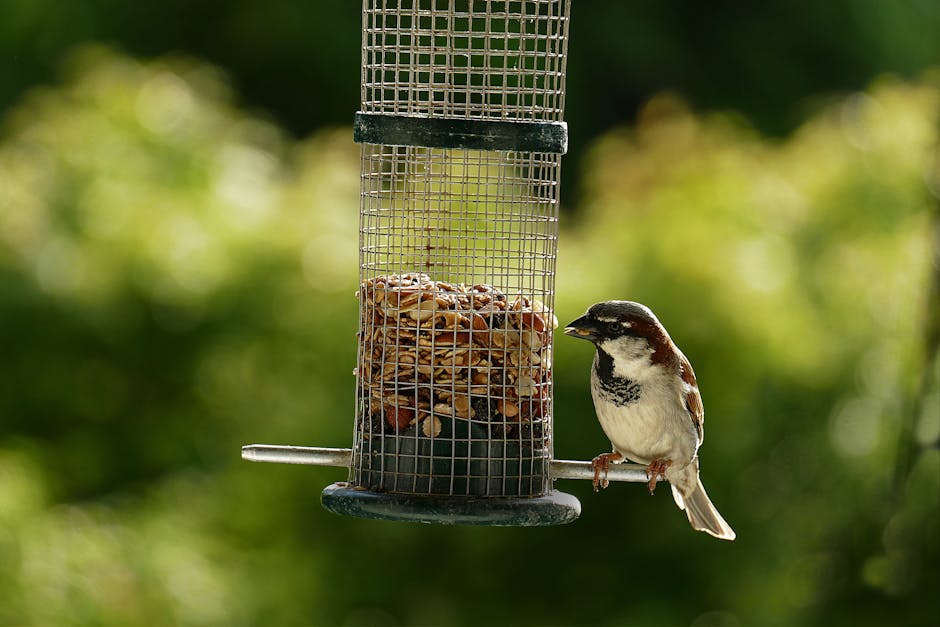
If you’re managing feeders near deer habitat, there’s a secondary complication worth mentioning. Deer will occasionally go after suet, corn-based feeds, or fallen seed under platform feeders, particularly in winter. A bird feeder for peanuts set low to the ground for ground-feeding birds is especially vulnerable to this, and the Yard Enforcer can be positioned to cover the area under a low feeder without interfering with the birds themselves, since birds trigger the detection at a different flight angle than a deer approaching at ground level. Test the positioning before assuming it won’t affect your bird feeding setup.
,
Frequently Asked Questions
Do ultrasonic deer repellers actually work?
The honest answer is: not reliably. Ultrasonic devices work inconsistently in field conditions, and deer habituate to novel sounds quickly when those sounds aren’t tied to a real threat. The devices with documented behavioral effectiveness use physical deterrents (water, smell, exclusion) rather than sound frequencies. If you’ve already tried ultrasonic stakes and found them wanting, that’s consistent with most real-world experience.
How long does it take for the Orbit Yard Enforcer to train deer away from an area?
Most users see measurable behavioral change in deer within two to three weeks of consistent encounters. The key word is consistent. If the sprinkler runs dry, the battery dies, or the unit gets repositioned frequently, the training effect resets. Keep it operational and in the same location through the initial training period.
How often do I need to reapply Liquid Fence?
Under normal summer conditions, every two to four weeks. After significant rainfall, sooner. A good rule is to check the treated foliage after any rain event over an inch and reapply if the sulfur smell is gone. The ready-to-use gallon makes reapplication straightforward, but if you’re covering large areas, the concentrate version is more practical and considerably cheaper per square foot covered.
Can I use the Orbit Yard Enforcer near a bird bath or feeder?
With careful positioning, yes. Birds approach at angles and altitudes that are different from deer. A sprinkler aimed to cover a ground-level approach zone won’t necessarily fire on birds landing at a feeder above its detection arc. That said, if you’re setting up a solar bubbler for a bird bath or a bird bath on a deck railing near a problem area, test the detection zone before assuming the birds won’t be affected. Larger birds moving through the lower arc at close range can trigger it.
Is Liquid Fence safe to use around vegetable gardens?
Liquid Fence states the ready-to-use formula is safe around edible plants once dry. I apply it to the perimeter foliage of the vegetable garden and on ornamental borders, but I avoid applying it directly to vegetables I’m going to eat. The smell dissipates significantly once dry, but I’d rather not have it on produce. On the surrounding foliage, border plants, and raised bed perimeters, it’s worked without any plant damage I’ve observed over three seasons of use.
Orbit 62000 Yard Enforcer Motion-Activated Deer Repellent Sprinkler, 2-Pack
- Deters deer, rabbits, cats, raccoons, and birds without chemicals or harm
- Day-only, night-only, or 24-hour detection modes prevent unwanted activations
- Can be triggered by other movement (blowing shrubs, passing people) , positioning matters
Liquid Fence Deer and Rabbit Yard Repellent Ready-To-Use, 1 Gallon
- Ready-to-use formula , no mixing; trigger sprayer applies directly to plants
- Rain-resistant formula lasts 2-4 weeks outdoors
- Strong sulfur/egg odor during and shortly after application
Frequently Asked Questions
Do ultrasonic deer repellers actually work?
Most peer-reviewed research on ultrasonic animal deterrents shows limited and inconsistent results — deer habituate to unfamiliar sounds within days to weeks. Motion-activated water sprayers and scent-based repellents have stronger documented behavioral responses and are more reliable for protecting garden beds.
How does the Orbit Yard Enforcer motion-activated sprinkler deter deer?
The Yard Enforcer detects motion via infrared sensor and delivers a sharp burst of water within the 120-degree detection arc, startling deer and other animals. With repeated encounters, deer begin to associate the area with an unpleasant experience and avoid it even when the sprinkler isn't active — a genuine training effect rather than just a temporary deterrent.
How long do batteries last in the Orbit Yard Enforcer?
The Orbit Yard Enforcer runs on a 9V battery rated for approximately 7,500 activations. In high deer-traffic areas, that can deplete in a few weeks during peak season. Check the battery every 2–3 weeks during active use periods, and position the unit carefully to avoid false triggers from blowing plants that burn through the count unnecessarily.
Does Liquid Fence deer repellent wash off in rain?
Liquid Fence is rain-resistant once dried and typically lasts 2–4 weeks outdoors per application. It should be reapplied after heavy rain events or every 2–3 weeks during the growing season. The odor (sulfur and putrescent egg) is strong during and shortly after application but fades to below human-detectable levels within a day.
Where should I position a motion-activated deer repeller in my garden?
Position it where the detection arc covers the entry point deer actually use — along established trails or at the corners of beds. Avoid placement near ornamental grasses, tall shrubs, or fence lines that will false-trigger in wind. Spend time observing where deer enter before locking in placement, and adjust stake height to account for late-season foliage.
Where to Buy
Orbit 62000 Yard Enforcer Motion-Activated Deer Repellent Sprinkler, 2-PackSee Orbit 62000 Yard Enforcer Motion-Acti… on Amazon