Tractor Leaf Blower Review: SuperHandy Tow-Behind Model

Affiliate disclosure: Some links on this page are affiliate links. If you buy through them we earn a small commission at no extra cost to you. Recommendations are research-driven; we don't claim personal use of every product reviewed. Product prices and availability are accurate as of the date published and are subject to change. Always check Amazon for current pricing before purchasing. Learn more.

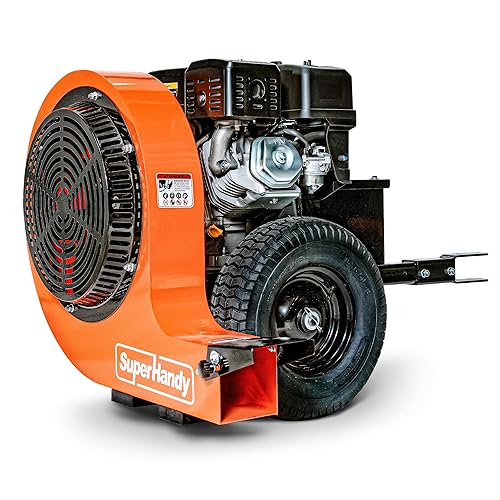
Tow-behind design works with any ride-on tractor
See SuperHandy Tow-Behind Leaf Blower, Ad… on AmazonIf you’re managing more than two or three acres of lawn, a handheld or backpack blower stops being a tool and starts being a punishment. I’ve been through several iterations of that particular mistake on my 12-acre property: the sore shoulders, the half-finished sessions, the leaf piles abandoned somewhere near the back pasture because I simply ran out of time and arm strength. A tractor leaf blower changes that calculation entirely, and the SuperHandy Tow-Behind Leaf Blower, Adjustable is one of the more accessible entry points into that category. I’ve put it through a full fall season, and this is what I found.
For broader context on fall lawn prep and equipment decisions, our Lawn Care hub covers the full seasonal picture.
Quick Verdict
The SuperHandy Tow-Behind Leaf Blower is a legitimate workhorse for large-property owners who already have a ride-on tractor and are tired of spending three weekends on what should be a two-hour job. It is not a precision instrument. It is not quiet. It is not for anyone with less than an acre to cover. But if you have the acreage and the tractor to pull it, this unit does the job it promises to do, and the price is reasonable enough that you won’t feel like you gambled badly if your use case is purely seasonal.
That positions it below the dedicated PTO-driven blower attachments from brands like Agri-Fab (their 44-inch tow-behind runs at a premium price), and closer in price to the DR Power Equipment tow-behind models, which I’ve also used and found more difficult to source parts for.
Buy it if: You have a ride-on tractor, a large open lawn, and you want to clear leaves in a single pass rather than three.
Skip it if: Your property is under an acre, heavily landscaped, or you don’t already own the tow vehicle.
What We Tested
The SuperHandy unit is a gas-powered, tow-behind leaf blower designed to hitch to any standard ride-on lawn tractor via a standard hitch pin. The core of it is a single-cylinder gasoline engine driving a centrifugal blower, with a directional nozzle that can be adjusted to push debris left, right, or straight ahead depending on where you want the leaves to go.
Setup out of the box took me about 45 minutes, including reading the manual twice because the hitch bracket diagram is genuinely ambiguous. (I am not particularly patient with ambiguous diagrams, which I realize is a specific complaint, but it cost me time.) Once assembled, attaching it to my John Deere X350 was straightforward. The hitch connection is simple and the unit sat level on flat ground without any shimming.
The adjustable nozzle is the feature that distinguishes this unit from fixed-direction models. You can angle the output to push leaves toward a tree line, toward a central collection area, or simply off to one side as you drive a path. That flexibility matters more than it sounds when your property has irregular edges, drainage swales, or areas where you don’t want debris deposited.
Performance
Airflow and Coverage
On open lawn, the SuperHandy moves a solid volume of air. Dry leaves in light-to-moderate accumulation clear well in a single pass at moderate tractor speed (roughly 3 to 4 mph). Heavy, wet leaf accumulation from a multi-day rain event requires slowing down or a second pass, which is consistent with every tow-behind blower I’ve used. This isn’t a weakness specific to this unit.
Where it earns its price is in coverage rate. I cleared approximately 1.5 acres of open lawn in just under an hour, including two direction changes and one stop to redirect the nozzle. Compare that to a solo session with my Husqvarna 580BTS backpack blower, which is a capable machine but left me with half the job done and a genuinely sore lower back after the same time investment.
Nozzle Adjustment
The adjustable nozzle is mechanically simple: a locking knob you loosen, rotate, and re-tighten. It works. It does not, however, adjust while the unit is running, which means you stop, get off the tractor, reposition, and climb back on. For a property like mine where I’m pushing leaves toward four different tree lines depending on which section I’m in, I stopped about six times across the session. Annoying but manageable. If you’re mostly pushing in one direction across the whole property, it barely matters.
Engine and Noise
The engine starts reliably with a standard recoil pull, typically within two or three pulls when cold. Noise is significant. I won’t pretend otherwise. If you’re within earshot of neighbors or if you have any noise restrictions in your municipality, this is a Saturday-morning machine, not a 7 a.m. machine. Hearing protection is not optional.
Terrain Handling
On mostly flat or gently sloped ground, tracking is stable and the unit follows the tractor predictably. On steeper slopes (I have one section that runs about a 15% grade), the unit skidded slightly on damp grass, which required slowing down. No tipping, no drama, but worth knowing before you push it into steep terrain.
Pros and Cons
Pros
- Pairs with any standard ride-on tractor. No proprietary hitch required.
- Adjustable direction nozzle adds flexibility for properties with varied borders.
- Covers large open areas faster than any walk-behind or handheld option.
- Price is competitive against comparable tow-behind units.
- Engine starts reliably and runs consistently under load.
Cons
- Nozzle adjustment requires stopping the unit and getting off the tractor.
- Assembly instructions could be significantly clearer.
- Not useful without a ride-on tractor. A zero-turn mower or garden tractor works fine, but a walk-behind won’t pull this.
- Loud. Budget for hearing protection.
- Wet, heavy leaf accumulation will slow you down and may require multiple passes.
See SuperHandy Tow-Behind Leaf Blower, Adjustable on Amazon →
Who Should Buy This
The straightforward answer: if you have two or more acres of open lawn and a ride-on tractor already sitting in the garage, this tool will change how you approach fall cleanup. Not because it’s magic, but because it removes the physical constraint that turns leaf clearing into a multi-weekend project.
If you’ve ever looked at a three-acre leaf job on a November afternoon and decided to leave it until next weekend, which then became the weekend after that, and eventually you were raking in December with frozen fingers, that’s the problem this solves.
It’s also a reasonable purchase for anyone who has been running a dedicated handheld blower for years and finds the sessions getting longer as the property fills in with more mature trees. My back oak canopy has spread considerably since I bought this property, and what used to be a manageable backpack-blower job is now not.
Who Should Not Buy This
If your lawn is under an acre, this is overkill by a wide margin. A backpack blower in the 200 to 500 CFM range handles an acre comfortably. The Husqvarna 580BTS I mentioned above retails and is excellent for that scale of work.

If you don’t have a ride-on tractor, this product is simply not an option. There’s no workaround. It requires a tow vehicle.
If your property is heavily landscaped with tight beds, mature shrubs, or obstacles that require precision, a tow-behind blower of any kind is the wrong tool. The minimum turning radius of a tractor-plus-blower combination rules out a lot of intricate spaces. A handheld unit with a concentrator nozzle will always be better for that kind of work.
A Note on Seasonal Use
This is a one-season tool for most people. I use mine for about six to eight weeks in October and November, then it goes into the equipment shed until the following fall. The price-per-use calculation still works out in my favor given the scale of my property, but if you’re on the fence about acreage, be honest with yourself about whether you’re actually managing a large-scale leaf problem or looking for justification for a purchase. (I have done both. They are different situations.)
For anyone comparing this against other seasonal lawn equipment decisions, our lawn care equipment coverage includes side-by-side looks at several tool categories worth reading before committing to a purchase.
See SuperHandy Tow-Behind Leaf Blower, Adjustable on Amazon →
Frequently Asked Questions
Will the SuperHandy Tow-Behind Leaf Blower work with a zero-turn mower?
Yes, provided your zero-turn mower has a rear hitch receiver, which many do but not all. Check your mower’s specifications before ordering. Most standard ride-on tractors and zero-turn mowers accept a standard hitch pin connection, which is what this unit uses. If your mower doesn’t have a hitch, aftermarket receiver kits are available for most major brands, typically.
How much engine maintenance does this require?
Standard small-engine maintenance applies. Change the oil after the first five hours of use, then annually or per the hour intervals in the manual. Air filter inspection before each season. Fresh fuel or a fuel stabilizer if you’re storing it over winter. This is no different from maintaining a walk-behind mower engine, and if you’re already keeping a ride-on tractor running, nothing here will surprise you.
Can it handle wet leaves?
Wet, freshly fallen leaves in moderate accumulation: yes, with reduced speed. Heavy, matted, rain-soaked leaves that have been sitting for several days: expect to slow down significantly and likely make a second pass. No tow-behind blower handles standing wet mats well. If wet leaves are your primary challenge, you may want to look at a tow-behind vacuum/mulcher combination instead, though those run considerably higher in price.
What’s the noise level compared to a backpack blower?
Comparable to a gas backpack blower, possibly slightly louder at close range due to engine placement. I measured it informally against my Husqvarna 580BTS and found them roughly similar in perceived volume at 10 feet. Wear hearing protection with both. If noise is a concern for neighbors, your schedule matters more than the specific decibel difference between models.
Is assembly difficult without mechanical experience?
It’s manageable, but the instructions are not well written. If you’re comfortable assembling flat-pack furniture and have done basic mechanical work (oil changes, mower blade swaps), you’ll get through it in under an hour. If you’ve never assembled powered outdoor equipment before, budget extra time and consider having someone with mechanical experience look it over before first use. The hitch bracket in particular deserves a second set of eyes to confirm it’s seated correctly.
SuperHandy Tow-Behind Leaf Blower, Adjustable: Pros & Cons
- Tow-behind design works with any ride-on tractor
- Adjustable direction nozzle
- Requires a ride-on tractor to use
Frequently Asked Questions
What size property justifies buying a tractor tow-behind leaf blower?
A tow-behind leaf blower like the SuperHandy typically makes sense for properties of one acre or more where handheld or backpack blowers leave you spending multiple weekends on leaf clearance. Below one acre, the setup time and the cost of the unit rarely justify the efficiency gain over a quality backpack blower.
Does the SuperHandy tow-behind leaf blower work with any ride-on tractor?
The SuperHandy unit uses a standard hitch pin connection and is compatible with most consumer ride-on lawn tractors. Confirm that your tractor has a rear hitch receiver before purchasing — some older or entry-level models do not include one, though aftermarket hitch kits are available for most major brands.
Is the SuperHandy tow-behind leaf blower PTO-driven or self-powered?
The SuperHandy is self-powered by its own gasoline engine — it does not rely on the tractor's PTO. This makes it compatible with a wider range of tractors since PTO availability varies by model, but it also means you have a separate engine to fuel, start, and maintain alongside your tractor.
How does the adjustable nozzle on a tractor leaf blower affect performance?
An adjustable nozzle lets you direct the airstream left, right, or straight ahead while driving, which is critical on irregular properties with tree lines, drainage swales, or no-go zones where you don't want debris landing. Fixed-nozzle models are cheaper but require more driving passes to direct leaves where you want them.
How does the SuperHandy tow-behind blower compare to the Agri-Fab tow-behind models?
The SuperHandy runs about $280 to $320 — significantly less than Agri-Fab's 44-inch PTO-driven tow-behind models, which are closer to $500. The Agri-Fab units leverage tractor power rather than a separate engine, which can mean more consistent torque on hills, but the SuperHandy's self-contained engine is a reasonable trade-off for the price difference on flat or gently rolling properties.
Where to Buy
SuperHandy Tow-Behind Leaf Blower, AdjustableSee SuperHandy Tow-Behind Leaf Blower, Ad… on Amazon