Deer Repellent Granules: What Actually Works

Affiliate disclosure: Some links on this page are affiliate links. If you buy through them we earn a small commission at no extra cost to you. Recommendations are research-driven; we don't claim personal use of every product reviewed. Product prices and availability are accurate as of the date published and are subject to change. Always check Amazon for current pricing before purchasing. Learn more.
Quick Picks

Liquid Fence Deer and Rabbit Yard Repellent Ready-To-Use, 1 Gallon
Ready-to-use formula , no mixing; trigger sprayer applies directly to plants
Buy on Amazon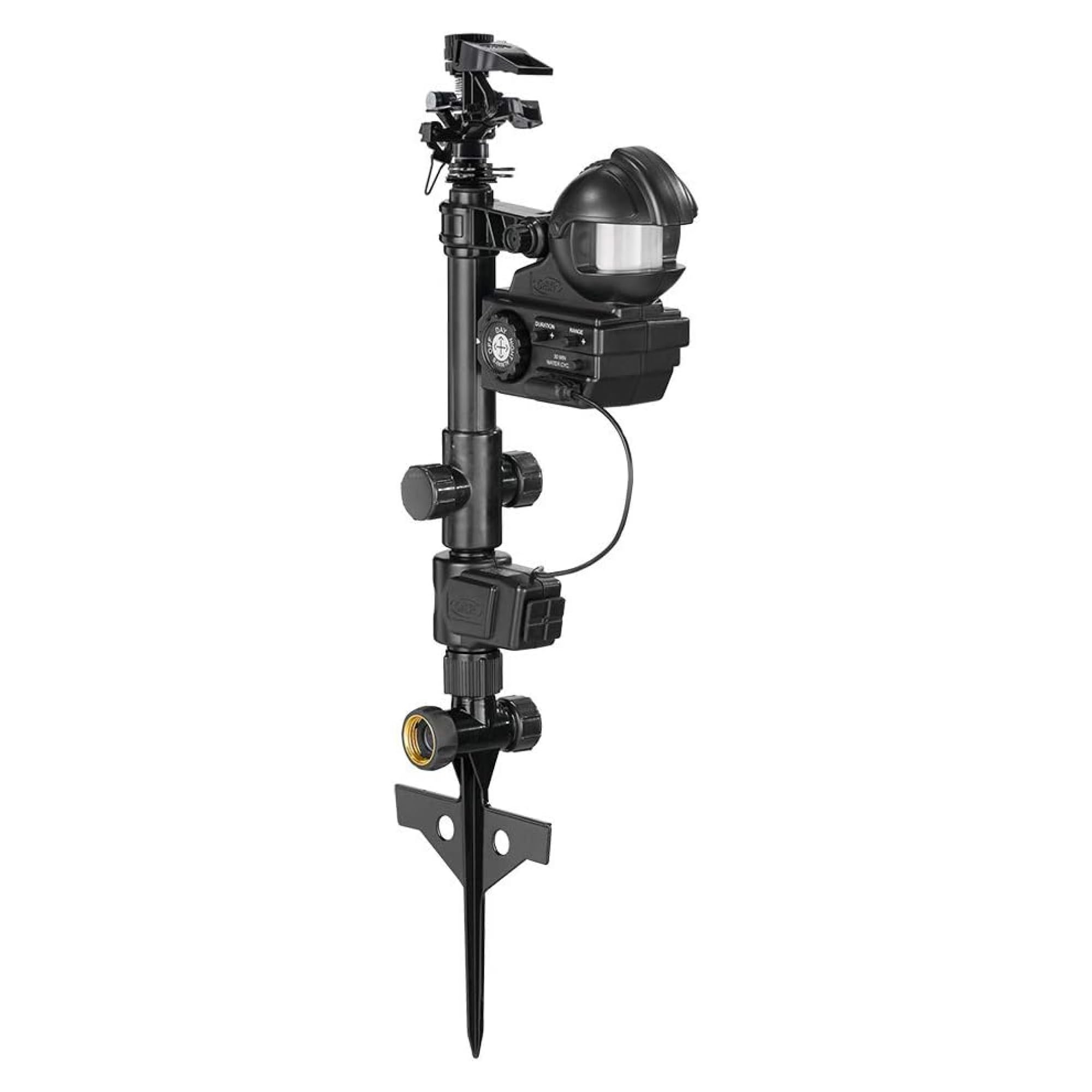
Orbit 62000 Yard Enforcer Motion-Activated Deer Repellent Sprinkler, 2-Pack
Deters deer, rabbits, cats, raccoons, and birds without chemicals or harm
Buy on Amazon| Product | Price Range | Top Strength | Key Weakness | Buy |
|---|---|---|---|---|
| Liquid Fence Deer and Rabbit Yard Repellent Ready-To-Use, 1 Gallon best overall | $ | Ready-to-use formula , no mixing; trigger sprayer applies directly to plants | Strong sulfur/egg odor during and shortly after application | Buy on Amazon |
| Orbit 62000 Yard Enforcer Motion-Activated Deer Repellent Sprinkler, 2-Pack also consider | $$ | Deters deer, rabbits, cats, raccoons, and birds without chemicals or harm | Can be triggered by other movement (blowing shrubs, passing people) , positioning matters | Buy on Amazon |
If you’re finding chewed hostas at dawn and hoof prints in the mud by the bird bath, you already know what deer pressure looks like. The question isn’t whether to do something about it. The question is what actually works, applied consistently, without turning your property into a chemistry experiment or a booby trap.
Deer repellent granules get searched constantly, but a lot of what’s sold under that label is barely distinguishable from mulch. Before I get into specific products, it’s worth being clear about what this category is actually doing: creating a sensory barrier, either chemical (smell, taste) or physical (surprise, discomfort), that trains deer and other browsers to route around your beds rather than through them. No single product is a one-time fix. Everything in this space requires repetition and, ideally, layering.
If you follow the wildlife and bird feeder coverage on this site at all, you’ll know that deer pressure doesn’t stay confined to the vegetable garden. Once deer are comfortable on a property, they’ll hit ornamentals, strip bark in winter, and ruin anything you’ve planted near a feeder setup. That’s when repellent stops being optional.
What to Look For in Deer Repellent Products
Active Ingredients and How They Work
The repellents that consistently perform fall into two categories. The first uses scent and taste aversion, typically sulfur-based compounds, putrescent egg solids, or predator urine. These smell bad to deer (and briefly to you), and the smell on treated foliage mimics danger signals. The second category is physical deterrence: motion-activated water, ultrasonic devices, or barriers. Both work. The most reliable results come from using both simultaneously.
Granule formulations are convenient but limited. They work well as a perimeter treatment on the ground, around beds or along fence lines, but they don’t protect the foliage itself. Spray formulations coat individual plants. If deer are browsing directly from your shrubs and perennials, a granule perimeter is part of the answer, not the whole answer.
Rain Resistance and Reapplication Frequency
Any repellent that claims to be permanent is lying. Rain, irrigation, and new plant growth all degrade coverage. A product that honestly states a two to four week outdoor window is telling you the truth. One that claims six months outdoors probably works for three weeks.
For anyone with a property larger than a typical suburban lot, concentrate formulas become significantly more economical than ready-to-use versions. The math matters here and I’ll come back to it below.
Safety Profile
Most sulfur-based and egg-solid formulas are safe around pets and children once dry, which typically takes 15 to 30 minutes. None of them smell pleasant during application. If you have dogs that patrol your beds, check whether the specific product has been tested with pets, not just whether it’s “natural.” Natural and harmless are not the same thing.
Top Picks
Liquid Fence Deer and Rabbit Repellent Ready-To-Use, 1 Gallon
This is my working recommendation for most people who need a spray-based repellent and want something they can open and use the same day. The gallon jug comes with a trigger sprayer, the formula is ready to go, and it covers deer and rabbits in a single application.
The active ingredient is putrescent whole egg solids combined with garlic. Yes, it smells. Significantly. I’ll be direct: the first application on a warm day is unpleasant in a way that’s hard to fully describe, and if you have neighbors in close proximity, pick a calm morning rather than an afternoon with an onshore breeze. The smell off-gasses within a few hours, and once dry, it’s not detectable to humans at normal distances. Deer, however, can still smell it.
Performance in wet springs is where this product earns or loses credibility. Liquid Fence states the formula is rain-resistant, and in my experience, a light rain won’t strip it entirely, but a sustained two-day wet period will cut your effective window to less than two weeks. Reapplication after heavy rain is not optional. If you treat, forget for three weeks, and then wonder why something ate your arborvitae, the timeline is probably your answer, not the product.
Coverage on a gallon jug goes further than you’d expect if you’re applying as a fine mist to foliage rather than soaking. On dense shrub borders, a gallon might cover 300 to 400 linear feet of bed edge and individual plant treatment.
Best for: Homeowners with defined garden beds, shrub borders, or specific plants under pressure. Works as a standalone for moderate deer activity. For high-pressure situations, layer it with a physical deterrent.
Orbit 62100 Yard Enforcer Motion-Activated Sprinkler
This is a different product category, and I’m including it because for anyone dealing with persistent deer pressure, spray repellent alone often isn’t enough. The Orbit Yard Enforcer is a motion-activated sprinkler that connects to a standard garden hose and fires a burst of water when it detects movement within its detection zone.
The detection range is 40 feet with a 120-degree arc, which covers a standard garden bed or the approach to a bird feeder setup without covering your entire yard. It runs on 4 AA batteries, operates in day-only, night-only, or 24-hour mode, and claims up to 7,500 activations per battery set (I haven’t verified this independently, but I’ve run the unit through a full season without mid-season battery failure).
What makes this worth including alongside a repellent review is the training effect. Deer that get hit with a cold-water burst two or three times in the same location learn to route around that area. Within two to three weeks of consistent activation, most deer herds stop testing the zone entirely. The spray repellent works on scent memory. The water works on physical memory. Together, they reinforce each other.
A few practical notes on the Orbit. Positioning matters more than the product description suggests. Placing it near shrubs or tall perennials that move in wind will trigger false activations constantly, burning battery life and eventually making you ignore the product entirely. Open sightlines with clear detection zones work better. Also, if you have children who play in the yard, the 24-hour mode will absolutely catch them, which is funny once.
Best for: Anyone who wants a non-chemical deterrent, properties with persistent deer problems that spray alone hasn’t solved, and as a layered approach alongside a repellent like Liquid Fence. Also works on rabbits, cats, raccoons, and birds, which matters if you’re dealing with more than one wildlife problem.
How to Choose
If You’re Starting From Scratch
Start with the spray repellent. The Liquid Fence gallon is a reasonable entry point, gives you immediate coverage across treated plants, and is entry-level. Apply at first leaf out in spring, reapply after any significant rain event, and maintain a two-week cadence through fall. This handles moderate deer pressure on properties where deer are occasional visitors rather than residents.
If deer are on your property consistently, not just moving through, add the Orbit Yard Enforcer at the highest-traffic entry points. Two units positioned at the approaches to your main planting areas, combined with consistent spray repellent use, will significantly change deer behavior within a month.
For Large Properties
The ready-to-use gallon becomes expensive quickly once you’re covering significant acreage. Shift to the concentrate formula and calculate your actual coverage needs before buying. I covered this in the Liquid Fence pricing notes above, but to be concrete: treating a half-acre of mixed beds and shrub borders every two weeks through a seven-month season will consume a meaningful quantity of product. Run the per-gallon math on concentrate vs. ready-to-use before your first purchase.
For a broader look at how deer and other wildlife interact with garden features, the wildlife coverage on this site has useful context, especially if you’re simultaneously trying to attract birds while deterring deer from the same space. Feeders and bird baths that draw songbirds will also attract deer to the yard, and that tradeoff is worth thinking through rather than just adding deterrents reactively.
What I’d Skip
Granule-only approaches for active deer pressure. Granules work as a perimeter signal, but deer that are already in the habit of browsing your beds will walk through a granule barrier without hesitation if the foliage itself isn’t treated. Use granules as a supplement to spray, not a replacement.
Solar ultrasonic stakes are largely ineffective at sustained deterrence. Deer habituate to them quickly. I’ve tried three different models over the years and I’d rather spend the money on Liquid Fence concentrate.
If you’re researching how deer activity intersects with other wildlife you’re trying to encourage, our review of the Deer Out deer repellent covers another product in this space with some different active ingredients worth comparing.
Seasonal Timing
Start repellent applications before deer pressure begins, not after damage appears. In most of the northeast, that means early April for spring plantings and again in late October as deer begin ranging more aggressively ahead of winter. New plantings need immediate treatment regardless of season. Deer are opportunistic and a freshly disturbed root zone and newly cut stems are attractive regardless of what else is in the area.
If you’re putting in new bird feeding stations or a bird bath on your deck railing this season, treat any ornamentals you’re planting nearby at the same time. Don’t wait for evidence of browsing.
Frequently Asked Questions
How often do I need to reapply deer repellent granules and sprays?
Every two weeks is the working standard for spray formulas under normal conditions. After heavy rain, reapply within 24 to 48 hours regardless of where you are in the schedule. Granule perimeter treatments typically last three to four weeks unless there’s heavy rainfall or you’re in a high-moisture environment. New plant growth is not covered by previous applications, so actively growing plants during spring and summer need more frequent attention than established, slow-growing shrubs.
Do deer repellents work in winter when there’s no foliage?
Winter is often when deer pressure peaks because natural food sources are scarce. Spray repellents can be applied to woody stems, bark, and evergreen foliage. For deciduous plants with exposed stems, direct application to the bark and a granule perimeter around the root zone is the practical approach. Motion-activated sprinklers need to be disconnected before hard freeze temperatures, so a physical deterrent like the Orbit is a three-season tool, not a four-season one.
Will deer repellent affect birds or other wildlife I want to attract?
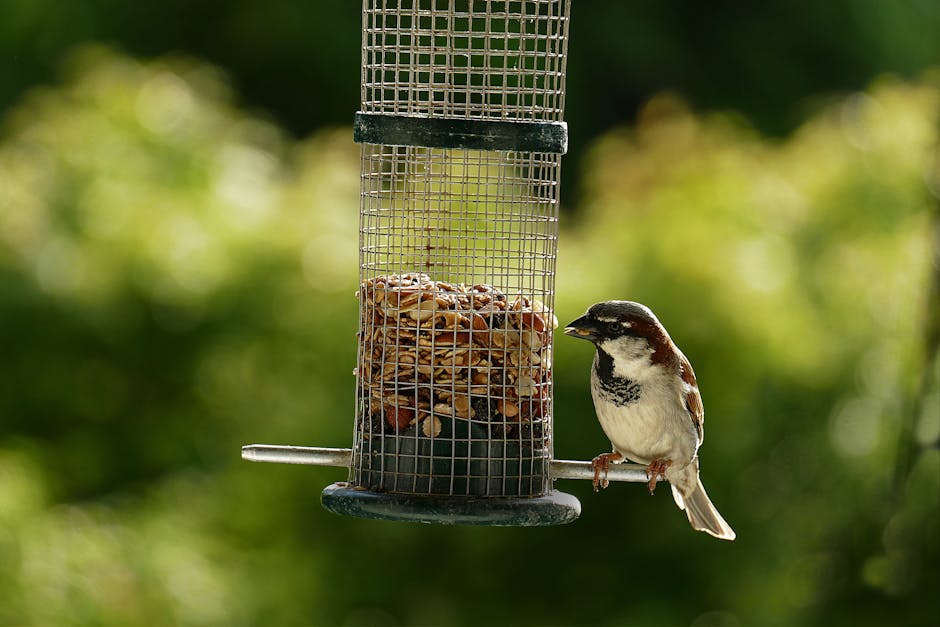
The spray-based repellents in this guide are not toxic to birds and won’t affect bird feeding activity near treated plants. The motion-activated sprinkler will trigger on birds, cats, and squirrels as well as deer, which may or may not be a problem depending on where you position it relative to feeders. Avoid pointing the detection zone directly at a bird feeder or bird bath if attracting songbirds is a priority. If you’re thinking about a new peanut feeder for your yard, position it outside the sprinkler’s arc.
Is there a deer repellent that’s safe to use on edible plants?
Liquid Fence and similar putrescent egg and garlic formulas are labeled for use around edible plants with instructions to avoid direct application to the edible portions and to observe a pre-harvest interval. Practically, this means treating the surrounding foliage and bed perimeter rather than spraying directly on fruit, vegetables, or herbs you intend to eat. For vegetable gardens specifically, a physical barrier like the motion-activated sprinkler is often a cleaner solution than spraying near food crops.
Why isn’t the repellent working even though I’m applying it regularly?
Three common reasons. First, application technique: a fine mist that coats foliage works. Heavy soaking that drips off immediately doesn’t hold as well and wastes product. Second, coverage gaps: one missed application after rain is enough for deer to re-establish a browsing route. Third, deer pressure level: in areas with very high deer density, no repellent alone is sufficient. If you’re applying correctly and consistently without results, the Orbit Yard Enforcer as a paired deterrent is worth adding before concluding the repellent has failed entirely.
Frequently Asked Questions
How do deer repellent granules work compared to spray repellents?
Granules create a ground-level scent barrier that deer encounter before entering a bed, while sprays coat foliage directly and work on contact. Granules are better suited for perimeter protection and areas where spraying foliage is impractical, such as around tree bases or along pathways.
How often do I need to reapply deer repellent granules?
Most granule products need reapplication every 30–60 days, though rain and irrigation can accelerate breakdown. Check the perimeter after significant rainfall and refresh any areas where the granule line has been washed or scattered.
Are deer repellent granules safe around pets and children?
Most granule formulas use natural compounds like putrescent egg, garlic, or blood meal and are not acutely toxic, but you should keep pets away from freshly applied areas and wash hands after handling. Always read the specific product label for safety precautions.
Can deer repellent granules protect a whole yard or just garden beds?
Granules work best as a perimeter barrier along fence lines, bed edges, and entry points rather than broadcast across an entire yard. For large properties, combine granules at key access points with a spray repellent applied directly to high-value plants.
Do deer repellent granules lose effectiveness in wet climates?
Yes — rain and irrigation dissolve granules faster, shortening the effective window significantly in wet regions. In high-rainfall areas, a motion-activated sprinkler provides a more weather-independent deterrent that doesn't degrade with moisture.
Where to Buy
Liquid Fence Deer and Rabbit Yard Repellent Ready-To-Use, 1 GallonSee Liquid Fence Deer and Rabbit Yard Rep… on Amazon