Drip Irrigation Conversion Kit Comparison: DIG vs Rain Bird

Affiliate disclosure: Some links on this page are affiliate links. If you buy through them we earn a small commission at no extra cost to you. Recommendations are research-driven; we don't claim personal use of every product reviewed. Product prices and availability are accurate as of the date published and are subject to change. Always check Amazon for current pricing before purchasing. Learn more.
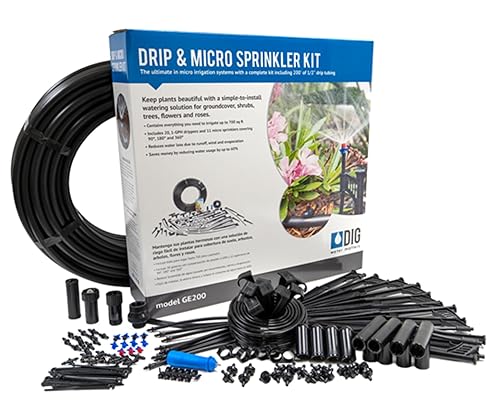 DIG Corporation DIG GE200 Drip & Micro Sprinkler Kit, 122-Piece Buy on Amazon
 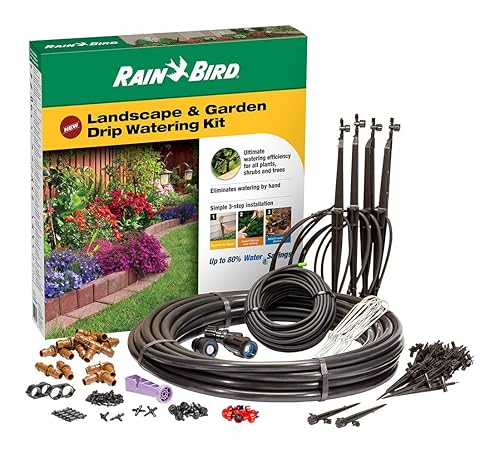 Rain Bird Rain Bird LNDDRIPKIT Drip Irrigation Landscape Kit Buy on Amazon
 Most drip irrigation conversion kits promise the same thing: take your existing hose connection and turn it into a slow, targeted watering system without hiring anyone or digging anything up. The honest difference between kits isn’t the promise, it’s what you get when you open the box and what you’re actually left solving on your own. The DIG GE200 Drip & Micro Sprinkler Kit, 122-Piece and the Rain Bird LNDDRIPKIT Drip Irrigation Landscape Kit both sit in the budget tier, both connect to a standard garden hose, and both can water a mixed planting without an in-ground system. That’s where the similarity ends.
I’ve spent time with both of these. My property has raised beds, a long perennial border, and a section of established shrubs that I refuse to hand-water through a dry July. I’ve worked through our Irrigation guides to plan out coverage, and these two kits come up constantly as starting points for people doing this for the first time. So let me be direct about which one is which.
At-a-Glance
The DIG GE200, and you get 122 pieces covering both drippers and micro-sprinklers, stake fittings, connectors, and enough 1/4-inch tubing to lay out a real system. The Rain Bird LNDDRIPKIT comes in slightly lower, typically, with fewer total components but three distinct emitter types including micro-bubblers, which the DIG kit doesn’t include.
Neither kit ships with a timer. That matters more than most buyers realize before they open the box.
DIG GE200 Drip & Micro Sprinkler Kit, 122-Piece
- Price:
- Pieces: 122
- Emitter types: drippers and micro-sprinklers
- Tubing: standard 1/2-inch mainline compatible, 1/4-inch distribution
- Timer included: no
- Best for: designing a system from scratch across multiple bed types
Rain Bird LNDDRIPKIT Drip Irrigation Landscape Kit
- Price:
- Pieces: fewer (not specified by Rain Bird, roughly 50 to 60 usable components)
- Emitter types: drippers, micro-bubblers, micro-sprays
- Connection: direct garden hose
- Timer included: no
- Best for: mixed landscape beds with established shrubs and ground cover
Why Choose the DIG GE200
If you’re designing a drip system from scratch rather than patching one together, the DIG GE200 is the better starting kit. The 122-piece count isn’t marketing padding. You get enough components to actually plan zones. Multiple bed types, containers, raised beds, and a border can all be addressed without a second order before you’ve even turned the water on.
The mix of drippers and micro-sprinklers is what makes this kit versatile in a practical sense. Drippers work well for containers and individual plants where you want water delivered to a specific root zone. Micro-sprinklers cover a wider area and are better suited for dense plantings or beds where you have ground cover. Having both in one kit means you’re not forced into a one-size approach that leaves some plants underwatered.
The tubing compatibility is worth mentioning plainly. DIG uses standard 1/2-inch mainline and 1/4-inch distribution sizing, which means every fitting is interchangeable with Raindrip, Rain Bird, and most other major brands. If you expand the system later, you’re not locked into DIG components. That matters if you’re building incrementally, which most people on a large property are.
The limitation is real: no timer. For a system to do what drip irrigation is supposed to do, which is water consistently without you standing there, you need automation. A battery-operated timer threads directly onto the hose bib before your mainline. I’d recommend looking at a battery operated sprinkler timer as a companion piece before you buy this kit. Budget more for that, and the total system cost is still well entry-level
The 122-piece count is also genuinely a lot to sort through if you’ve never laid out a drip system before. The instruction sheet is functional but thin. If you’re working with a complicated layout, sketch your bed dimensions before you open the bag. (I did this on graph paper, which I realize is a specific suggestion, but it saved me two trips back to the hose bib.)
Why Choose the Rain Bird LNDDRIPKIT
Rain Bird’s commercial reputation in irrigation is strong, and the LNDDRIPKIT reflects their approach: fewer total pieces, but the emitter selection is more thoughtfully curated for landscape beds specifically.
The three emitter types, drippers, micro-bubblers, and micro-sprays, give you a meaningful choice depending on what you’re watering. Micro-bubblers are particularly useful for established shrubs where you want a slow flood at the root zone rather than surface spray. That’s a specific need the DIG kit doesn’t address as cleanly, and if your landscape has mature woody plants mixed with perennials, the Rain Bird gives you better tools for that combination.
The direct hose connection is straightforward. Attach to a standard spigot, run your mainline, and push in emitters where you need them. For someone who wants a functional landscape system up and running in an afternoon without a lot of planning, this is the more approachable kit.
The filter that comes included deserves attention. Drip emitters clog, and in areas with hard water or any mineral content in the supply, clogging happens faster than you’d expect. The Rain Bird kit includes an inline filter, and if you’re in an area with hard water, install it. Do not skip this step because it looks optional. I’ve seen micro-spray heads on systems without filtration become completely blocked within a single season.

Where this kit runs into trouble is scale. Fewer components means less flexibility. For a single landscape zone or a straightforward mixed bed of moderate size, it’s adequate. For a property with multiple distinct areas, multiple exposure conditions, and a mix of containers and in-ground plantings, you’ll hit the component limit and need to order more. At that point the DIG kit would have been the more efficient starting point.
A timer is just as necessary here as with the DIG. Something like a battery sprinkler timer that screws onto the hose bib will turn this into an actual automated system rather than a fancy hose arrangement. Without automation, drip irrigation is useful but not particularly efficient.
One note on the micro-spray heads specifically: they have a wider throw than drippers, which is useful for dense beds but can create overlap problems in tightly designed borders where you don’t want moisture on paths or structures. Position them carefully in the first session.
Verdict
These two kits are solving slightly different problems, and buying the wrong one for your situation is a straightforward mistake to avoid.
Buy the DIG GE200 Drip & Micro Sprinkler Kit, 122-Piece if you’re laying out a new drip system across multiple bed types and want enough components to work with from the start. The piece count, the tubing compatibility with all major brands, and the dual emitter types make it the better foundation kit. Plan on pairing it with a sprinkler timer battery operated option to complete the system. Your total outlay will be depending on the timer you choose, and you’ll have a system with real coverage flexibility.
Buy the Rain Bird LNDDRIPKIT Drip Irrigation Landscape Kit if your specific situation is a landscape bed with established shrubs, mixed plant types, and a need for micro-bubblers alongside sprays and drippers. The emitter variety is better matched to in-ground landscape conditions, and the included filter is a practical feature if your water supply has any mineral hardness. It’s a cleaner kit for a defined landscape zone, not for a property-wide build-out.
Neither kit is wrong at its price point. The DIG is the better starting kit for anyone designing a system. The Rain Bird is the better kit for a targeted landscape application where the emitter types match the planting. If you’re still deciding how to structure your irrigation approach across the property, the broader Irrigation section covers zone planning, timer selection, and seasonal maintenance in more detail.
The one thing both kits share: without a timer, you’re doing this manually. That’s fine as a temporary arrangement, but it’s not what drip irrigation is for.
Frequently Asked Questions
What is a drip irrigation conversion kit and how does it work?
A drip irrigation conversion kit is a collection of fittings, tubing, and emitters that attaches to a standard garden hose or hose bib and delivers water slowly and directly to the root zone of plants. The basic setup involves running a mainline from the water source, punching holes at plant locations, and inserting emitters that release water at a controlled rate, typically between half a gallon and two gallons per hour depending on the emitter type.
Do I need a timer with these kits?
Neither the DIG GE200 nor the Rain Bird LNDDRIPKIT includes a timer. A timer is not required for the system to function, but without one you’re turning the water on and off manually every time. For drip irrigation to deliver consistent moisture without attention, a battery-operated hose timer is the practical solution. These run from entry-level to mid-range in price and attach between the spigot and the kit mainline.
Can I use these kits with an existing in-ground irrigation system?
Both kits are designed to connect to a standard garden hose or hose bib, not to in-ground pressurized irrigation systems. If you have a dedicated in-ground system with a pressure regulator and backflow preventer already in place, compatibility depends on the pressure output of that system. Drip emitters generally operate best between 15 and 30 PSI. Most in-ground systems run higher than that, which can damage or pop drip fittings without a pressure reducer in line.
Which kit is better for raised beds?
The DIG GE200 handles raised beds more effectively because of the component variety and piece count. Raised beds typically need individual drippers per plant or row, and the 122-piece kit gives you enough emitters and 1/4-inch distribution tubing to address multiple beds in a single setup. The Rain Bird kit is more oriented toward landscape beds with mixed in-ground plantings where micro-bubblers and sprays serve a purpose.
How do I prevent drip emitters from clogging?
Use a filter. The Rain Bird LNDDRIPKIT includes one. If you’re using the DIG GE200, purchase an inline filter separately, which typically. Install it between the hose connection and the mainline. In hard-water areas, flush the system at the end of each season and inspect emitters before reopening in spring. Emitters that deliver well below their rated output or produce no flow at all are usually clogged and can be removed, soaked in white vinegar for a few hours, and reinstalled.
Frequently Asked Questions
What tools do I need to install a drip irrigation conversion kit?
Most kits require only a punch tool to create emitter holes in the main tubing, plus the fittings and stakes included in the box. A hose timer is essential but is typically sold separately — budget for one before you buy the kit.
How many plants can a 122-piece drip kit like the DIG GE200 cover?
A 122-piece kit can cover around 20–30 individual plants depending on spacing and layout, or a combination of drip emitters for containers and micro-sprinklers for ground beds. Larger plantings or multiple zones may require additional tubing and emitters.
What is the difference between drip emitters, micro-bubblers, and micro-sprays?
Drip emitters deliver water slowly at a single point — ideal for individual plants and containers. Micro-bubblers flood a small area slowly, suitable for shrubs. Micro-sprays distribute water over a wider radius, working better for dense ground cover or mixed flower beds.
Does a drip irrigation conversion kit work with low water pressure?
Drip systems generally perform well at lower pressures than sprinkler systems, but most kits recommend a minimum of 20–25 PSI at the faucet. If your pressure is very low or variable, add a pressure regulator to the hose connection to protect emitter performance.
Is Rain Bird or DIG better for a beginner setting up drip irrigation?
Both are beginner-friendly, but the DIG GE200's 122-piece count gives more flexibility for mixed plantings right out of the box. Rain Bird's kit offers three distinct emitter types, which is useful if you have varied plant types but don't need as many total outlets.
Where to Buy
DIG Corporation DIG GE200 Drip & Micro Sprinkler Kit, 122-PieceSee DIG GE200 Drip & Micro Sprinkler Kit,… on Amazon